What Are the Top UPVC Pipe Types for 2026?

Choosing the right upvc pipe in 2026 requires more than comparing prices or wall thickness. Building projects now demand reliable flow, lower maintenance, and materials suited to changing environmental conditions. A pipe that performs well in a garden irrigation line may fail under high pressure, buried traffic loads, or hot wastewater. The details matter.

This guide examines the leading UPVC pipe types used across water supply, drainage, sewerage, irrigation, and electrical protection. It considers pressure-rated pipes, non-pressure drainage pipes, soil and waste systems, conduit pipes, and specialized agricultural options. Each type has a different purpose, connection method, and installation limit. Experienced installers often check pressure class, diameter tolerance, solvent compatibility, and burial depth before selecting a product. Manufacturer datasheets and regional standards should support every decision.

Real projects reveal the difference. A pressure pipe may carry clean water through a compact utility room, while a ribbed drainage pipe handles rainwater beneath a driveway. Exposed pipes also need protection from sunlight, impact, and temperature changes. No list is perfect. Site conditions can overturn a simple recommendation. Some suppliers describe similar products differently, which creates confusion for buyers and contractors. Careful comparison remains essential.

The following overview highlights the top upvc pipe types for 2026, their practical strengths, and their common limitations. It also explains where each option fits best. The goal is dependable selection, not marketing claims. Small checks prevent costly failures.
What Are the Top UPVC Pipe Types for 2026?

UPVC Pipe Basics and Selection Criteria for 2026

What Are the Top UPVC Pipe Types for 2026?

UPVC Pipe Basics and Selection Criteria for 2026

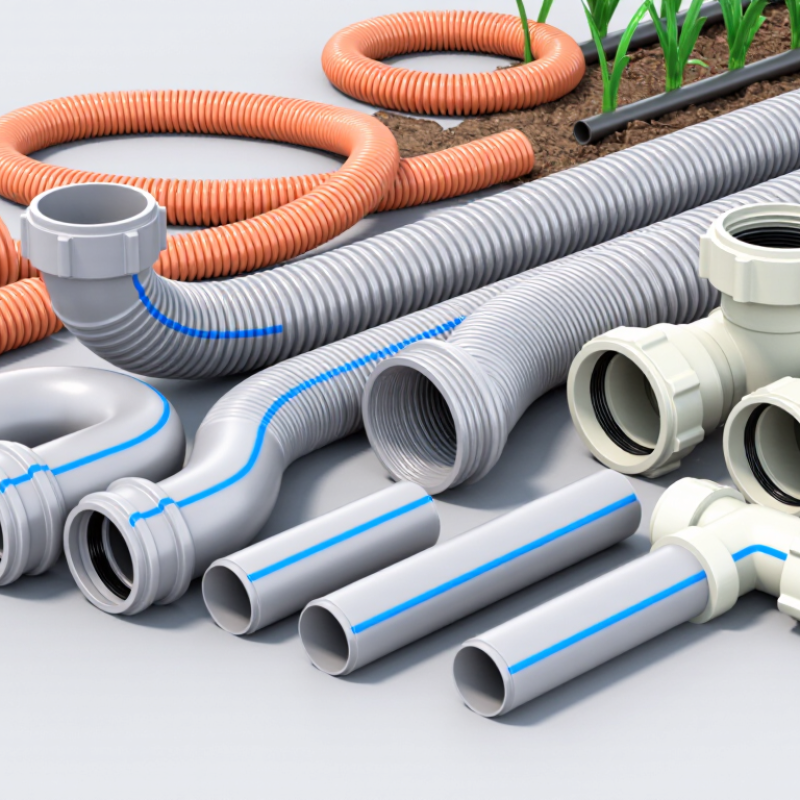
UPVC pipes remain practical for water supply, drainage, irrigation, and electrical protection. Their light weight simplifies handling, while smooth internal walls help maintain steady flow. Pressure UPVC pipes suit cold-water systems and must match the required pressure rating. Drainage pipes usually have thinner walls and larger diameters. Conduit types protect cables from moisture and physical impact.

Selection should begin with the application, not the lowest price. Check diameter, wall thickness, pressure class, temperature limits, and connection method. Solvent-welded joints can create reliable seals when surfaces are clean and aligned. Underground installations also need suitable bedding, backfill, and protection from sharp stones. In exposed areas, ultraviolet resistance deserves attention. UPVC is not suitable for every hot-water system.

Small details matter.

Tips: Measure the route twice before ordering. Compare the pipe rating with the pump’s maximum pressure. Inspect each length for cracks, distortion, or damaged sockets. Keep pipes shaded during storage, and avoid dragging them across rough ground. Local building requirements and recognized testing standards should guide final selection. A fitting may look compatible but still fail after thermal movement. I would allow extra fittings for repairs, although excessive stock can create waste. That balance is easy to overlook.

Potable Water UPVC Pipes for Safe Residential Supply

What Are the Top UPVC Pipe Types for 2026?

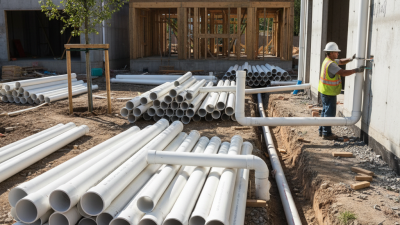
For safe residential supply, potable-water UPVC means unplasticized polyvinyl chloride pipe. It contains no added plasticizers, which helps maintain a rigid, smooth bore.

Grand View Research valued the global PVC pipes market at approximately USD 53.6 billion in 2023. Its report also forecasts steady growth through 2030, driven by water infrastructure and housing demand. Market growth alone proves little. Drinking-water approval matters more.

A reliable installation should use pressure-rated UPVC pipes certified for potable contact. Look for compliance with recognized standards, such as NSF/ANSI/CAN 61 or equivalent national requirements.

These standards evaluate materials that touch drinking water, including fittings and jointing compounds.

The WHO and UNICEF Joint Monitoring Programme reported that 2.2 billion people lacked safely managed drinking water in 2022. That figure makes contamination control practical, not theoretical.

On site, I would inspect pipe interiors for dust, oil, and rough scratches before assembly. Clean cuts create tighter solvent-welded joints. Flush the system thoroughly before occupancy.

UPVC resists corrosion, but it is not invulnerable. Excessive heat, poor support, or incompatible chemicals can shorten its service life. That caveat is easy to overlook.

Engineers should also verify local pressure ratings, temperature limits, and water chemistry instead of copying a standard specification. A quiet pipe is not automatically a safe pipe.

Drainage and Sewer UPVC Pipes for Efficient Wastewater Flow

What Are the Top UPVC Pipe Types for 2026?

For drainage and sewer systems, solid-wall UPVC pipes remain a practical choice for gravity wastewater lines. Their smooth internal surface helps sewage and suspended solids move with less resistance. This can reduce deposits when the pipe has the correct gradient. In field inspections, joint alignment often matters as much as pipe strength. A badly seated gasket may leak, even when the pipe itself looks undamaged.

Structured-wall UPVC pipes offer lower weight and can simplify handling on larger projects. Their ribbed or layered construction provides stiffness while using less material. They suit many buried drainage applications, but engineers must check the specified load class. Soil pressure, road traffic, trench depth, and groundwater can change performance. Lightweight does not mean weak. It means design details matter more.

Perforated UPVC pipes serve land-drainage work rather than sealed sewer conveyance. Small openings collect groundwater around foundations, gardens, and sports surfaces. A geotextile wrap and clean drainage stone can help limit soil entry. However, perforations are unsuitable where contaminated wastewater must remain contained. That distinction is easy to miss. Installers should also inspect pipe beds, socket cleanliness, and fall before backfilling. A small installation shortcut may create recurring blockages, and UPVC is not a cure-all for poor system design.

Top UPVC Pipe Types for 2026: Drainage and Sewer Pipe Flow Capacity

Estimated full-flow capacity of smooth UPVC gravity sewer pipes at a 1% gradient. Larger nominal diameters provide substantially greater wastewater conveyance capacity.

The estimates are calculated with the Manning equation using a typical UPVC roughness coefficient of n = 0.011. Actual system capacity depends on pipe slope, loading conditions, joints, bends, surcharge, and local drainage standards.

Electrical Conduit UPVC Pipes for Cable Protection

What Are the Top UPVC Pipe Types for 2026?

Electrical Conduit UPVC Pipes for Cable Protection

Electrical conduit UPVC pipes remain practical for residential, commercial, and infrastructure wiring. They resist moisture, corrosion, and many common chemicals. Their smooth interior also helps electricians pull insulated cables through bends. Fit matters. A poorly sized conduit can crush cables or create excessive pulling tension.

The International Energy Agency’s Electricity 2024 report forecasts global electricity demand growth of about 4% annually through 2026. More wiring means greater demand for dependable cable protection. For 2026 projects, rigid UPVC conduit suits exposed walls, service shafts, and concrete runs. Flexible conduit works better around tight corners and equipment connections. Installers should check wall thickness, impact resistance, temperature limits, and flame behavior before selection.

Standards remain essential. IEC 61386 covers conduit systems for electrical installations, including mechanical strength and resistance testing. Local electrical codes may require different classifications. Do not treat a larger diameter as automatic protection. Oversized conduit can allow movement, while undersized conduit damages cable jackets during installation. That assumption deserves review.

On site, a clean solvent-welded joint should remain aligned and fully supported. Sharp edges need removal before cable pulling. UV exposure also requires attention, especially on rooftops and exterior walls. UPVC performs well, but prolonged sunlight can reduce durability without suitable protection. The best choice depends on cable quantity, route geometry, impact risk, and installation environment.

Industrial and High-Pressure UPVC Pipes for Specialized Systems

What Are the Top UPVC Pipe Types for 2026?

Industrial and High-Pressure UPVC Pipes for Specialized Systems

Industrial UPVC pipes are becoming more specialized in 2026. Pressure-rated systems now support chemical dosing, water treatment, cooling loops, and process drainage. Their smooth internal walls reduce friction and help limit deposits. High-pressure UPVC pipes also resist many acids, alkalis, and salts. However, chemical compatibility must be checked for each fluid and temperature.

Select pipes by pressure class, wall thickness, operating temperature, and connection method. A pipe may handle high pressure at room temperature but perform poorly near its thermal limit. Solvent-welded joints need clean, dry surfaces and correct curing time. Flanged connections are useful around pumps and equipment that require maintenance. Surge pressure deserves attention too. Fast valve closure can damage an otherwise suitable system.

Tips: Confirm the pressure rating with a qualified engineer. Check chemical resistance charts before ordering. Use proper supports near valves, bends, and vertical runs. Leave space for thermal movement. Outdoor installations may need UV protection. Never treat a general drainage pipe as a pressure pipe.

Installation records improve reliability. Record batch details, pressure-test results, and curing conditions. Inspect joints before covering them. A small alignment error can create stress later. This is easy to overlook. UPVC is not ideal for every industrial service, especially high-temperature lines or compressed-gas applications. Reviewing the actual operating conditions may prevent an expensive redesign.

What Are the Top UPVC Pipe Types for 2026? – Industrial and High-Pressure UPVC Pipes for Specialized Systems

UPVC Pipe Type Typical Pressure Class or Rating Common Diameter Range Recommended Applications Key Performance Characteristics Common Standards and Design References Important Selection Considerations
Pressure Water-Supply UPVC Pipe PN6–PN16
Approximately 0.6–1.6 MPa at the reference temperature
20–630 mm Cold-water distribution, irrigation, municipal water lines, and industrial utility water systems High stiffness, smooth internal surface, low friction loss, corrosion resistance, and low water absorption ISO 1452, EN 1452, and equivalent national pressure-pipe standards Confirm the pressure class, operating temperature, joint system, potable-water approval, and external loading conditions
High-Pressure UPVC Pipe PN10–PN25
Available ratings depend on wall thickness, SDR, diameter, and standard
16–630 mm High-pressure process water, cooling-water loops, compressed-air-free fluid service, and demanding industrial transfer lines Strong pressure capability, good dimensional stability, and resistance to many aqueous chemicals ISO 1452, EN 1452, ASTM D1785, or ASTM D2241, depending on the product design Pressure ratings must be derated at elevated temperatures; avoid sudden pressure surges and incompatible fluids
Industrial Chemical-Process UPVC Pipe Typically PN6–PN16
Actual suitability is chemical- and temperature-dependent
25–400 mm Water-treatment plants, plating systems, chemical dosing, laboratory services, and nonflammable process-fluid handling Good resistance to many acids, alkalis, salts, and aqueous solutions; smooth bore reduces deposits EN 1452, ISO 1452, and chemical-resistance data for rigid PVC-U Check concentration, temperature, exposure time, permeation, joint-seal compatibility, and chemical-resistance charts before use
UPVC Drainage and Waste Pipe Non-pressure or low-pressure
Designed mainly for gravity flow
32–630 mm Industrial wastewater, building drainage, laboratory discharge, and non-pressure process drainage Lightweight, corrosion-resistant, easy to install, and suitable for smooth-flow drainage networks ISO 3633, EN 1329, EN 1401, or applicable national drainage standards Use the correct ring-seal or solvent-weld system; provide support, slope, access points, and thermal-expansion allowances
Underground Sewer UPVC Pipe Gravity sewer design
Structural class is commonly expressed by stiffness rather than pressure
110–1,000 mm Sanitary sewers, stormwater networks, buried industrial drains, and wastewater collection systems Low weight, good hydraulic efficiency, resistance to many soil and wastewater environments, and long service potential ISO 4435, EN 1401, and equivalent buried-drainage standards Evaluate ring stiffness, trench conditions, soil support, groundwater, traffic loading, and installation quality
UPVC Electrical Conduit Non-pressure
Mechanical performance is specified by conduit classification
16–200 mm Power-cable protection, instrumentation wiring, telecommunications, and industrial electrical installations Electrical insulation, resistance to moisture and corrosion, low maintenance, and ease of routing IEC 61386 series, EN 61386 series, and applicable electrical-installation codes Confirm impact, compression, flame, UV, temperature, burial, and fire-performance requirements for the installation
UPVC Well-Casing and Screen Pipe Non-pressure well construction
Strength depends on wall thickness, diameter, and installation depth
50–630 mm Water wells, monitoring wells, groundwater sampling, and borehole casing systems Corrosion resistance, low surface friction, chemical stability, and suitability for many groundwater environments ASTM F480 and applicable groundwater-well construction requirements Check collapse resistance, slot design, gravel-pack compatibility, depth, groundwater chemistry, and local regulations
UPVC Double-Containment Pipe Primary pipe rating varies
Secondary containment is generally not treated as a pressure line unless specifically engineered
25–300 mm primary pipe size Hazardous or corrosive chemical transfer, wastewater treatment, and facilities requiring leak detection or secondary containment Provides an additional containment layer and can support leak monitoring while retaining UPVC chemical resistance System-specific engineering design using relevant UPVC pressure and chemical-service standards Design the annular space, supports, inspection points, leak detection, ventilation, and emergency drainage as a complete system

Engineering note: Pressure values are typical reference ranges, not universal guarantees. Final selection should be based on the applicable standard, pipe SDR or wall thickness, fluid chemistry, operating temperature, surge conditions, installation method, and local code requirements.

top