Top PVC Pipe Manufacturers in the World?

Choosing among the top PVC pipe manufacturers in the world requires more than comparing factory size or annual revenue. Performance depends on resin quality, wall thickness, pressure ratings, certification, and installation support. A pipe that looks identical on a warehouse pallet may behave differently underground, especially after years of heat, soil movement, or chemical exposure.

Dr. Steve Folkman, a recognized PVC piping researcher, has emphasized, “PVC pipe is the most sustainable pipe material available today.” This perspective matters because sustainability includes service life, leakage control, energy use, and replacement frequency. Manufacturers deserve attention when they combine these advantages with documented testing, traceable materials, and consistent production.

This guide examines leading pvc pipe manufacturers through practical criteria. It considers product range, international standards, manufacturing capacity, technical expertise, and market reputation. It also looks at municipal water, drainage, irrigation, conduit, and industrial applications. Details matter.

Still, no global ranking is perfectly objective. Public data can be incomplete, regional certifications differ, and a strong brand in one market may have limited support elsewhere. Price can also mislead. A cheaper pipe may create higher costs through difficult joining, weak documentation, or premature replacement.

The best manufacturers are not simply the largest names. They are companies that communicate clearly, publish reliable specifications, and support engineers after delivery. Buyers should verify current certificates, pressure classes, dimensions, and local compliance before making a decision. This article offers a practical starting point, not a substitute for project-specific engineering review.
Top PVC Pipe Manufacturers in the World?

Global PVC Pipe Manufacturing: Scope, Standards, and Market Structure

Top PVC Pipe Manufacturers in the World?

Global PVC pipe manufacturing covers water distribution, drainage, irrigation, sewerage, and industrial fluid handling. Market boundaries differ across reports. Fortune Business Insights valued the global PVC pipes market at approximately USD 24.1 billion in 2023, while Grand View Research reported a different estimate and projected steady growth through 2030. These gaps reflect varied product definitions and regional coverage.

Manufacturers operate within strict dimensional and pressure requirements. ISO 1452 addresses unplasticized PVC systems for water supply and buried drainage. ASTM D1785 covers Schedule 40, 80, and 120 pressure pipe, while ASTM D2241 applies to SDR-based products. European projects commonly reference EN 1452. Testing usually includes hydrostatic pressure, impact resistance, wall-thickness checks, and socket integrity. A pipe can look flawless and still fail after years underground.

The industry is regionally structured. Large producers supply standardized resin compounds, while smaller converters serve municipal projects and agricultural distributors. Asia-Pacific remains a major production and consumption center, supported by urban expansion and irrigation demand. North American procurement often emphasizes ASTM compliance, traceability, and certified testing. European buyers generally focus on EN standards, lifecycle performance, and recycled-content policies. The OECD and PlasticsEurope have both noted increasing pressure to improve plastics circularity, although PVC recycling rates and reporting methods remain inconsistent. This is an uncomfortable weakness. Market rankings can also mislead when companies report revenue, capacity, or shipment volume differently. A practical comparison should examine certifications, pressure classes, independent test records, and installation performance—not production claims alone.

Leading PVC Pipe Manufacturers by Region and Production Capability

Top PVC Pipe Manufacturers in the World?

Regional scale strongly shapes PVC pipe manufacturing. Grand View Research estimated that Asia-Pacific held more than 45% of global PVC pipe revenue in 2023. China and India provide large extrusion capacity, broad supplier networks, and major infrastructure demand. Their factories commonly run multiple high-speed lines, producing pressure pipes, drainage systems, and irrigation products.

Production capability is not only about volume. European manufacturers often compete through certification, low-waste processing, and strict dimensional control. PlasticsEurope reports that PVC remains one of Europe’s major polymer families, supported by established recycling systems and construction demand.

North American producers focus on municipal water, sewer, and building applications. The region benefits from standardized specifications and large replacement projects.

Capability differs inside every region. A huge plant may still face resin shortages, energy costs, or quality variation. That detail is easy to miss. The World Bank’s infrastructure research also shows that water investment needs remain substantial across developing economies, supporting long-term pipe demand.

However, market reports do not always measure capacity in the same way. Some count installed extrusion lines, while others count annual sales. Buyers should compare verified output, pressure-test records, wall-thickness consistency, and delivery performance. A polished factory tour proves little. Audited data matters more.

Product Types, Technologies, and Applications Across Major Manufacturers

Top PVC Pipe Manufacturers in the World?

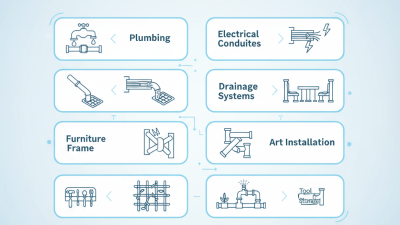
Leading PVC pipe manufacturers produce more than standard water lines. Their product ranges often include pressure pipes, drainage systems, electrical conduits, irrigation tubes, and foam-core pipes. Chlorinated PVC options serve hotter water applications, while flexible PVC supports low-pressure connections. Each type requires a different compound design and wall structure.

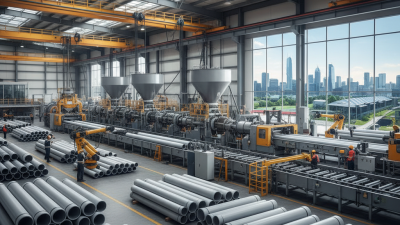
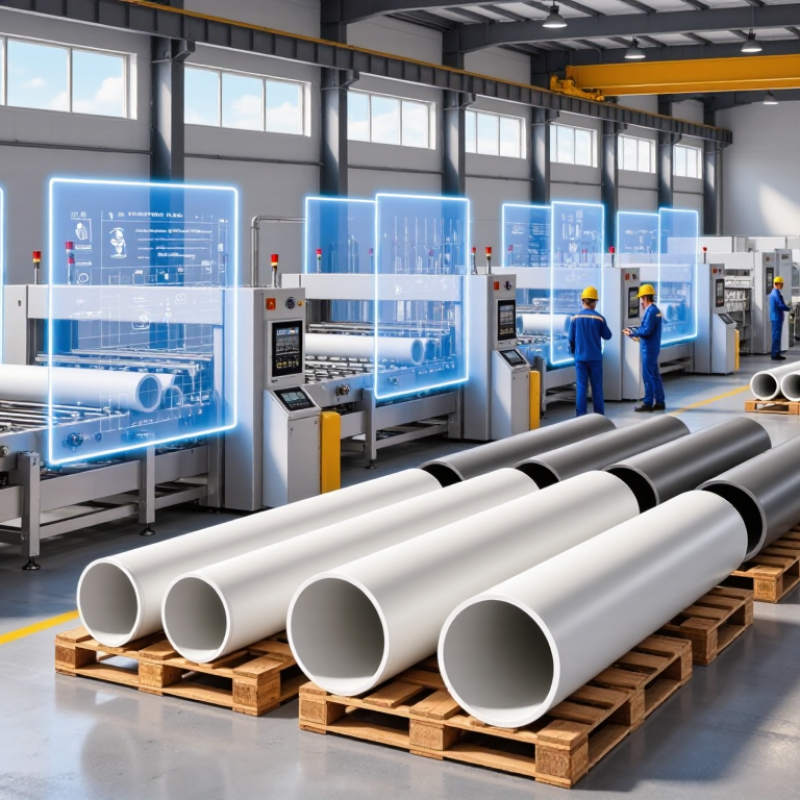
Modern factories use high-speed extrusion, computer-controlled sizing, and vacuum calibration. Some manufacturers add multilayer construction for better impact resistance. Others use molecular orientation to improve strength while reducing material use. Quality teams test dimensions, pressure performance, impact resistance, and long-term heat exposure. Certifications based on recognized industry standards also support buyer confidence. Still, a certificate does not replace proper installation.

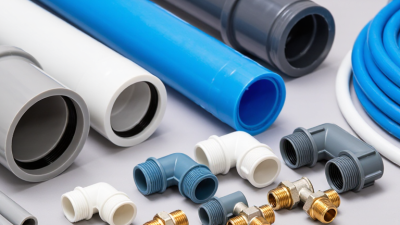
Applications vary by project conditions. Blue pressure pipes may carry treated water underground, while gray conduit protects cables inside walls. Large-diameter drainage pipes often use ribbed profiles to reduce weight and improve stiffness. In agricultural fields, narrow irrigation lines must tolerate sunlight, fertilizer contact, and seasonal movement. Factory inspections often reveal practical differences, such as cleaner joints, steadier wall thickness, and fewer surface marks. A glossy finish can mislead. Performance matters more than appearance. Some material-saving designs look efficient but may perform poorly under repeated loading. Buyers should compare test data, installation guidance, warranty terms, and local climate requirements before selecting a supplier.

Quality, Sustainability, and Certification Criteria for Comparing Producers

Comparing the top PVC pipe manufacturers requires more than checking product prices or production capacity. Quality begins with consistent dimensions, smooth internal walls, reliable socket fit, and stable performance under pressure. During site inspections, small defects matter. Uneven pipe ends can slow installation and increase leakage risks. Buyers should review pressure ratings, impact resistance, thermal behavior, and batch traceability before approving a supplier.

Certification provides useful evidence, but it needs careful verification. Check whether ISO 9001 covers the actual manufacturing site and product line. Environmental systems should be supported by current ISO 14001 certification, measurable energy data, and documented waste controls. Product approvals must come from recognized, independent bodies. Review testing methods, certificate dates, laboratory accreditation, and the exact pipe applications covered. A certificate with the wrong scope is not reliable proof.

Sustainability should be measured across the pipe’s life cycle. Compare recycled content, production emissions, water use, packaging, service life, and end-of-life recovery options. Environmental Product Declarations can improve transparency, although their boundaries may differ between producers. That makes direct comparisons imperfect. A polished sustainability report can still omit difficult data. Ask for recent audit records, corrective-action reports, and sample test results. Independent factory visits remain valuable, especially when documentation looks unusually perfect. Reliability grows when claims match physical evidence.

Top PVC Pipe Manufacturers in the World? - Quality, Sustainability, and Certification Criteria for Comparing Producers
Evaluation Dimension Relevant Product or Management Standard Objective Benchmark or Requirement Evidence to Request from a Producer Importance When Comparing Producers
Product scope ISO 1452 series; EN 1452 series PVC-U pipes and fittings for water supply, buried and above-ground applications Product standard, application range, nominal diameter, pressure class, wall-thickness tables, and conformity documents Confirms that the producer is being assessed against the correct technical standard for the intended application.
Pressure-pipe performance ISO 1452-2; EN ISO 1452-2; ASTM D1785 where applicable Declared pressure rating, dimensional compliance, hydrostatic strength, and resistance to internal pressure Independent test reports, batch test records, pressure-class declarations, and applicable third-party certification Helps verify long-term reliability in potable-water, irrigation, and pressurized industrial systems.
Non-pressure drainage performance EN 1401-1; ISO 4435 PVC-U systems for underground non-pressure drainage and sewerage applications Ring-stiffness class, impact-resistance data, dimensional reports, joint-sealing tests, and product certificates Shows whether the pipe is suitable for buried drainage conditions rather than only general-purpose use.
Soil and waste systems EN 1329-1; ISO 3633 PVC-U piping for non-pressure soil and waste discharge inside buildings Fire classification where required, temperature-resistance data, acoustic or system test results, and conformity documentation Separates building-drainage products from underground sewer products with different operating requirements.
Dimensional consistency Applicable ISO, EN, ASTM, or national product standard Consistent outside diameter, wall thickness, ovality, socket dimensions, and tolerances Calibration records, laboratory inspection plans, in-process measurement data, and certificates of analysis Accurate dimensions improve joint integrity, installation efficiency, and interchangeability with approved fittings.
Material formulation Applicable product standard; local drinking-water rules where relevant Controlled PVC resin, stabilizer, pigment, impact modifier, and additive formulation appropriate to the application Raw-material specifications, formulation controls, supplier approvals, migration or extraction test results, and change-control records Reduces variation in mechanical performance, color, weatherability, and regulatory compliance.
Quality management ISO 9001:2015 A documented quality-management system covering design, purchasing, production, testing, complaints, and corrective action Valid certificate from an accredited certification body, audit scope, certificate validity, and corrective-action process Provides evidence that quality control is systematic rather than limited to final-product inspection.
Laboratory competence ISO/IEC 17025:2017 Testing laboratory competence for the specific methods and products being evaluated Accreditation scope, method list, equipment calibration records, proficiency-testing results, and signed test reports Increases confidence that reported performance results are technically valid and repeatable.
Potable-water suitability Applicable national regulations; NSF/ANSI/CAN 61 or equivalent where required Demonstrated compliance for materials and components that contact drinking water Current product-specific certification, formulation disclosure to the certifier, extraction or migration test results, and approval scope Ensures that a pipe intended for drinking water has been evaluated for health-related requirements.
Environmental management ISO 14001:2015 A certified environmental-management system covering significant manufacturing impacts and legal obligations Certificate scope, environmental objectives, compliance evaluations, waste records, and audit findings Indicates that environmental impacts are managed through a formal, auditable system.
Energy management ISO 50001:2018 A structured system for monitoring and improving energy performance Valid certificate, energy baseline, significant-energy-use analysis, improvement targets, and performance indicators Supports comparison of manufacturing efficiency without relying only on unverified sustainability claims.
Recycled-content claims ISO 14021; ISO 14025 and EN 15804 for relevant environmental declarations Recycled content and environmental claims supported by defined calculation methods and traceable evidence Percentage by mass, pre-consumer or post-consumer classification, chain-of-custody records, and third-party verification where available Distinguishes measurable recycled-content performance from broad or unsupported “green” marketing language.
Life-cycle transparency ISO 14025; EN 15804; ISO 14040 and ISO 14044 Product-specific environmental data based on a documented life-cycle assessment or Environmental Product Declaration Current EPD, declared modules, functional unit, system boundary, PCR reference, verifier, and publication date Enables more consistent comparisons of manufacturing, transport, use, and end-of-life impacts.
Circularity and recyclability Applicable local recycling rules and product-design requirements Documented take-back, scrap-recovery, reprocessing, or recycling pathway compatible with the product formulation Recycling rate, internal scrap data, take-back arrangements, recycler qualifications, and end-of-life guidance Shows whether sustainability extends beyond production to the practical end-of-life management of PVC products.
Weatherability Applicable outdoor-use product standard; ISO 4892 series for accelerated weathering where specified Declared resistance to ultraviolet exposure, temperature cycling, and outdoor aging for products designed for external use UV-stabilization specification, accelerated-weathering results, color-retention criteria, and installation limitations Important for exposed pipework, above-ground systems, and products used in high-solar-radiation regions.
Traceability Product-standard and quality-system requirements Ability to link finished pipe to production date, line, raw-material batch, inspection results, and shipment records Marking photographs, lot-number structure, digital traceability records, retention period, and recall procedure Allows faster investigation and more reliable containment if a nonconformity is discovered.
Certification validity Accredited certification and inspection schemes Current and product-specific Certificate number, issuing body, accreditation status, scope, expiry date, manufacturing site, and covered diameter or pressure range Prevents expired, generic, site-mismatched, or out-of-scope certificates from being treated as proof of compliance.
Supply reliability Commercial performance metric rather than a single universal standard Documented production capacity, lead-time performance, minimum order quantity, geographic coverage, and contingency planning On-time-delivery data, capacity statement, inventory policy, logistics partners, business-continuity plan, and customer references Helps evaluate whether technical quality can be maintained consistently across large or international projects.
Note: Certification, test methods, pressure classes, and regulatory approvals must always be checked against the destination country, intended application, pipe material, diameter range, and current certificate scope.

How to Evaluate the Best PVC Pipe Manufacturer for Different Projects

How to Evaluate the Best PVC Pipe Manufacturer for Different Projects

When evaluating PVC pipe manufacturers, start with the project’s actual conditions.
A cold-water system needs different performance than buried drainage.
Record the required diameter, pressure rating, temperature range, and installation method.
Then compare products against recognized technical standards, not marketing claims.
Ask for current test reports covering pressure resistance, dimensions, impact strength, and chemical compatibility.
A dependable manufacturer should explain testing methods and provide traceable production records.
Batch numbers matter when problems appear years later.
They also reveal whether quality control is consistent.

Material selection deserves practical attention.
For example, pipes exposed to sunlight may need suitable protection against ultraviolet degradation.
Buried pipes require verified stiffness and clear installation guidance.
Review joint design, gasket quality, tolerances, and compatibility with fittings.
Request samples before approving a large order.
Measure them yourself.
A smooth surface is useful, but it does not prove long-term performance.
I have seen attractive samples hide weak documentation and unclear warranty terms.
That experience changed my evaluation process.

Manufacturing capacity should match the project schedule without sacrificing inspection standards.
Ask how raw materials are checked before production and how defects are isolated.
Evaluate technical support, replacement procedures, and delivery reliability.
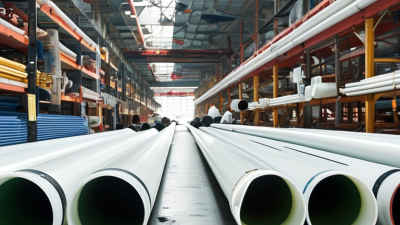
A factory visit can reveal storage problems, confusing labeling, or poor handling practices.
Do not choose only by price.
An inexpensive pipe may increase labor costs through difficult joining or frequent damage.
The strongest choice balances verified performance, transparent records, field support, and realistic project requirements.

How to Evaluate the Best PVC Pipe Manufacturer for Different Projects

Typical procurement priorities by project type. The percentages represent the relative importance of each evaluation criterion when selecting a PVC pipe manufacturer; they are not company or brand performance scores.

Higher weight indicates greater importance during project evaluation. Standards compliance and pressure performance are especially important for potable-water and industrial applications, while cost and delivery capacity usually carry more weight in large infrastructure projects.

top