China Top Polyethylene Pipe Suppliers for Global Buyers?

For global buyers, selecting a dependable polyethylene pipe supplier requires more than comparing prices online. Product quality, manufacturing consistency, export experience, and technical support all influence long-term project performance. A supplier may offer attractive quotations, yet still lack stable material control or reliable delivery records. That assumption is risky.

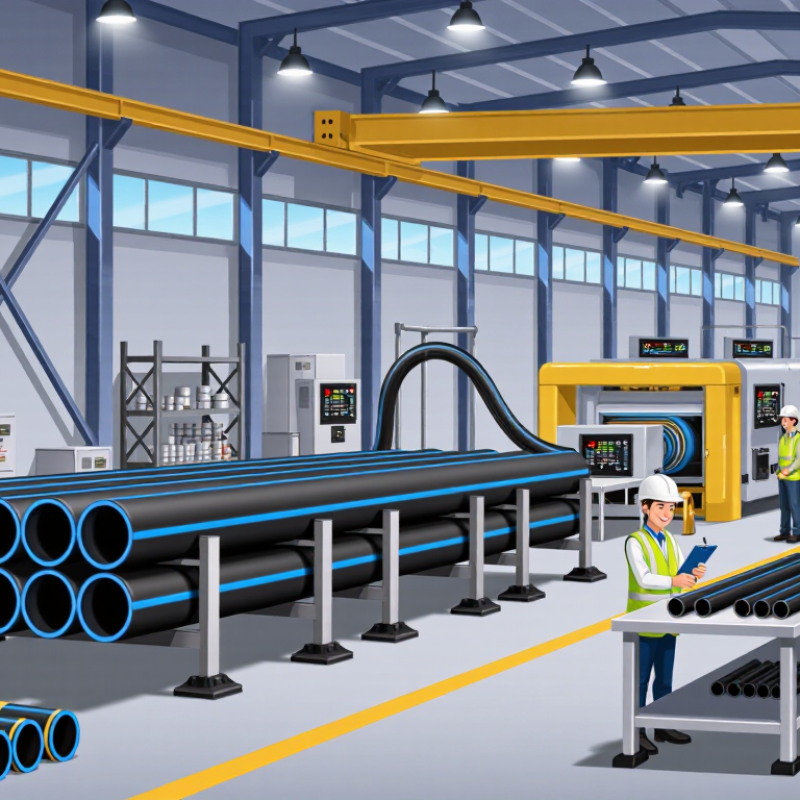
This guide examines leading Chinese polyethylene pipe suppliers and the capabilities that distinguish them. It considers production scale, raw material management, pressure ratings, dimensional accuracy, and available testing procedures. Factory certifications can provide useful evidence, but they should not replace direct verification. Buyers should review inspection reports, sample performance, welding guidance, and batch traceability before placing large orders. Small details matter. A clean production floor, clear labeling, and careful packaging often reveal operational discipline.

The discussion also considers applications such as water distribution, drainage, irrigation, mining, and industrial fluid transfer. Each project demands different specifications, including diameter, wall thickness, PE grade, connection method, and operating temperature. Experienced suppliers should explain these choices clearly instead of offering a generic catalog. However, no shortlist is perfect. Supplier information can change, and published claims may require independent confirmation. Practical due diligence remains essential, especially when shipping across borders and coordinating local standards. With a balanced evaluation, global buyers can identify a Chinese partner that supports dependable polyethylene pipe procurement, transparent communication, and safer project planning.

China Top Polyethylene Pipe Suppliers for Global Buyers?

Polyethylene Pipe Grades: PE80 at 8 MPa and PE100 at 10 MPa MRS

China Top Polyethylene Pipe Suppliers for Global Buyers

PE80 and PE100 are performance classes, not simple product labels. Under ISO 9080 and ISO 12162, PE80 has an MRS of 8 MPa, while PE100 reaches 10 MPa. MRS means Minimum Required Strength after a 50-year design reference at 20°C. The value is statistically derived, then rounded down. It is not the pipe’s direct working pressure.

This distinction matters. ISO 4427 and the Plastics Pipe Institute’s PE Handbook indicate that pressure capacity also depends on SDR, temperature, wall thickness, and design coefficients. A PE100 pipe can use a thinner wall than PE80 for the same nominal pressure, reducing material consumption. However, thinner is not automatically better. Installation loads, ground movement, fusion quality, and surge conditions still require engineering review.

Ask Chinese suppliers for batch-level MRS evidence, hydrostatic test results, resin traceability, and dimensional inspection records. Confirm compliance with the project’s target standard, not only a factory certificate. A catalogue may show “10 MPa” beside PE100, yet that figure does not replace an SDR calculation. This is an easy mistake. Careful buyers should also review test temperatures and sampling frequency, because laboratory data can look strong while field conditions remain harsher. Supplier comparison is incomplete without checking fusion instructions, pressure-testing procedures, and technical support for the destination climate.

Polyethylene Pipe Grades: PE80 vs PE100 MRS

The chart compares the Minimum Required Strength (MRS) values used to classify polyethylene pipe materials. PE80 has an MRS of 8 MPa, while PE100 has an MRS of 10 MPa. These values represent the long-term hydrostatic strength at 20°C for a 50-year service period according to international polyethylene classification practices.

Key Standards: ISO 4427, EN 12201, ASTM D3035, and ASTM F714

China Top Polyethylene Pipe Suppliers for Global Buyers

When evaluating polyethylene pipe suppliers, global buyers should begin with the governing standard, not the lowest quotation. ISO 4427 and EN 12201 address polyethylene systems for water supply and pressure applications. They cover dimensions, performance, and testing requirements. ASTM D3035 and ASTM F714 use North American sizing and pressure classifications. ASTM F714 is commonly applied to larger outside-diameter pipes.

The details matter.

A reliable supplier should provide material-grade records, production dates, dimensional reports, and pressure-test results. Buyers should compare the specified outside diameter, wall thickness, SDR, pressure rating, and temperature conditions. A pipe may appear identical in a warehouse photograph but perform differently under field pressure. Check whether fittings, joints, and testing procedures follow the same standard. Mixing systems without engineering review creates avoidable risk.

Factory audits can reveal practical issues that certificates miss. Inspect extrusion lines, calibration tanks, storage areas, and sample identification. Ask for independent laboratory reports when a project is critical. Traceability should reach the resin batch and production shift. It is not perfect, though. Documents may contain translation errors or outdated test references. I would verify every report against the current project specification and the destination country’s requirements. Small inconsistencies deserve attention before containers leave the port.

China Top Polyethylene Pipe Suppliers for Global Buyers? - Key Standards: ISO 4427, EN 12201, ASTM D3035, and ASTM F714

Evaluation Dimension ISO 4427 EN 12201 ASTM D3035 ASTM F714 Buyer Verification Point
Primary application Polyethylene piping for water supply and pressure sewerage Polyethylene piping for water supply, pressure sewerage, and related applications PE plastic pipe for water service and other pressure applications Large-diameter PE pressure pipe for water and other pressure applications Match the standard to the project specification, fluid, operating pressure, and installation method
Standard structure ISO 4427-1 to ISO 4427-5 cover general aspects, pipes, fittings, valves, and fitness for purpose EN 12201-1 to EN 12201-5 cover general aspects, pipes, fittings, valves, and fitness for purpose Single product standard covering PE pipe dimensions, pressure ratings, and quality requirements Single product standard covering PE pipe dimensions, pressure ratings, and quality requirements Request the exact edition and all referenced parts stated in the purchase contract
Material designation PE 40, PE 63, PE 80, or PE 100 classifications may be used, depending on the applicable product requirements PE 40, PE 63, PE 80, or PE 100 classifications may be used, depending on the applicable product requirements PE compounds are selected and rated according to ASTM material and pressure-design requirements PE compounds are selected and rated according to ASTM material and pressure-design requirements Verify compound grade, designation, lot traceability, and applicable resin qualification documents
Dimensioning approach Metric outside-diameter series with standard dimension ratio, commonly expressed as SDR Metric outside-diameter series with standard dimension ratio, commonly expressed as SDR Controlled outside-diameter pipe with dimension ratio and pressure-rating designations Outside-diameter controlled pipe using IPS dimensions and dimension-ratio designations Confirm OD system, SDR or DR value, wall thickness, tolerances, and fitting compatibility
Common pressure classes PN 4, PN 6, PN 8, PN 10, PN 12.5, PN 16, and PN 20 are commonly encountered, subject to material and SDR PN 4, PN 6, PN 8, PN 10, PN 12.5, PN 16, and PN 20 are commonly encountered, subject to material and SDR Pressure ratings are generally stated in psi and depend on DR, material, and design basis Pressure ratings are generally stated in psi and depend on DR, material, and design basis Do not convert PN and psi without checking temperature, material, design coefficient, and project requirements
Typical size system Metric nominal outside diameters; exact size range depends on the applicable product specification Metric nominal outside diameters; exact size range depends on the applicable product specification IPS-based sizes, commonly ranging from small service sizes up to approximately 24 in under the standard scope IPS-based large-diameter sizes, commonly from approximately 4 in to 63 in under the standard scope Require a dimensional drawing showing nominal size, actual OD, minimum wall, and length tolerance
Temperature reference Pressure ratings are normally based on a reference water temperature of 20 °C, with derating required at higher temperatures Pressure ratings are normally based on a reference water temperature of 20 °C, with derating required at higher temperatures Pressure design is generally based on a reference temperature of 73 °F, with temperature adjustment required when applicable Pressure design is generally based on a reference temperature of 73 °F, with temperature adjustment required when applicable Obtain the manufacturer’s pressure-temperature derating chart for the selected compound
Jointing compatibility Butt fusion, electrofusion, mechanical connections, and compatible fittings may be used according to the application Butt fusion, electrofusion, mechanical connections, and compatible fittings may be used according to the application Fusion and mechanical joining methods must be compatible with the selected pipe and fittings Fusion and mechanical joining methods must be compatible with large-diameter pipe and fittings Check fusion procedure qualification, operator certification, fitting standard, and field-joining instructions
Key quality evidence Dimensional inspection, hydrostatic strength, elongation, oxidation induction time, and compound conformity records may be required Dimensional inspection, hydrostatic strength, elongation, oxidation induction time, and compound conformity records may be required Dimensional checks, sustained pressure testing, burst or pressure verification, and material quality records may be required Dimensional checks, sustained pressure testing, burst or pressure verification, and material quality records may be required Request batch-specific test reports rather than only generic certificates
Marking information Typical markings identify manufacturer, standard, material, nominal size, SDR or pressure class, and production traceability Typical markings identify manufacturer, standard, material, nominal size, SDR or pressure class, and production traceability Typical markings identify manufacturer, standard, nominal size, DR or pressure rating, material designation, and production information Typical markings identify manufacturer, standard, nominal size, DR or pressure rating, material designation, and production information Approve a marking layout before production and verify permanent, legible, repeated markings on delivery
Recommended supplier documentation Declaration of conformity, product datasheet, material certificate, inspection plan, test reports, and traceability records Declaration of conformity, product datasheet, material certificate, inspection plan, test reports, and traceability records Certificate of compliance, product datasheet, resin documentation, inspection plan, test reports, and traceability records Certificate of compliance, product datasheet, resin documentation, inspection plan, test reports, and traceability records Make document submission and approval a contractual milestone before shipment
Best fit for global buyers Projects using ISO-based metric specifications and international water infrastructure requirements European and CE-oriented projects using metric dimensions and EN-based technical specifications North American projects requiring IPS dimensions and ASTM pressure-pipe specifications North American large-diameter projects requiring IPS dimensions and ASTM requirements Select suppliers with proven production capability in the required standard, size range, and inspection regime
Commercial qualification indicator Ability to provide consistent metric SDR production, batch traceability, and ISO-compliant test documentation Ability to provide EN-compliant dimensions, conformity documentation, and fittings matched to the pipe system Ability to provide accurate IPS dimensions, ASTM compliance records, and pressure-rating calculations Ability to manufacture, inspect, package, and transport large-diameter pipe without deformation or damage Evaluate technical compliance before comparing price, lead time, payment terms, and logistics

Note: Actual dimensions, pressure ratings, material grades, test frequencies, and allowable applications must be confirmed against the current edition of the applicable standard and the project specification.

Manufacturing Quality: 2.25% Carbon Black, MFR Testing, and Wall Control

China Top Polyethylene Pipe Suppliers for Global Buyers?

For global buyers, manufacturing quality begins with controlled material, not polished sales claims. A carbon black level near 2.25% can improve protection against ultraviolet exposure. However, the percentage alone proves little. Suppliers should verify carbon black dispersion, batch consistency, and resin traceability. Request test records linked to production dates and pipe batches.

Melt Flow Rate testing helps confirm processing consistency. The test temperature and load must match the applicable standard. Results can reveal resin variation, contamination, or poor blending. Wall control also deserves close attention. Modern gauges can monitor thickness around the pipe, while operators record minimum and maximum readings. A small variation may affect pressure performance, joining, and field installation. Experienced inspectors should review calibration certificates, sampling plans, and corrective-action reports. A clean document pack is useful, but it is not proof by itself. Mistakes still happen.

Tips: Ask for recent laboratory results, not only sample reports. Compare carbon black content with dispersion images. Check MFR results against the stated standard and test conditions. Request wall-thickness data from several points around the circumference. An independent inspection can expose gaps that factory paperwork misses. Do not choose a supplier on price alone. My practical concern is simple: some factories measure frequently, yet record only favorable results. Buyers should ask how failed readings are handled. That answer often reveals real manufacturing discipline.

Sizing and Pressure: SDR11 PE100 Pipes Rated Up to PN16 at 20°C

China Top Polyethylene Pipe Suppliers for Global Buyers?

SDR11 PE100 pipe combines a 110-millimetre standard dimension ratio with a 10 MPa minimum required strength. Under ISO 4427, this class can reach PN16 at 20°C when correctly designed and tested. The pressure rating is not a universal promise. It depends on temperature, service life, safety factors, and joint quality. The Plastics Pipe Institute’s PPI TR-4 technical listing supports the importance of verified material classifications and documented pressure design.

For buyers, wall thickness matters immediately. A 110 mm outside-diameter SDR11 pipe has approximately 10 mm of wall thickness. A 315 mm pipe has roughly 28.6 mm. These dimensions affect weight, handling, trench width, and fusion time. At 20°C, PN16 is achievable; warmer water requires derating. ISO 4427 design tables should guide that adjustment, not a sales sheet alone. Check batch certificates, hydrostatic test results, and dimensional inspection records. Small gaps can become expensive failures.

Field experience suggests one overlooked detail: pressure spikes can exceed normal operating pressure. Pumps, valves, and elevation changes deserve separate review. The Global Water Intelligence Utility Performance Report has repeatedly identified leakage as a major infrastructure cost, although pipe material alone cannot prevent it. PE100 is flexible and corrosion-resistant, but poor fusion practice still causes trouble. Ask for traceability. Ask again. A credible supplier should provide clear calculations, testing evidence, and installation guidance.

Supplier Due Diligence: 50-Year Design Life, Certifications, and Export Data

China Top Polyethylene Pipe Suppliers for Global Buyers?

Supplier Due Diligence: 50-Year Design Life, Certifications, and Export Data

A claimed 50-year design life is not an automatic guarantee. It depends on resin quality, pressure rating, temperature, installation, and operating conditions. Ask suppliers for long-term hydrostatic strength data, product test reports, and written design assumptions. Check whether the pipe grade matches the intended water, gas, mining, or industrial application. Small details matter. Wall thickness records should match the drawings and delivered samples.

Certifications require careful verification, not simple logo checking. Request current certificates, issuing-body details, scope, expiry dates, and applicable standards such as ISO 4427, EN 12201, or ASTM requirements. Confirm that the certificate covers the actual factory and pipe series. Independent laboratory reports are stronger when sample numbers, test dates, and methods are visible. A certificate may be genuine but irrelevant. That mistake is surprisingly common.

Export data can reveal practical reliability. Review shipment history, destination markets, product descriptions, quantities, and recurring customers where legally available. Compare those records with production capacity and claimed annual output. Ask for redacted bills of lading, inspection records, and references from similar projects. Be cautious when data is incomplete. Missing export evidence does not prove poor performance, but it deserves a clear explanation. One imperfect document should not decide the purchase; repeated inconsistencies should. Insist on pre-shipment inspection, traceable batch markings, and agreed remedies before payment. That is where confidence becomes measurable.

top