Choosing the right black pvc pipe is more than a color decision. It affects flow, durability, installation time, and long-term maintenance. In practical projects, the pipe may sit under a driveway, behind a wall, or beside hot mechanical equipment. Each location creates different demands.
Global water infrastructure needs remain substantial. The WHO and UNICEF Joint Monitoring Programme reported that 2.2 billion people lacked safely managed drinking water in 2022. This pressure supports continued investment in reliable distribution and drainage systems. Grand View Research also identifies construction, water supply, and wastewater projects as major drivers of the PVC pipes market. These reports show the wider demand, but they do not select a pipe for your site.
The project details must do that work. Check the pipe’s pressure rating, outside diameter, wall thickness, temperature range, and chemical compatibility. Confirm whether it meets applicable standards, such as ASTM requirements or NSF certification for approved potable-water uses. Black PVC may provide useful light protection and strong visibility underground, yet color alone does not prove suitability. That assumption can fail.
Installation experience matters, too. A pipe exposed to direct sunlight may need additional UV protection. A buried line needs proper bedding, joint preparation, and attention to soil movement. For electrical applications, use listed PVC conduit rather than ordinary plumbing pipe. Always follow the manufacturer’s technical sheet and local code requirements. Small details matter. This guide compares these factors so you can choose with evidence, not guesswork.
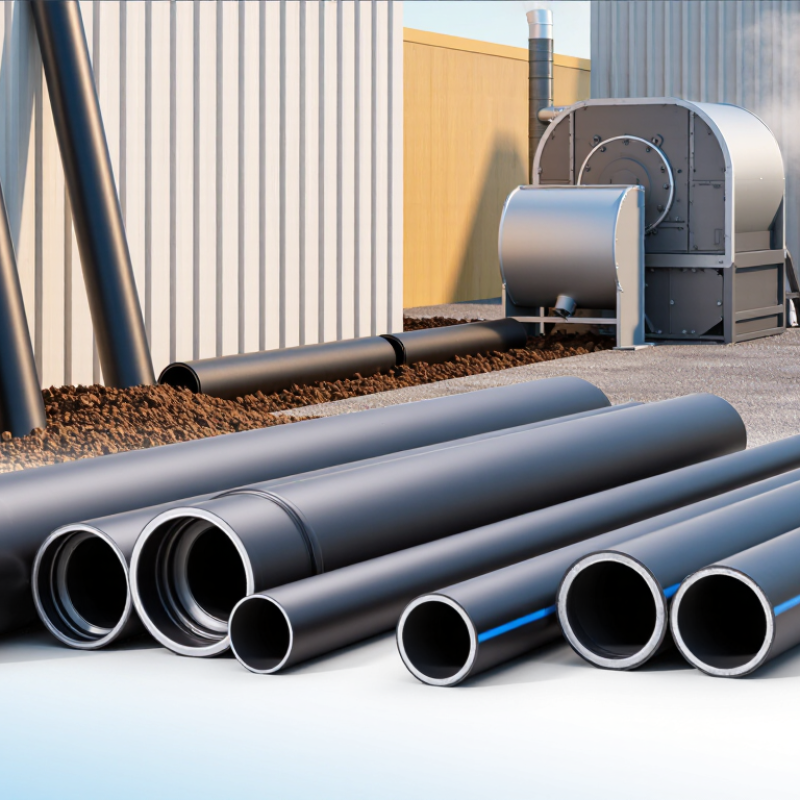
How to Choose the Right Black PVC Pipe for Your Project?
Define Your Project’s Piping Needs and Operating Conditions
Before choosing black PVC pipe, define what the system must carry and where it will operate. Water, wastewater, compressed air, and chemicals require different performance levels. Confirm the required flow rate, pipe diameter, pressure, and connection method. A pipe that fits physically may still fail under continuous pressure.
Check the operating temperature carefully. PVC performance can change as temperatures rise, especially near pumps, boilers, or outdoor equipment. Review chemical compatibility instead of relying on appearance alone. Acids, solvents, oils, and cleaning agents may affect the pipe or its seals. Ask for documented pressure ratings and applicable testing standards.
Location matters too. Buried pipe needs suitable wall thickness, stable bedding, and protection from sharp stones. Outdoor pipe faces sunlight, temperature swings, and accidental impact. Black coloring may improve light resistance, but it does not remove the need for proper installation. Measure twice.
In practical inspections, small details often reveal larger problems. Look for scratches, oval ends, damaged threads, and poor storage conditions. Keep pipe supported and capped before installation. Use compatible fittings and follow the solvent-cement manufacturer’s curing guidance. Do not rush pressure testing. I once underestimated installation temperature, and the joint cured unevenly. That mistake changed my checklist. A short trial assembly can expose alignment issues before the full system is installed.
| Project Requirement | Key Data to Define | Typical Selection Guidance | Why It Matters |
|---|---|---|---|
| Application Type | Drainage, irrigation, water transfer, conduit, process piping, or low-pressure service | Use pressure-rated PVC pipe for pressurized liquid service. Use DWV-rated pipe only for drainage, waste, and vent systems where permitted by local code. Use electrical conduit products only for cable protection. | Pipe classifications are not interchangeable. A drainage pipe may not be suitable for pressurized service, while conduit is not intended to carry fluids. |
| Fluid or Material Conveyed | Water, wastewater, dilute chemicals, air, gas, slurry, or other media | PVC is commonly used for cold water and many dilute chemical services. Confirm chemical compatibility before using the pipe with solvents, fuels, oils, concentrated acids, or unusual process fluids. | Chemical compatibility depends on the fluid concentration, temperature, exposure time, and pipe compound. |
| Operating Temperature | Normal temperature, minimum temperature, maximum temperature, and temperature cycling | Standard PVC pressure pipe is generally limited to approximately 140°F (60°C), with pressure capacity reduced as temperature increases. For temperatures above this range, evaluate a different material. | Higher temperatures reduce PVC strength and allowable working pressure. Freezing conditions can also damage water-filled piping. |
| Working Pressure | Normal pressure, maximum pressure, surge pressure, and vacuum conditions | Compare the required pressure with the manufacturer’s published pressure rating for the exact nominal size, wall thickness, and temperature. Consider water hammer and pump-start surges. | Pressure ratings vary by pipe size, schedule, temperature, joining method, and applicable standard. Do not select pipe based on diameter alone. |
| Pipe Schedule | Schedule 40, Schedule 80, or another approved wall thickness | Schedule 40 provides a larger internal diameter and lower weight. Schedule 80 has a thicker wall and generally higher pressure capability, but a smaller internal diameter for the same nominal size. | Wall thickness affects pressure capacity, flow area, weight, cost, and fitting compatibility. |
| Nominal Pipe Size | Required flow rate, allowable velocity, available space, and connection size | Size the pipe using the required flow rate, friction loss, velocity, and system layout. Match the nominal pipe size to compatible fittings, valves, pumps, and equipment connections. | A pipe that is too small can create excessive friction loss and noise; an oversized pipe may increase cost and reduce flow velocity. |
| Flow Requirements | Design flow rate, pressure drop, elevation change, and pump performance | Calculate friction loss using the selected inside diameter and pipe length. Include elbows, tees, valves, filters, meters, and other fittings in the system calculation. | Total system resistance is determined by both straight-pipe friction and fitting losses. |
| Connection Method | Solvent cement joint, threaded connection, flanged connection, gasketed joint, or mechanical coupling | Use a solvent-cement system approved for the pipe material and service. Avoid excessive tightening of threaded PVC connections; use adapters or flanges where repeated disassembly is required. | Improper joining can cause leaks, cracking, joint failure, or reduced service life even when the pipe itself is correctly selected. |
| Chemical Compatibility | Fluid concentration, temperature, exposure duration, and cleaning chemicals | Check a current chemical-resistance chart and obtain technical confirmation for critical applications. Pay special attention to aromatic solvents, ketones, chlorinated solvents, and petroleum-based products. | Some chemicals can soften, swell, embrittle, or rapidly weaken PVC without visible damage at the time of installation. |
| Outdoor Exposure | Sunlight, weather, impact, soil conditions, and installation location | Black PVC may provide better light protection than light-colored PVC, but outdoor suitability still depends on the product formulation and applicable specifications. Protect exposed piping from impact and excessive heat. | Ultraviolet exposure, physical impact, and temperature changes can affect long-term performance. |
| Buried Installation | Trench depth, soil type, traffic loading, bedding, drainage, and groundwater | Follow the applicable installation standard for trench preparation, granular bedding, side support, backfilling, and minimum cover. Prevent sharp rocks from contacting the pipe wall. | Flexible thermoplastic pipe relies on proper soil support. Poor bedding or backfill can cause deformation or joint movement. |
| Indoor Installation | Fire requirements, building code, support spacing, noise, and access for maintenance | Verify local plumbing, mechanical, fire, and electrical requirements. Install adequate supports and allow access to valves, cleanouts, unions, and inspection points. | Code approval and support requirements vary by jurisdiction and building type. |
| Mechanical Loads | Impact, vibration, bending, thermal expansion, unsupported spans, and external loads | Use proper hangers, guides, anchors, expansion provisions, and protective sleeves. Do not force the pipe into alignment or use it to support equipment. | PVC is lightweight and corrosion-resistant but can be damaged by impact, concentrated loads, or excessive bending. |
| Regulatory Requirements | Applicable ASTM, ISO, plumbing, water, drainage, electrical, or pressure-piping requirements | Specify pipe and fittings that comply with the standards required for the intended service and location. Confirm whether potable-water, wastewater, chemical, or electrical approvals are needed. | Meeting the correct standard verifies dimensions, pressure performance, materials, testing, and intended use. |
| Inspection Before Purchase | Markings, dimensions, wall thickness, surface condition, certificates, and batch information | Check that the pipe is clearly marked with material, nominal size, schedule or pressure class, applicable standard, and manufacturer traceability information. Reject pipe with deep scratches, cracks, gouges, or distortion. | Traceable markings and visual inspection help confirm that the product matches the design specification. |
| Installation Environment | Minimum installation temperature, ventilation, curing time, moisture, and handling conditions | Follow the solvent-cement and primer instructions for surface preparation, application, assembly, and cure time. Support pipe during handling and protect it from contamination. | Joint strength depends on correct preparation, adequate insertion, proper curing, and suitable environmental conditions. |
| Final Selection Check | Size, schedule, pressure, temperature, fluid compatibility, standard, and joint system | Select black PVC pipe only after all operating conditions have been checked against the product’s technical data. For critical or high-consequence systems, have the design reviewed by a qualified engineer. | A suitable selection must satisfy the complete system requirement, not just one individual specification. |

© Copyright 2025 PolyFab Plastic Industry LLC. All Rights Reserved.

