What Is HDPE Pipe and Which Type Is Best?

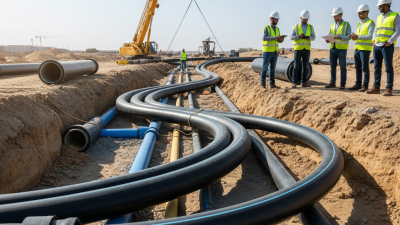
HDPE pipe, or high-density polyethylene pipe, is widely used for water, wastewater, irrigation, mining, and industrial networks. Its smooth interior reduces friction, while its flexibility helps it absorb ground movement and installation stress. It does not rust. That matters in wet soil, coastal areas, and chemically aggressive environments.

Thomas H. Janson, author of Polyethylene Pipes and Fittings, describes polyethylene as “flexible, tough, and corrosion resistant.” His observation captures the material’s practical value. However, “best” is never a universal label. A pipe buried beneath a city street faces different demands from one carrying abrasive slurry at a mine. Engineers must examine pressure ratings, diameter, resin grade, temperature, joining method, and site conditions before choosing a product.

Small details decide performance. A fusion joint should be clean, aligned, and properly cooled. Poor handling can damage the pipe before it reaches the trench. I have seen project discussions focus heavily on price while overlooking installation access, thermal expansion, and future maintenance. That approach deserves reconsideration. The cheapest hdpe pipe may not be the most economical choice after labor, fittings, testing, and repairs are included.

This guide explains common HDPE pipe types, including PE4710 and PE100 systems, and compares their strengths. It also considers pressure applications, flexibility, wall thickness, and connection options. There is no perfect pipe. There is only a suitable choice supported by evidence, qualified design, and careful installation.
What Is HDPE Pipe and Which Type Is Best?

What Is HDPE Pipe?

HDPE pipe means high-density polyethylene pipe, a flexible thermoplastic conduit used for water, gas, drainage, mining, and industrial service. Its low density is misleading. ASTM D3350 classifies polyethylene compounds by density, slow-crack growth resistance, and hydrostatic strength. These factors matter more than the word “high-density” alone. HDPE resists corrosion, tolerates ground movement, and uses heat fusion to create nearly continuous joints.

The Plastics Pipe Institute’s Handbook of Polyethylene Pipe reports that properly designed polyethylene pressure systems can achieve service lives exceeding 100 years under suitable conditions. That estimate depends on temperature, pressure cycles, soil chemistry, installation quality, and sunlight exposure. It is not a promise. Field experience also shows that poor trench support can damage excellent pipe.

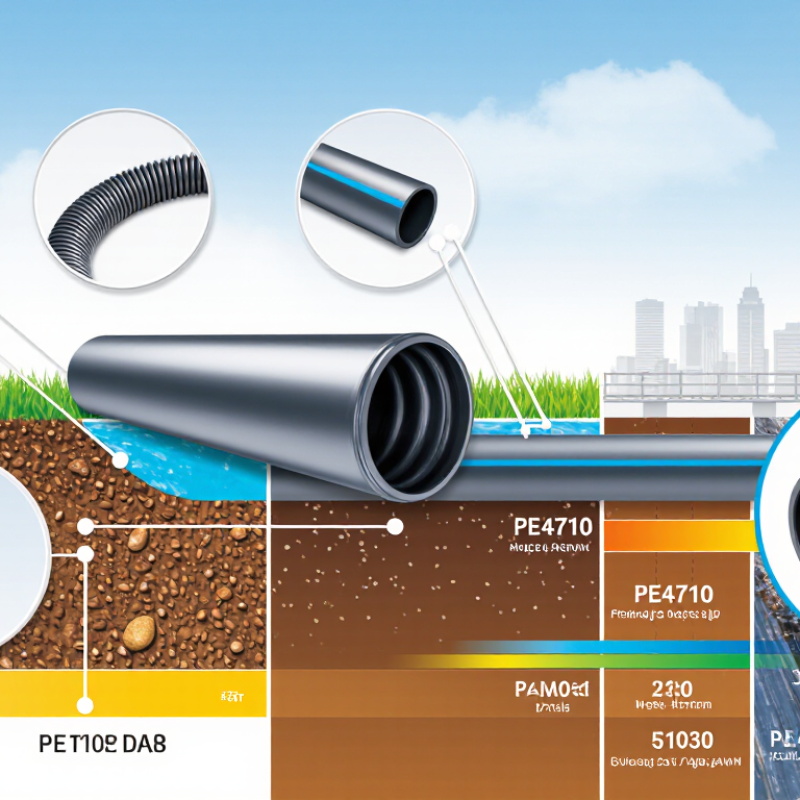
The best type depends on the duty. PE100 systems are common where high pressure capacity and strong crack resistance are required. PE4710 compounds are widely selected for North American water applications. Smooth-wall pressure pipe suits water conveyance. Corrugated HDPE is often better for stormwater and gravity drainage. Check the relevant standards, including AWWA C906 or local equivalents, before choosing a pressure class. Wall thickness is critical. A thinner pipe may cost less initially, yet it can become a costly mistake when traffic loads, temperature, or surge pressure are underestimated.

How Is HDPE Pipe Manufactured and Classified?

What Is HDPE Pipe and Which Type Is Best?

How Is HDPE Pipe Manufactured and Classified?

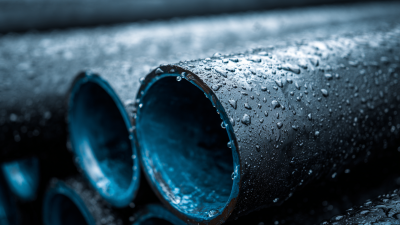
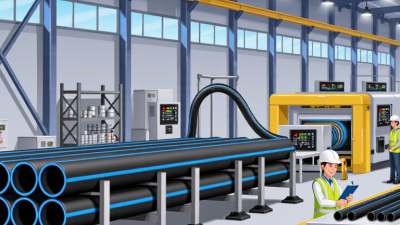
HDPE pipe begins with polyethylene resin pellets, not recycled mystery material. During extrusion, heated resin passes through a shaped die. Vacuum sizing fixes the outside diameter. Water cooling then stabilizes the pipe. Continuous markings identify size, SDR, resin grade, and production information. The Plastics Pipe Institute’s Handbook of PE Pipe explains that HDPE density typically ranges from 0.941 to 0.965 g/cm³. This dense structure supports strength, flexibility, and corrosion resistance.

Classification depends mainly on pressure rating, wall thickness, and resin performance. ISO 4427 commonly uses PE80 and PE100 designations. Their minimum required strengths are approximately 8 and 10 MPa after long-term testing, respectively. SDR means outside diameter divided by wall thickness. A lower SDR usually indicates a thicker wall and higher pressure capacity. ASTM and AWWA standards also classify pipes by dimensions, pressure service, and testing requirements. The table is useful, but not magic. Temperature, soil movement, joining quality, and installation errors still affect performance. Field experience often reveals gaps that laboratory numbers cannot show.

Tips: Match the pipe to operating pressure, temperature, fluid, and burial conditions. Check the marking before installation. Do not choose PE100 only because its number looks higher. A qualified engineer should confirm the design, especially for changing temperatures or unstable ground.

What Are the Main Advantages and Limitations of HDPE Pipe?

HDPE pipe is a flexible thermoplastic pipe made from high-density polyethylene. Its main value is toughness, not appearance. The Plastics Pipe Institute’s PE Handbook reports that properly designed polyethylene systems can provide service lives of 50 to 100 years. Fusion joints also create nearly continuous pipelines, reducing leak paths and soil-entry points.

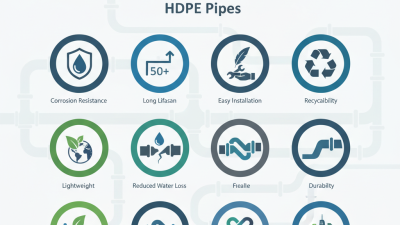
The advantages are practical. HDPE resists corrosion, abrasion, and many common chemicals. Its flexibility helps it tolerate ground movement better than rigid materials. AWWA Manual M55 identifies polyethylene as suitable for water applications when temperature, pressure, and installation conditions are controlled. PE4710 pressure pipe has a 1,600 psi hydrostatic design basis at 73.4°F, according to PPI technical data. That figure is not a field guarantee. Temperature changes can reduce pressure capacity.

Limitations deserve equal attention. HDPE expands and contracts significantly with heat, so above-ground runs need careful anchoring. Sunlight exposure requires suitable stabilization. Scratches, poor fusion temperature, or weak operator training can undermine an otherwise strong system. The material can also absorb or transmit hydrocarbons in contaminated soil, requiring professional assessment. Real sites are messier. A thicker wall is not automatically the best choice. Engineers should compare pressure class, temperature, installation method, soil conditions, and joining quality before selecting PE100, PE4710, or another HDPE grade.

Where Is HDPE Pipe Commonly Used?

HDPE pipe is commonly used where systems need flexibility, leak resistance, and long service life. Water utilities install it for drinking-water mains, service lines, and rehabilitation projects. The U.S. Environmental Protection Agency’s 7th Drinking Water Infrastructure Needs Survey estimates $625 billion in required investment over 20 years. Durable pipe materials matter in that aging network.

Wastewater plants use HDPE for force mains, outfalls, and chemical-transfer lines. Its fused joints can reduce leak paths beneath roads, wetlands, and industrial yards. Irrigation networks also benefit from its light weight and resistance to soil movement. It bends. That matters on uneven farmland.

Gas distribution, mining, geothermal systems, and telecommunications conduits are other common applications. The Plastics Pipe Institute’s Handbook of Polyethylene Pipe describes long design lives for properly engineered buried systems, often using a 100-year design basis. However, “best” depends on pressure, temperature, fluid chemistry, and installation quality. A thick-wall pressure pipe may suit a municipal main, while corrugated HDPE may fit drainage or conduit work. Poor bedding can still cause trouble. Field inspections often find that joint preparation and backfill control matter more than pipe selection alone. The EPA data highlights the scale of infrastructure demand, but project specifications must remain site-specific.

Which HDPE Pipe Type Is Best for Different Applications?

HDPE pipe is made from high-density polyethylene, a flexible plastic that resists corrosion, chemicals, and ground movement. Its fused joints can create a nearly continuous pipeline, reducing leak paths. However, “HDPE pipe” is not one universal product. Wall thickness, pressure rating, diameter, and resin quality affect performance.

For drinking-water systems, pressure-rated, smooth-wall HDPE pipe is usually the practical choice. It should meet the project’s approved material and safety standards. For buried drainage, stormwater, and culvert work, corrugated HDPE pipe can offer lighter handling and useful stiffness. Its ribbed exterior supports surrounding soil, while the interior must provide enough flow capacity. Pressure pipe is the wrong choice when the design only needs gravity drainage.

Wastewater and industrial lines may require thicker walls, abrasion resistance, or chemical compatibility checks. Mining slurry, for example, can wear ordinary pipe faster than expected. In rocky soil, flexibility helps, but sharp bedding material can still damage the pipe. Careful installation matters as much as the pipe type. Inspectors should verify fusion records, trench bedding, backfill, and pressure testing. A common mistake is choosing by diameter alone. I have seen projects fail because temperature, surge pressure, or soil movement received little attention. There is no single best HDPE pipe; the best type depends on flow, pressure, soil, temperature, and maintenance access.

What Is HDPE Pipe and Which Type Is Best?

Which HDPE Pipe Type Is Best for Different Applications?

HDPE Pipe Type Main Construction Typical Pressure Capability Best-Fit Applications Key Advantages Important Limitations Common Joining Methods
Solid-Wall Pressure Pipe Uniform HDPE wall designed to resist internal pressure and external loads. Suitable for pressurized service when the selected material grade, wall thickness, SDR, temperature, and design code are appropriate. Potable-water transmission, water distribution, sewer force mains, irrigation, mining slurry, and industrial process lines. Excellent corrosion resistance, low friction, high impact resistance, flexibility, and leak-resistant fused joints. Pressure rating decreases as operating temperature rises; correct installation and protection from excessive point loading are required. Butt fusion, electrofusion, and mechanical connections where permitted by the design.
Solid-Wall Non-Pressure Pipe Solid HDPE wall intended primarily for gravity flow or applications with little to no internal pressure. Not normally selected for continuous pressure service unless specifically designed, rated, and approved for that use. Gravity sewers, drainage outfalls, landfill leachate collection, culverts, and protective conduits. Lightweight, chemically resistant, flexible, and less vulnerable to cracking caused by ground movement than many rigid materials. The pipe must be designed for burial loads, buckling, deformation, and installation conditions rather than internal pressure alone. Butt fusion, electrofusion, gasketed joints, or other approved connection systems.
Corrugated Single-Wall Pipe Corrugated HDPE wall with ribs that increase stiffness while using relatively little material. Generally intended for non-pressure drainage and conveyance. Agricultural drainage, roadway edge drains, stormwater collection, and light-duty culverts where the applicable standard allows it. Lightweight, easy to handle, flexible, and efficient for drainage installations. The corrugated interior can create more flow resistance than a smooth interior; it is not a substitute for pressure-rated pipe. Couplers, snap connections, gaskets, or approved fittings depending on the product design.
Corrugated Double-Wall Pipe Smooth inner wall for flow and corrugated outer wall for structural stiffness. Normally used for gravity drainage and stormwater systems, not continuous internal pressure. Storm sewers, highway drainage, detention systems, agricultural drainage, and underground drainage networks. Improved hydraulic performance compared with single-wall corrugated pipe and good resistance to external soil loads when properly installed. Requires proper bedding, backfill, alignment, and cover; product stiffness and joint performance must match the project requirements. Gasketed bell-and-spigot joints, couplers, or other approved drainage connectors.
Reinforced or Structured-Wall HDPE Pipe HDPE combined with structural ribs, profiles, or reinforcement to increase stiffness or reduce wall mass. Usually selected for non-pressure service; pressure capability is product-specific and must be documented by the manufacturer. Large-diameter stormwater systems, culverts, sewer rehabilitation, outfalls, and deep-burial drainage projects. Can provide high ring stiffness and lower handling weight for large diameters. Performance depends strongly on profile geometry, reinforcement, joints, soil conditions, and installation quality. Welding, gasketed joints, mechanical couplers, or project-specific connection systems.
PE100 or PE4710 Pressure-Grade Pipe Modern pressure-grade polyethylene classified under regional material designation systems. Designed for pressure service; the actual allowable pressure depends on SDR, design basis, temperature, fluid, and applicable regulations. Municipal water, gas distribution where approved, industrial piping, slurry transport, and pressure sewer systems. High long-term strength, strong fusion joints, resistance to many chemicals, and good tolerance of ground movement. PE100 and PE4710 are designation systems used in different standards and regions; they should not be compared without reviewing the governing standard and design assumptions. Butt fusion, electrofusion, and approved mechanical transition fittings.
Selection Notes: Choose solid-wall pressure pipe for pressurized systems, smooth-interior double-wall pipe for most gravity drainage projects, and corrugated single-wall pipe for simpler non-pressure drainage where permitted. Final selection should verify the required diameter, SDR or stiffness class, fluid compatibility, operating temperature, burial depth, soil conditions, joint system, and applicable local standards.
top