Home // Blog
Choosing the best plastic pipe fittings is not a simple matter of selecting the cheapest option. The fitting must match the pipe material, pressure rating, temperature range, fluid, and joining method. A fitting that performs well in a cold-water system may fail under chemical exposure or repeated thermal movement.
Market data shows why this decision deserves careful attention. Grand View Research estimated the global plastic pipes market at approximately USD 58.3 billion in 2023, with continued growth expected through 2030. The report links this growth to water infrastructure, construction, irrigation, and industrial applications. However, market growth does not make every fitting suitable. Standards still matter. The Plastic Pipe Institute’s guidance emphasizes design verification, proper installation, and compatibility across the complete piping system. ISO 15874, ISO 161, ASTM D2466, and ASTM F2164 also provide relevant performance frameworks for different plastic systems.
David F. Willoughby, P.E., a recognized plastic piping specialist and former executive director of the Plastic Pipe Institute, has stressed a practical principle: “Plastic piping systems are engineered systems, not simply pieces of pipe.” That idea should guide every comparison. Compression, solvent-welded, push-fit, and electrofusion fittings each solve different problems. Some are easier to repair. Others offer stronger resistance to pressure or chemical attack. The best choice depends on evidence, not appearance. I would question any universal winner. Even experienced installers can overlook expansion, misalignment, or poor surface preparation. A durable system begins with the right fitting, but it ends with disciplined installation and inspection.
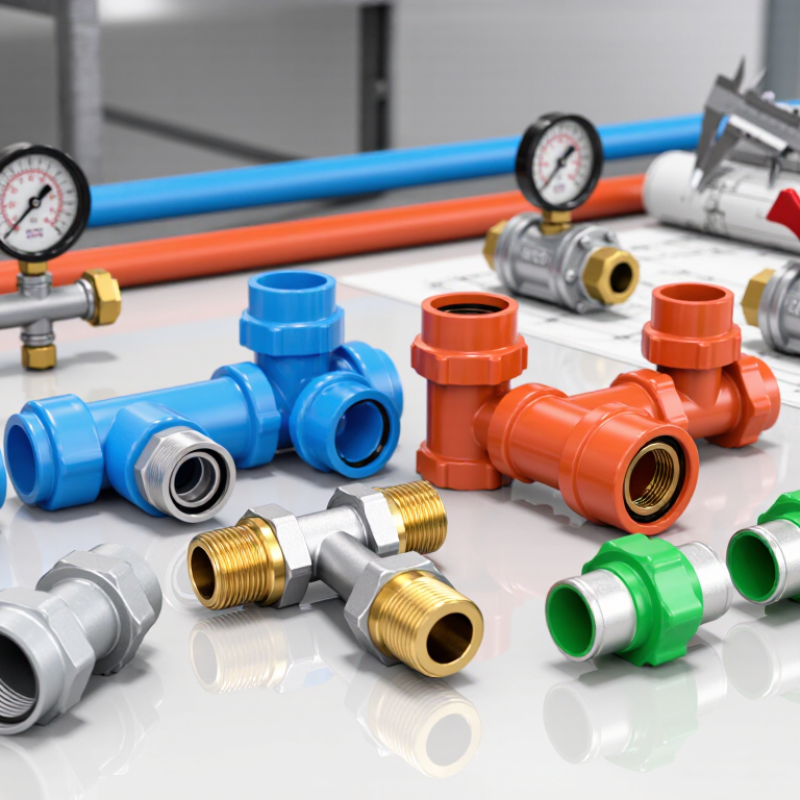
Choosing plastic fittings starts with service conditions, not color or price. In field inspections, PVC performs reliably in cool-water and drainage systems when solvent joints are prepared correctly. Pressure PVC fittings commonly follow ASTM D2466, while material requirements may reference ASTM D1784. PVC is economical, rigid, and easy to inspect. It becomes less suitable where heat, impact, or repeated movement is expected. Small details matter.
CPVC carries warmer water than standard PVC, but its temperature rating must match the system design. ASTM D2846 covers certain CPVC systems, although applicable standards vary by fitting type and region. HDPE fittings, including butt-fusion and electrofusion designs, are valued for flexibility and leak-resistant fused joints. ASTM D3350 classifies PE compounds, and ASTM D3261 addresses some injection-molded fittings. Fusion quality depends on clean surfaces, correct heating, alignment, and trained installation.
PEX is flexible and reduces joint count around tight corners. Common references include ASTM F876 and F877 for tubing, with fitting standards such as ASTM F1807 and F1960. Mechanical fittings still need compatibility with the selected PEX system. A useful comparison can fail if installers ignore ultraviolet exposure, chlorine, pressure, or thermal cycling. I would verify markings, listings, pressure ratings, and local code before purchase. That step is easy to skip. It should not be.
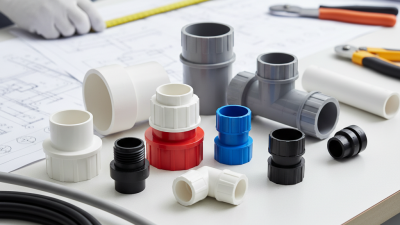
Choosing the best plastic pipe fitting starts with its pressure classification, not its appearance. Schedule 40 and Schedule 80 describe wall thickness, commonly under ASTM D1785 for PVC pipe. Schedule 80 has thicker walls and usually tolerates higher pressure. However, the actual rating depends on pipe size, temperature, fitting design, and joining method. Schedule numbers are not universal pressure values.
SDR uses a simple ratio: outside diameter divided by wall thickness. A lower SDR means a thicker wall. For example, SDR 11 polyethylene pipe commonly corresponds to PN16 at 20°C, when verified against the material standard and application conditions. The Plastics Pipe Institute’s PPI TR-4 technical tables show that pressure ratings reduce as operating temperature rises. That detail is easy to miss. PN16 means a nominal 16-bar rating under defined reference conditions, not a permanent guarantee at every temperature. ISO 4427 and ISO 9080 provide important testing and design guidance for polyethylene systems.
Tips: Match the fitting to the pipe’s SDR, material, and pressure class. Check the manufacturer’s temperature derating table. Do not mix a PN16 fitting with an unverified Schedule 40 system. I have seen installations fail because the pipe rating was checked, but the threaded adapter was ignored. This is a small detail with expensive consequences. Test the assembled line gradually, inspect joints, and allow for water hammer. A perfect calculation can still meet poor workmanship.
| Classification | What It Describes | Typical Plastic Materials | Pressure Expression | Reference Examples | Selection Notes |
|---|---|---|---|---|---|
| Schedule 40 | A U.S. nominal wall-thickness series. The schedule number does not represent a universal pressure rating. | PVC-U, CPVC, and other thermoplastic systems manufactured to the relevant dimensional standard. | Pressure is normally stated separately in psi, bar, or MPa and varies with size and temperature. | For PVC pressure pipe at approximately 23°C / 73°F, published ratings commonly decrease as nominal diameter increases. | Often selected for general water and low-to-moderate pressure service where the required rating is confirmed for the complete system. |
| Schedule 80 | A thicker-wall U.S. schedule than Schedule 40 for the same nominal pipe size. | PVC-U and CPVC are common examples for industrial, chemical, and pressurized piping applications. | Generally provides a higher pressure capability than Schedule 40 of the same material and size, but the exact rating remains size- and temperature-dependent. | At the same nominal size, Schedule 80 has a thicker wall and smaller internal diameter than Schedule 40. | Useful when higher pressure, greater mechanical strength, or increased chemical-service robustness is required. |
| SDR 11 | Standard Dimension Ratio: outside diameter divided by minimum wall thickness. | Commonly used with PE 100 and PE 80 pressure pipe systems. | For PE 100 water pipe at 20°C, SDR 11 is commonly associated with PN16, subject to the applicable design coefficient and standard. | SDR 11 means the outside diameter is approximately 11 times the minimum wall thickness. | A strong choice for higher-pressure PE water systems, but temperature derating and surge conditions must be checked. |
| SDR 17 | A lower wall-thickness-to-diameter ratio than SDR 11, resulting in a thinner wall. | PE 100 and PE 80 pressure pipe systems. | For PE 100 water pipe at 20°C, SDR 17 is commonly associated with PN10. | SDR 17 has a thinner wall than SDR 11 for the same outside diameter. | Can reduce material use and improve flow capacity where a PN10 design pressure is adequate. |
| SDR 21 | A still thinner-wall SDR category used for lower-pressure applications. | PE 100 and PE 80 systems, depending on the governing standard. | For PE 100 water pipe at 20°C, SDR 21 is commonly associated with PN8. | The larger SDR indicates a thinner wall relative to the outside diameter. | Suitable only when the calculated operating pressure, surge pressure, and installation loads remain within the design limits. |
| PN16 | A nominal pressure class used in metric piping systems. | PVC-U, PE, PP, and other thermoplastics when manufactured to a standard that specifies PN16. | 16 bar nominal pressure = 1.6 MPa ≈ 232 psi, generally referenced at 20°C unless the product standard states otherwise. | PN16 is a classification, not a guarantee that every fitting in every material can operate at 16 bar at all temperatures. | Confirm the fitting, pipe, valve, flange, gasket, and joining method are all rated for the same pressure and temperature conditions. |
| Temperature Derating | A reduction in allowable pressure as operating temperature rises above the reference temperature. | Applies to PVC-U, CPVC, PE, PP, and other thermoplastics, with different derating behavior for each material. | The maximum working pressure at elevated temperature is lower than the nominal catalog pressure in many systems. | A rating stated at 20°C or 23°C should not automatically be used for hot water or chemical service at higher temperatures. | Always apply the temperature correction factors specified by the relevant material and product standard. |
What Is the Best Type of Plastic Pipe Fittings?
Temperature limits often decide between CPVC and PEX fittings. Both systems can be rated up to 93°C, but that figure needs careful reading. ASTM F441 data for CPVC and ASTM F876 data for PEX commonly show hot-water ratings near 82°C at 100 psi. At 93°C, allowable pressure may drop significantly. The Plastic Pipe Institute’s TR-4 pressure-rating listings also show that temperature and pressure must be evaluated together. A fitting may survive a short heat spike, yet fail under continuous heat, vibration, or poor support. That distinction is easy to miss.
Tips: Check the pipe, fitting, seal, and joining method as one system. Confirm the pressure rating at the actual operating temperature. Leave room for thermal movement, especially near water heaters. PEX usually handles bending and expansion well, while CPVC needs cleaner alignment and careful support. Do not trust the 93°C number alone.
On a real installation, I would measure the water temperature at the fixture, not only at the heater outlet. A few degrees can matter. Hot water can also soften surrounding materials and increase movement in long runs. This is where design judgment becomes important. Published test data is reliable, but jobsite conditions are rarely perfect. Local plumbing codes and the applicable edition of ASTM standards should control the final selection.
Choosing the best plastic pipe fitting depends on the joint method, not only the pipe material. Solvent cement softens compatible surfaces and chemically bonds them. It works quickly on smaller systems, but poor cleaning or insufficient insertion can create hidden leaks. ASTM installation guidance stresses dry, square cuts and full socket engagement. Field experience shows that rushed preparation remains a common failure.
Heat fusion creates a continuous thermoplastic joint. The Plastics Pipe Institute’s PE Handbook reports that properly made fusion joints can develop strength comparable to the pipe itself. Temperature, pressure, and cooling time must be controlled. Crimp fittings are practical for accessible water lines. They use a metal ring compressed around a fitting, making inspection simple. However, uneven crimping can damage the seal. It is less forgiving than it looks.
Compression fittings need no heat, solvent, or specialized fusion machine. They suit repairs and confined spaces, especially where future disassembly matters. The connection depends on correct tightening and clean, undamaged pipe. Over-tightening is a real mistake. The U.S. Environmental Protection Agency reports that household leaks can waste nearly 10,000 gallons of water annually, according to its WaterSense leak guidance. That figure makes small fitting errors worth taking seriously. A 2024 global plastic pipe market report from Grand View Research projects continued market growth through 2030, but growth does not remove installation discipline. Sometimes, the simplest joint is the least reliable one.
The best plastic pipe fitting is not chosen by appearance or price. It is selected against the system’s pressure, temperature, fluid, and installation conditions. In practice, a fitting that feels rigid may still fail when thermal cycling stresses a joint. That detail is easy to miss. ASTM requirements can help verify dimensions, material performance, pressure ratings, and test methods. However, “ASTM compliant” is too vague without the specific standard and product scope.
For cross-linked polyethylene water systems, ISO 15875 deserves close attention. It addresses PEX pipes and fittings used in hot and cold water installations. Check the fitting’s connection method, dimensional compatibility, operating temperature, and pressure class. A crimp connection needs the correct ring, tool, and insertion depth. Small errors matter. I would also compare test reports with the actual fitting size, not a similar model. Documentation sometimes looks complete until this gap appears.
When water may be consumed, NSF/ANSI 61 compliance is a critical selection filter. It evaluates materials that contact drinking water and helps control contaminant extraction. Confirm that certification covers the fitting, its formulation, and intended temperature range. Do not assume a compliant pipe makes every accessory compliant. Keep lot numbers, installation records, and pressure-test results. They support traceability when a joint leaks months later. A practical review should also inspect chlorine exposure, UV storage, and compatibility with sealants. No checklist is perfect. Field conditions can expose assumptions that laboratory documents cannot.
This comparison shows whether each reference is directly relevant to a primary selection criterion. A value of 1 means the reference directly addresses that criterion; 0 means it is not its primary scope. ASTM product standards generally define dimensional and performance requirements, ISO 15875 addresses crosslinked polyethylene (PEX) hot- and cold-water systems, and NSF/ANSI 61 evaluates health effects for materials in contact with drinking water. These references complement one another rather than serving as interchangeable certifications.
© Copyright 2025 PolyFab Plastic Industry LLC. All Rights Reserved.