Home // Blog
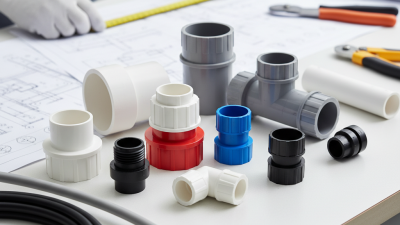
Choosing the right PVC fittings for global projects requires more than matching pipe sizes. A fitting may look suitable in a warehouse, yet fail after exposure to heat, pressure, chemicals, or rough transportation. Project teams should review dimensions, connection methods, pressure ratings, and installation conditions before approving any purchase.
Material compatibility matters. PVC fittings used for drinking water need verified safety documentation and traceable manufacturing records. Industrial systems may require stronger chemical resistance, while drainage networks often prioritize flow performance and reliable sealing. Standards such as ASTM, ISO, EN, or regional certifications can guide decisions, but they should match the project location and application. A certificate alone is not enough.
Small details matter.
Experienced engineers also check thread quality, socket depth, gasket condition, and storage practices. Poorly protected fittings can become scratched, warped, or contaminated before installation. I have seen specifications focus heavily on price while overlooking temperature changes between ports, deserts, and high-altitude sites. That assumption can be costly.
The best selection process combines technical data, supplier credibility, and installation feedback from similar projects. Request test reports, batch information, dimensional samples, and clear warranty terms. Compare actual operating conditions, not only catalog values. Some recommendations may still need revision after site inspection. That is normal. Reliable decisions come from documenting risks, questioning convenient assumptions, and selecting pvc fittings that remain dependable throughout transport, installation, and long-term service.

Choosing PVC fittings for a global project starts with real service conditions, not catalog dimensions. Record the working pressure, maximum temperature, fluid composition, flow rate, and expected design life. PVC pressure ratings usually decrease as temperature rises. A fitting suitable for cold water may perform poorly near its upper temperature limit.
Fluid compatibility also needs careful review. Acids, salts, oils, and cleaning chemicals can affect fittings differently. Check concentration, exposure time, and operating cycles. Consider pressure surges from pumps, valves, and sudden flow changes. The normal pressure may look safe, yet a short surge can damage joints. I have seen projects focus on pipe strength while overlooking fitting transitions and threaded connections.
Design life should include sunlight, soil movement, vibration, and maintenance access. For international work, compare the selected fittings with local standards and installation practices. Documents matter. So does field reality. A perfect calculation may still fail when installers lack the correct joining tools or training.
Tips: Build a service-condition sheet before selecting fittings. Include minimum and maximum pressure, temperature, fluid details, surge conditions, and target life. Ask the supplier for chemical-resistance data and temperature derating. Verify every threaded connection carefully. Small leaks become expensive problems. Recheck assumptions after pilot installation, because the first design is rarely perfect.
How to Choose the Right PVC Fittings for Global Projects?
Global PVC projects need more than a familiar fitting shape. They need a precise standards match. ISO 1452 and EN 1452 cover PVC-U pressure systems for water supply and buried or above-ground applications. Their pressure classes, outside diameters, and metric dimensions differ from North American schedules. ASTM D2466 covers Schedule 40 socket-type fittings. ASTM D2467 covers Schedule 80 fittings, with thicker walls and higher mechanical resistance. Never replace one system by appearance alone.
Tips: Check pipe outside diameter, nominal pressure, temperature, joint method, and certification. Confirm whether the design uses solvent cement, elastomeric seals, or threaded transitions. Ask for test records, not only a catalogue page. A neat spreadsheet can still hide a wrong assumption.
Industry data supports careful material selection. PlasticsEurope’s Plastics—The Fast Facts 2023 reports global plastics production reached about 400.3 million tonnes in 2022. The OECD Global Plastics Outlook reports 353 million tonnes of plastic waste in 2019, with only 9% recycled. Long service life matters, but documentation matters too. In field reviews, I have seen metric ISO fittings mixed with inch-based ASTM pipe. The connection looked acceptable, yet its pressure basis was unclear. I still recheck this point because temperature, wall class, compound, and installation quality can change the real performance. A project specification should name the exact standard, dimensional series, pressure rating, testing requirement, and approved transition detail.
| Project Requirement | ISO 1452 | EN 1452 | ASTM D2466 | ASTM D2467 | Selection Guidance |
|---|---|---|---|---|---|
| Primary PVC Type | PVC-U, also known as unplasticized PVC | PVC-U, also known as unplasticized PVC | Rigid PVC fittings for Schedule 40 systems | Rigid PVC fittings for Schedule 80 systems | Confirm that the pipe and fitting are made from compatible PVC-U or rigid PVC materials and are approved for the intended service. |
| Typical Application | Pressure pipe systems for water conveyance, including buried and above-ground installations | Pressure pipe systems for water conveyance, including buried and above-ground installations | General-purpose pressure and process piping where Schedule 40 dimensions are specified | Higher-wall-thickness pressure and process piping where Schedule 80 dimensions are specified | Use the standard required by the project specification, local authority, or procurement document rather than selecting only by nominal size. |
| Dimensional System | Metric outside-diameter series; wall thickness is related to SDR and pressure class | Metric outside-diameter series; wall thickness is related to SDR and pressure class | U.S. nominal pipe size with Schedule 40 socket-fittings dimensions | U.S. nominal pipe size with Schedule 80 socket-fittings dimensions | Do not assume that a metric DN size will fit an NPS fitting, or that the same nominal size has the same outside diameter in both systems. |
| Pressure Design Method | Pressure class and SDR selections are used; available combinations depend on the product size and applicable part of the standard | Pressure class and SDR selections are used; available combinations depend on the product size and applicable part of the standard | Schedule 40 wall dimensions; allowable pressure depends on size, temperature, material, and system conditions | Schedule 80 wall dimensions; allowable pressure depends on size, temperature, material, and system conditions | Never select a fitting from the standard name alone. Verify the pressure rating at the actual operating temperature. |
| Connection Type Covered | Socket, spigot, and other fitting configurations defined by the applicable product part | Socket, spigot, and other fitting configurations defined by the applicable product part | Primarily solvent-cement socket fittings, including standard elbows, tees, couplings, adapters, and related shapes | Primarily solvent-cement socket fittings, including standard elbows, tees, couplings, adapters, and related shapes | Check socket depth, spigot dimensions, thread type, and the required joining procedure before ordering. |
| Joining Compatibility | Use joining components and procedures specified for the selected metric PVC-U system | Use joining components and procedures specified for the selected metric PVC-U system | Use solvent cement and primer systems suitable for the pipe, fitting, service, and applicable installation code | Use solvent cement and primer systems suitable for the pipe, fitting, service, and applicable installation code | Do not mix metric and inch socket systems unless a specifically designed transition fitting is used and approved. |
| Dimensional Check Before Purchase | Nominal size, outside diameter, SDR, pressure class, and fitting series | Nominal size, outside diameter, SDR, pressure class, and fitting series | NPS size, Schedule 40 designation, socket dimensions, and threaded-end requirements | NPS size, Schedule 80 designation, socket dimensions, and threaded-end requirements | Request dimensional drawings or certified product data when connecting components from different regions. |
| Temperature Consideration | Pressure capability must be checked against the PVC-U temperature derating requirements | Pressure capability must be checked against the PVC-U temperature derating requirements | Pressure capability must be reduced as operating temperature increases; consult the applicable rating data | Pressure capability must be reduced as operating temperature increases; consult the applicable rating data | For warm fluids, calculate the derated pressure rating instead of using the room-temperature value. |
| Best Fit for Global Procurement | Projects using ISO-based metric pressure piping specifications | Projects using European metric pressure piping specifications | Projects using inch-based Schedule 40 specifications | Projects using inch-based Schedule 80 specifications or requiring heavier-wall fittings | Match the fitting standard, pipe standard, dimensional series, pressure requirement, and local installation rules as one complete system. |
Choosing PVC fittings for a global project starts with three numbers: DN, SDR, and pressure rating at 20°C. DN describes the nominal connection size, but it is not always the measured outside diameter. SDR is the outside diameter divided by wall thickness. For example, SDR 13.5 indicates a thicker wall than SDR 17. A lower SDR generally supports higher pressure, but fitting geometry and material class still matter.
ISO 1452 identifies PVC-U pressure classes such as PN 6, PN 8, PN 10, PN 12.5, and PN 16 at reference conditions near 20°C. AWWA M23 also stresses checking surge, operating temperature, and installation conditions during PVC design. These values are not interchangeable across standards. ASTM systems may use dimension ratios and hydrostatic design data instead of PN labels. One recurring mistake is matching pipe SDR while ignoring the fitting’s pressure rating. That shortcut fails.
Tips: Build a conversion sheet before ordering. Record DN, actual outside diameter, SDR, PN, test standard, and temperature correction. Check every fitting against the lowest-rated component. A 20°C rating can drop in hot service. Solvent-joint depth also affects field reliability, especially when alignment is imperfect. Uni-Bell PVC Pipe Association guidance recommends considering surge pressure and long-term design conditions, not only normal operating pressure. Recheck the calculation. Field reality is rarely tidy.
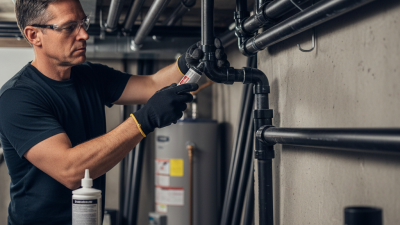
Choosing PVC fittings for global projects requires more than matching pipe diameter. Jointing methods can change installation speed, leak risk, and long-term service. Solvent cement joints need clean, dry surfaces and correct curing time. Gasketed joints may suit larger systems and easier maintenance. Threaded connections are convenient, but over-tightening can damage plastic threads.
Chemical resistance also needs careful review. Check the fluid, concentration, temperature, and contact time. A fitting that handles cool water may fail with warm disinfectants or aggressive process chemicals. Field conditions are rarely perfect. Dust, rushed preparation, and poor alignment can weaken an otherwise suitable joint. I would verify compatibility charts with technical documents, then request written confirmation for unusual chemicals. Guessing here is expensive.
Tips: Confirm the jointing method before ordering. Ask for installation instructions and test requirements. For drinking-water systems, check NSF/ANSI 61 compliance for every wetted fitting, not only the pipe. Review the certificate scope, size range, pressure limits, and production site. Requirements can differ between countries and project owners. Keep batch records and approval documents with the project file. A fitting may carry a familiar compliance claim, yet the exact formulation or use condition may not be covered. That detail is easy to miss.
Global PVC projects often fail at the evidence stage, not at installation.
A fitting may look identical on a warehouse shelf. Its pressure rating can still change with temperature, resin formulation, and joint design.
ISO 9080 evaluates long-term hydrostatic strength through elevated-temperature testing and statistical extrapolation. It does not create a universal 50-year guarantee. That distinction matters.
Request the complete test basis. Check the pressure class, test temperatures, regression curve, and lower confidence limit. ISO 9080 results should connect with product standards, batch controls, and independent certification.
The Plastics Pipe Institute’s TR-3 methodology also shows why sustained pressure design requires material-specific data, not marketing language.
Ask whether the fitting and pipe were tested as a complete system. They should be.
Review the certificate scope, issuing body, expiry date, and manufacturing site. A certificate covering pipe may not cover fittings, seals, or transition parts.
ISO 9080 service-life claims also depend on operating temperature and pressure history. The 2024 World Bank report on water losses highlights how infrastructure reliability depends on asset management, not one laboratory number.
Field records, installation training, and traceability deserve equal attention.
In practice, I have seen projects accept a 50-year
statement without checking its reference temperature. That shortcut is understandable, but it is weak engineering.
A careful specification leaves room for uncertainty, maintenance, and local approval requirements.
© Copyright 2025 PolyFab Plastic Industry LLC. All Rights Reserved.