Home // Blog
Choosing a plastic pipe fittings supplier can shape a project’s cost, reliability, and delivery schedule. A fitting may look simple on a drawing, yet small differences in resin, dimensions, or molding quality can affect installation and long-term performance. Buyers also need to match each product to its application, operating pressure, temperature, and local technical requirements.
This guide reviews seven suppliers for global buyers, focusing on practical factors rather than broad promises. It considers product range, material options, quality-control information, export experience, lead times, and responsiveness to technical questions. Clear product data matters. So does traceability. A polished catalog is not proof of consistent quality; request current specifications, test records, and relevant certificates before comparing quotations. Details matter here.
No single supplier will suit every project. Some buyers prioritize a wide selection and consolidated shipments, while others need custom dimensions, small trial orders, or dependable local support. The comparison can help narrow the field, but it cannot replace checking samples and confirming requirements with the supplier. Markets and product lines change, and published information may lag behind. That is a limitation worth acknowledging. Use the shortlist as a starting point, then verify compatibility, documentation, and delivery terms for the exact plastic pipe fittings you intend to purchase.
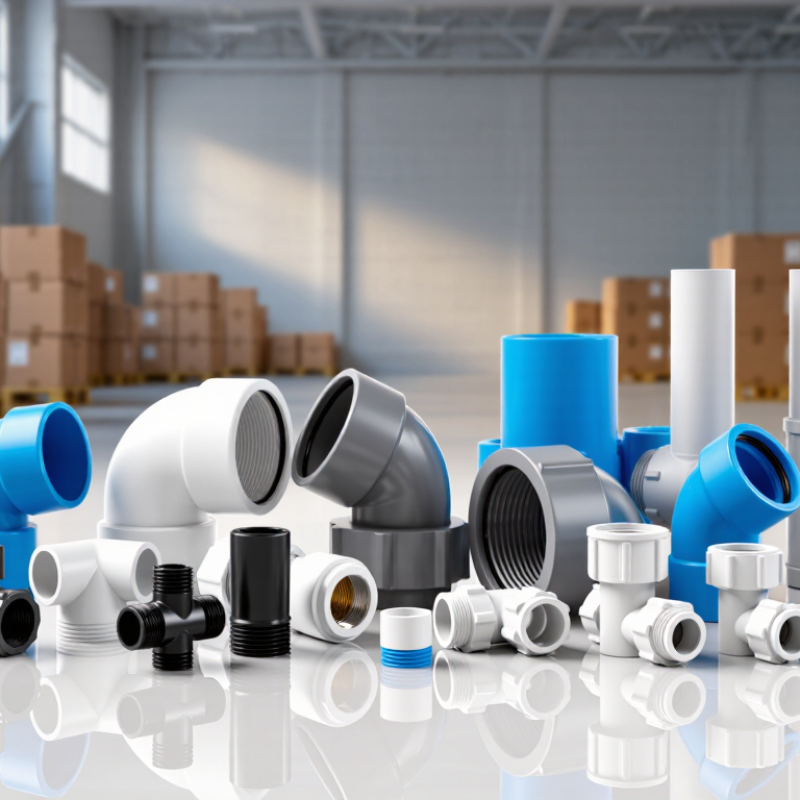
Plastic pipe fittings join, redirect, branch, or control flow in water, drainage, irrigation, and industrial systems. Material choice affects pressure capacity, temperature tolerance, chemical resistance, and installation method. PVC is common in cold-water and drainage lines, while CPVC handles warmer water. Polyethylene fittings flex around ground movement. Polypropylene can suit selected chemical-handling applications. Check the intended service conditions; a familiar material is not automatically the right one.
Fittings include elbows, tees, reducers, couplings, unions, and adapters. Each shape solves a different layout problem. For example, a 90-degree elbow turns a pipe around a wall, while a reducer connects different pipe sizes. Connections may use solvent cement, heat fusion, compression, or threads. Compatibility matters. Mismatched dimensions or joining methods can cause leaks, even when the parts look similar. Ask suppliers for material specifications, pressure ratings, dimensional details, and inspection records.
Tips: Match the fitting to the fluid, temperature, pressure, and installation environment. Check pipe size and connection type before ordering. Request samples or technical documents for unfamiliar products. A small detail, such as thread form, can delay installation. It is easy to overlook.
Choosing a plastic pipe fittings supplier takes more than comparing unit prices. Check whether fittings match the pipe material, pressure class, temperature range, and intended service. For water systems, ISO 4427 covers polyethylene piping, while ISO 1452 covers PVC-U; neither standard suits every application. Ask for current test reports, dimensional inspection records, and resin-batch traceability. A certificate alone is not enough. OECD’s Global Plastics Outlook reports that global plastic production reached 460 million tonnes in 2019, underscoring the scale of material flows—and the value of reliable quality controls. One caveat: paperwork can lag behind product changes, so confirm that documents identify the exact fitting and production site.
Compare suppliers on more than technical compliance. Request sample fittings and inspect socket depth, thread finish, and visible defects. Ask how they control production variation, manage complaints, and communicate lead-time changes. For overseas orders, verify packaging, shipment planning, and export-document accuracy. These details can prevent delays at a project site. They are easy to overlook.
Tips: Send the same specification to every bidder. Compare pressure ratings, test methods, and delivery terms side by side. If an answer is vague, ask for evidence. A short factory audit may reveal gaps that a polished catalog will not.
Global buyers may encounter seven useful types of plastic pipe fittings suppliers: integrated manufacturers, regional specialists, irrigation suppliers, drainage suppliers, industrial-grade producers, custom molders, and export-focused distributors. Each serves a different need. Integrated manufacturers may offer coordinated pipes and fittings, while regional specialists can provide closer support on familiar standards. Irrigation suppliers focus on tees, elbows, and connectors for water networks. Drainage suppliers often carry fittings for gravity-flow systems. Industrial producers may offer materials suited to demanding fluids, subject to compatibility checks. Custom molders can address unusual dimensions, though tooling may add cost and time. Export-focused distributors may consolidate products from several factories.
Before requesting a quote, buyers should share drawings, dimensions, operating pressure, temperature, and intended fluid. Ask for material specifications, test records, and details about production checks. A sample can reveal poor thread fit or uneven socket depth that a catalogue photograph hides. Details matter. Confirm packaging, lead time, and replacement-part availability in writing, especially for mixed shipments.
The lowest price may not mean the lowest project cost. Compare like with like: material grade, wall thickness, tolerances, and included documents. I would not treat a certificate as a substitute for checking whether it applies to the exact fitting and use. Supplier claims can be incomplete; request clarification when a specification feels vague. That extra step may seem fussy, but a small mismatch can complicate installation.
A material-property comparison to help global buyers assess plastic pipe fitting options.
Values are representative typical densities in g/cm³; actual density varies by grade, formulation, and manufacturer. Confirm product specifications with suppliers.
Global plastics production reached an estimated 413.8 million tonnes in 2023, according to PlasticsEurope’s Plastics—the Fast Facts 2024 report. Scale matters. For buyers comparing plastic pipe fittings suppliers, documented controls matter more than polished catalogues. Check whether quality-system certificates are current, issued to the actual manufacturing site, and independently verifiable. Then match product evidence to the application: potable-water projects may require health-effects testing, while industrial systems need pressure and material data. OECD’s Global Plastics Outlook reports plastics use rose from 234 million tonnes in 2000 to 460 million in 2019, underscoring the value of consistent specifications across large supply chains.
Customization should be measurable, not just promised. Ask for resin type, fitting dimensions, pressure rating, connection details, and allowable tolerances in writing. Request a sample and inspection record before approving a production run. Small mismatch, big leak. I would also check whether changes to tooling or material trigger renewed testing; buyers sometimes overlook this.
Export support shows up in practical details: protective packing, clear carton labels, test reports, and timely shipping documents. Confirm how the supplier handles damaged goods and production delays, not only ideal schedules. A neat certificate folder can still hide weak batch traceability. Ask for lot identification on packaging and a realistic lead-time range for repeat orders.
Choosing among plastic pipe fittings suppliers starts with your project requirements, not a sales pitch. Match resin type, diameter, pressure class, temperature range, and joint method to your drawings. Ask whether pressure ratings apply to continuous service or only short-term testing. Request sample fittings and check socket depth, molding seams, and dimensions with calipers. Small details matter.
Verify documents against the exact product being offered. Request material data, test reports, quality certificates, and batch traceability records. Check that names, dates, product codes, and stated standards agree across the documents. A certificate alone is not proof. Ask how the supplier handles rejected batches and production changes, then confirm the answers in writing.
Review delivery performance as carefully as product quality. Ask for references from buyers with similar applications, realistic lead times, and details about export packaging. For a trial order, inspect fittings on arrival and compare them with approved samples. Video calls and factory audits can reveal useful details, but neither guarantees consistent quality. No checklist catches everything; keep some room for follow-up.
| Supplier profile | Typical materials and fittings | Common project fit | Relevant standards to check | Evidence to request | Key buyer verification |
|---|---|---|---|---|---|
| 1. PE pressure-fitting specialist | PE fittings, including butt-fusion and electrofusion types | Water and gas distribution projects where the specified PE system and joining method are suitable | ISO 4427 for PE piping systems for water; ISO 4437 for PE piping systems for gas; ASTM D3261 for PE butt-fusion fittings | Applicable product certificates, material and batch traceability, dimensional inspection records, and fusion-joint instructions | Confirm size range, pressure class, resin designation, compatible pipe dimensions, and approval requirements for the destination market. |
| 2. PVC-U pressure-fitting producer | PVC-U sockets, elbows, tees, reducers, and other pressure fittings | Cold-water networks, irrigation, and other uses specified for PVC-U pressure systems | ISO 1452 for PVC-U piping systems for water; ASTM D2466 for Schedule 40 PVC fittings; ASTM D2467 for Schedule 80 PVC fittings | Standard edition and product scope, pressure or schedule data, dimensional reports, and solvent-cement or jointing guidance where applicable | Check that the fitting standard, pipe standard, nominal size, pressure rating, and joining system match the project specification. |
| 3. CPVC hot-water and industrial supplier | CPVC fittings, commonly supplied as molded or fabricated components | Hot- and cold-water systems or chemical-service applications, subject to material compatibility and design limits | ISO 15877 for CPVC hot- and cold-water systems; ASTM D2846 for CPVC hot- and cold-water distribution systems | Temperature-pressure rating information, chemical compatibility guidance, applicable certificates, and installation instructions | Verify operating temperature, pressure derating, fluid compatibility, and local code acceptance for the intended application. |
| 4. PP-R plumbing-system supplier | PP-R fittings such as elbows, tees, reducers, and transition fittings | Hot- and cold-water installations designed for polypropylene piping systems | ISO 15874 for PP piping systems for hot- and cold-water installations | System classification, dimensional and pressure data, fusion-welding instructions, and test or certification documents | Confirm pipe-and-fitting system compatibility, fusion tool requirements, operating conditions, and whether third-party approvals cover the exact products. |
| 5. Industrial thermoplastic-fitting supplier | PVC-U, PVC-C, or ABS fittings, depending on the product range | Industrial fluid handling and process systems where the selected material is suitable for the service conditions | ISO 15493 covers industrial thermoplastic piping systems made from ABS, PVC-U, and PVC-C; check the relevant material and product scope | Chemical-resistance data, pressure-temperature limits, material identification, and inspection records for the supplied product | Provide the supplier with the fluid, concentration, temperature, pressure, and operating conditions; obtain written material-suitability confirmation. |
| 6. Large-diameter PE fabrication supplier | Fabricated PE bends, branches, manifolds, and non-standard fittings | Infrastructure and industrial projects requiring engineered geometries or sizes not available as standard molded fittings | Project-specified PE system standards, such as ISO 4427 where applicable; require the fabricator to identify the applicable design and testing requirements | Approved drawings, fabrication procedures, weld records, dimensional inspection reports, and pressure-test documentation where specified | Review design responsibility, tolerances, jointing method, inspection plan, and acceptance criteria before approving production. |
| 7. Multi-material export distributor | May source several plastic fitting materials and sizes from different manufacturers | Buyers consolidating products, shipments, or documentation across multiple product categories | Standards depend on each product and material; verify the standard and certificate against every line item | Manufacturer and factory identification, product-level certificates, batch traceability, packing list, and country-of-origin documents | Establish whether the seller is the manufacturer or a reseller, and independently confirm certificate validity and product scope. |
| Selection note: These are supplier profiles, not a ranked list of named companies. Standards identify possible specifications to check; applicability depends on the product, service conditions, contract, and destination-market requirements. ISO 9001 relates to a quality-management system and does not by itself certify a particular fitting. For drinking-water applications, check whether the required jurisdiction accepts a relevant health-effects certification, such as NSF/ANSI/CAN 61, for the exact product. | |||||
© Copyright 2025 PolyFab Plastic Industry LLC. All Rights Reserved.