2026 Best 8 Inch PVC Pipe Types for Global Buyers
Choosing the right 8 pvc pipe is not simply a matter of matching an eight-inch label. Global buyers must examine pressure ratings, wall thickness, connection methods, temperature limits, and regional standards. An 8-inch pipe may serve municipal water, irrigation, drainage, sewer, electrical protection, or industrial processing. Each application demands a different design decision.
PVC materials engineer Charles E. Wilkes wrote, “PVC performance depends on both material selection and service conditions.” That principle remains highly practical. A pipe crossing a hot warehouse floor faces different risks from one buried beneath wet soil. Buyers should check nominal size, outside diameter, SDR or Schedule rating, gasket quality, UV exposure, and chemical compatibility. Certification also matters, especially for drinking-water systems. ASTM, ISO, EN, and NSF requirements are not interchangeable everywhere.
This guide compares eight-inch pressure pipe, sewer pipe, drain pipe, conduit, industrial PVC, and other widely purchased types. It focuses on measurable details, including stiffness, joining reliability, installation depth, and expected service conditions. The category is not perfectly tidy. Product names often overlap between markets. Some suppliers also present similar pipes with different standards or wall classes. That deserves careful review. A perfect shortlist does not exist. The most suitable 8 pvc pipe depends on the project, not the catalog photograph. With field experience, technical documentation, and honest supplier verification, buyers can reduce costly mistakes and select pipe that performs reliably beyond the first shipment.
What Defines an 8-Inch PVC Pipe and Its Main Applications
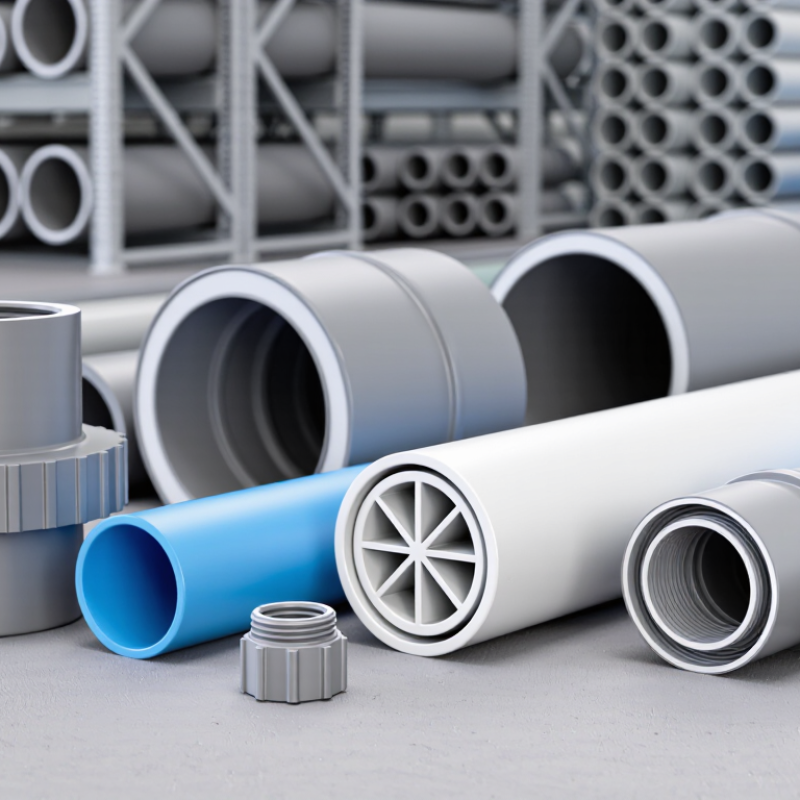
An 8-inch PVC pipe usually means a nominal pipe size, not an exact eight-inch opening. Its outside diameter depends on the regional standard and manufacturing system. Wall thickness also changes with the pressure class, schedule, or stiffness rating. Measure carefully.
In field inspections, I check the pipe’s outside diameter, wall thickness, socket depth, and marking information. These details affect compatibility with fittings and joining tools. A thicker wall can improve pressure resistance, but it may reduce the internal flow area. Temperature, soil load, and installation depth also influence performance. Small mistakes become expensive underground.
Common applications include municipal drainage, gravity sewer lines, irrigation networks, and low-pressure industrial water systems. Large buildings may use this size for stormwater or waste discharge. Some projects use PVC as a protective conduit for cables or smaller pipes. Potable-water service requires the correct certification for the destination market. Do not assume every 8-inch PVC pipe is suitable for drinking water. It is not.
For global buyers, the material grade matters. PVC-U is common for rigid pressure and drainage systems, while other formulations serve different conditions. Ask for test reports, dimensional standards, pressure ratings, and installation limits. I would also compare gasket quality and UV exposure requirements. A catalog can look precise, yet field tolerances sometimes differ. That deserves a second check.
2026 Best 8 Inch PVC Pipe Types for Global Buyers
What Defines an 8-Inch PVC Pipe and Its Main Applications
An 8-inch PVC pipe normally refers to NPS 8, which has a nominal outside diameter of approximately 8.625 inches (219.1 mm). The internal diameter changes with the wall specification. Schedule 40 and SDR 26 provide larger flow areas, while Schedule 80 and SDR 21 provide thicker walls for higher mechanical or pressure requirements. Typical applications include municipal water distribution, irrigation, sanitary and storm sewers, industrial drainage, and non-metallic conduit systems. Selection should also consider the applicable ASTM, AWWA, ISO, or local standard, operating pressure, temperature, and fluid chemistry.
How to Compare PVC Pipe Standards, Dimensions, and Performance Ratings
For global buyers, an 8-inch PVC pipe is not defined by diameter alone. Under ASTM D1785, its nominal outside diameter is 8.625 inches. Schedule 40 has a 0.322-inch wall, while Schedule 80 reaches 0.500 inches. Pressure systems often use SDR ratings instead. ASTM F412 defines SDR as outside diameter divided by wall thickness. Therefore, SDR 26 measures about 0.332 inches, while SDR 18 measures about 0.479 inches.
Performance ratings need equal attention. The Plastics Pipe Institute’s 2024 technical guidance identifies 4,000 psi as a common hydrostatic design basis for many PVC compounds at 73°F. However, temperature reduces pressure capacity. AWWA C900 data also separates pressure classes, including 150, 200, and 250 psi systems. These figures are not interchangeable. Threaded fittings, joint design, surge pressure, and installation quality can change actual performance. A clean comparison is harder than it looks.
Tips: Check the complete standard, not only “8-inch PVC.” Confirm the actual outside diameter, wall thickness, pressure class, temperature rating, and test method. For gravity drainage, compare stiffness ratings and ring deflection. For water service, review hydrostatic and surge requirements. ISO 1452 provides another reference for pressure PVC systems, but dimensions may differ from ASTM-based products. I would request third-party test records before approving a mixed-standard purchase. That extra step feels slow, yet it can prevent costly field adjustments.
2026 Best 8 Inch PVC Pipe Types for Global Buyers - How to Compare PVC Pipe Standards, Dimensions, and Performance Ratings
| PVC Pipe Type |
Applicable Standard |
Typical Application |
Nominal Size Basis |
Outside Diameter |
Minimum / Nominal Wall |
Approx. Inside Diameter |
Pressure or Stiffness Rating |
Key Performance and Selection Notes |
| Schedule 40 PVC Pressure Pipe |
ASTM D1785; IPS dimensions |
Industrial, process, irrigation, and general pressure service |
NPS 8 / DN 200 equivalent |
8.625 in
219.1 mm |
0.322 in
8.18 mm |
7.981 in
202.7 mm |
ASTM D1785 does not assign one universal pressure rating; use the certified manufacturer rating for the selected compound, temperature, and joint system. |
Provides a larger flow bore than Schedule 80. Suitable where moderate wall thickness and economical installation are important. |
| Schedule 80 PVC Pressure Pipe |
ASTM D1785; IPS dimensions |
Higher-pressure industrial, chemical, and water service |
NPS 8 / DN 200 equivalent |
8.625 in
219.1 mm |
0.500 in
12.70 mm |
7.625 in
193.7 mm |
ASTM D1785 does not assign one universal pressure rating; verify the product-specific rating and temperature derating. |
Thicker wall improves pressure and mechanical resistance but reduces internal diameter and increases weight compared with Schedule 40. |
| SDR 21 PVC Pressure Pipe |
ASTM D2241; IPS dimensions |
Municipal water, irrigation, and pressure distribution |
NPS 8 / IPS |
8.625 in
219.1 mm |
Approx. 0.411 in
10.41 mm |
Approx. 7.803 in
198.2 mm |
Approx. 200 psi at 73°F / 23°C |
SDR is the outside-diameter-to-wall-thickness ratio. Pressure capability must be derated at higher temperatures and confirmed for the specific pipe compound. |
| SDR 26 PVC Pressure Pipe |
ASTM D2241; IPS dimensions |
Water distribution, irrigation, and lower-pressure service |
NPS 8 / IPS |
8.625 in
219.1 mm |
Approx. 0.332 in
8.51 mm |
Approx. 7.961 in
202.2 mm |
Approx. 160 psi at 73°F / 23°C |
Lighter and more economical than SDR 21, with a larger flow area. Confirm allowable surge pressure and joining requirements before specification. |
| SDR 41 PVC Pressure Pipe |
ASTM D2241; IPS dimensions |
Low-pressure water, irrigation, and buried distribution |
NPS 8 / IPS |
8.625 in
219.1 mm |
Approx. 0.210 in
5.55 mm |
Approx. 8.205 in
208.4 mm |
Approx. 100 psi at 73°F / 23°C |
Offers a high flow bore and low material weight, but has less pressure and external-load resistance than lower SDR values. |
| SDR 35 PVC Gravity Sewer Pipe |
ASTM D3034; PS 46 sewer pipe |
Sanitary sewer, storm drainage, and non-pressure underground systems |
8 in nominal sewer size |
8.625 in
219.1 mm |
Approx. 0.255 in
6.48 mm |
Approx. 8.115 in
206.1 mm |
Minimum pipe stiffness: 46 psi
319 kPa |
Designed for gravity flow, not continuous internal pressure. Bedding, trench width, cover depth, and soil conditions strongly affect performance. |
| DR 18 PVC Pressure Pipe |
AWWA C900; CIOD dimensions |
Potable water, municipal water mains, and fire-protection distribution |
Nominal 8 in / CIOD |
8.625 in
219.1 mm |
Approx. 0.480 in
12.19 mm |
Approx. 7.665 in
194.7 mm |
Pressure Class 235
235 psi at 73°F / 23°C |
Uses cast-iron outside-diameter sizing and is intended for water-main construction. Check surge allowance, gasket compatibility, and local approval requirements. |
| DN 200 PN 16 PVC-U Pipe |
EN ISO 1452-2; metric dimensions |
Metric water supply, irrigation, and buried pressure systems |
DN 200 |
200 mm
7.874 in |
Approx. 15.0 mm
0.591 in |
Approx. 170.0 mm
6.693 in |
PN 16
16 bar at 20°C |
Metric outside diameter is not interchangeable with 8 in IPS or 8 in CIOD pipe. Use matching metric fittings, valves, and gasket systems. |
Comparison notes: “8 inch” is not a single global dimensional standard. NPS/IPS, CIOD, sewer pipe sizing, and DN metric systems can have different outside diameters and fitting compatibility. Pressure values shown for pressure pipe are reference values at approximately 73°F / 23°C or 20°C, as applicable; actual allowable working pressure must include temperature derating, surge pressure, chemical compatibility, installation conditions, and the current edition of the applicable standard.
Selecting the Right 8-Inch PVC Pipe for Water, Drainage, and Industrial Systems
Choosing an 8-inch PVC pipe starts with the fluid, pressure, and installation environment.
For clean water, pressure-rated PVC-U pipe offers a smooth bore and dependable flow. Confirm its pressure class, wall thickness, and approval for potable water in the destination market. A pipe suitable for irrigation may not meet drinking-water requirements.
For gravity drainage, non-pressure sewer and drain pipe is often more practical. Its gasketed joints handle long underground runs, while lighter walls can reduce handling effort. Check stiffness ratings before installation beneath roads or heavy equipment. A deep trench, poor bedding, or uneven backfill can damage even a well-made pipe. Small details matter.
Industrial systems need closer chemical and temperature checks.
PVC pipe can perform well with many acids, salts, and process fluids, but compatibility depends on concentration and operating temperature. Review technical tables, joint materials, and expected pressure changes. Solvent-welded joints need clean, dry surfaces and proper curing time. Gasketed systems require correct lubrication and alignment. In field work, rushed joints cause more failures than the pipe itself. A perfect choice rarely exists. Buyers should compare standards, test reports, traceability records, and local installation rules before ordering large quantities.
Global Buying Factors: Certification, Shipping, Quality, and Supplier Evaluation
Choosing the right 8 inch PVC pipe in 2026 requires more than comparing prices. Buyers should match the pipe type with its service condition, such as pressure water, drainage, or electrical conduit. Certification must fit the destination market. Request current test reports, factory declarations, and product markings. Check whether the certificate covers the exact diameter, wall thickness, and intended use. A certificate alone can mislead. Some documents describe a product family, not the supplied batch. That detail deserves careful review.
Shipping also affects total cost and product condition. Measure bundle dimensions before booking freight. Protect socket ends with caps, and use stable supports to prevent bending during transport. Ask for loading photos and a packing list with bundle counts. Quality checks should include outside diameter, wall thickness, impact resistance, and pressure performance when applicable. Supplier evaluation works best through samples, production records, and traceable batch numbers. A reliable supplier should explain raw material control without avoiding specific questions. Factory audits can reveal storage problems, mixed grades, or weak inspection routines. Small warning signs matter.
Do not depend on one inspection visit. Production can change after approval. Independent pre-shipment testing adds confidence, although it increases time and cost. My own buying approach would still leave room for review, because delivery pressure can encourage rushed decisions. The lowest quote is rarely the lowest risk. A clear specification, realistic shipping plan, and documented inspection process protect both budget and project performance.