Why Choose Flexible PVC Pipe for Global Projects?
Why Choose Flexible PVC Pipe for Global Projects?
Global infrastructure is under pressure to deliver more water with fewer resources. The WHO and UNICEF Joint Monitoring Programme reported that 2.2 billion people lacked safely managed drinking water in 2022. This gap increases demand for practical, durable piping systems. Flexible PVC pipe can support these projects because it bends around uneven ground, reduces joint requirements, and simplifies transport. On a remote site, a lighter coil can move through narrow access roads without heavy lifting equipment.
Industry data supports this direction. Grand View Research’s 2024 PVC pipes market analysis identifies construction, agriculture, and water infrastructure as major demand sectors. MarketsandMarkets also links plastic pipe growth with urban development and expanding water networks. These reports indicate strong market momentum, but market size alone does not prove suitability. It must match the application.
Experience matters here. Engineers should check operating pressure, temperature, soil movement, ultraviolet exposure, and chemical compatibility. They should also verify applicable ASTM, ISO, or local standards. Potable-water projects may require NSF/ANSI/CAN 61 certification. Installation quality remains critical. A poorly supported bend can create stress, even when the pipe itself performs well.
No material is perfect.
Flexible PVC pipe may need protection from sharp rocks, excessive heat, and unsuitable chemicals. Its performance also depends on correct fittings, burial depth, and inspection records. Still, when designers combine verified specifications with realistic field planning, flexible PVC pipe can offer a dependable balance of flexibility, service life, and installation efficiency across diverse global projects.
What Flexible PVC Pipe Is and How It Works
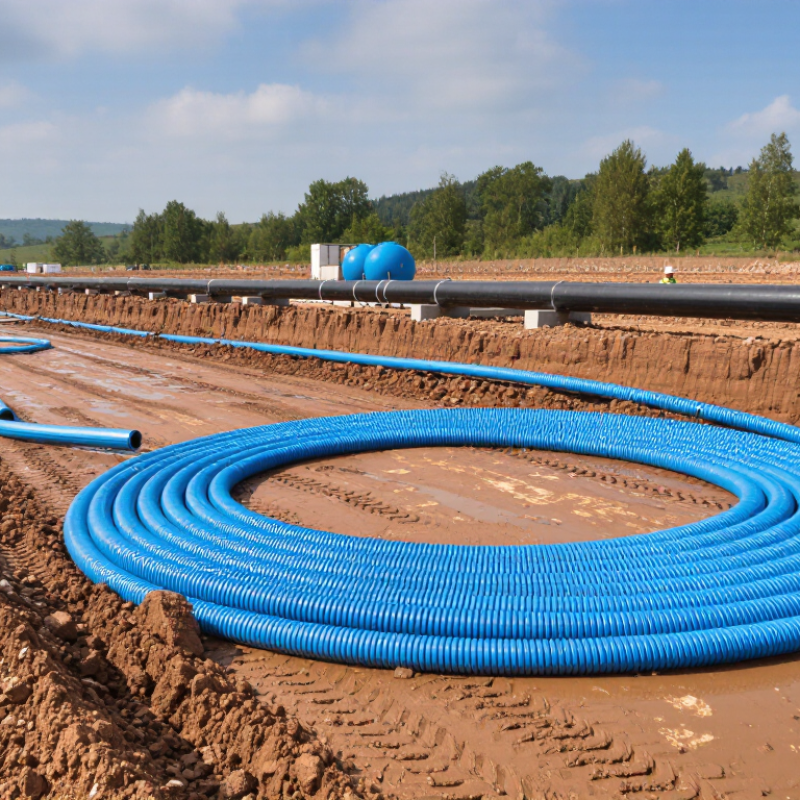
Flexible PVC pipe is made from polyvinyl chloride softened with plasticizers. This treatment creates a bendable body with a smooth inner surface. Some designs include textile, wire, or spiral reinforcement for higher pressure.
During operation, fluid presses against the inner wall. The pipe transfers that force through its wall and reinforcement to the fittings. Its flexibility helps it follow trenches, equipment movement, and gentle curves. Fewer joints can reduce possible leak points. That benefit depends on proper support and secure connections.
For global projects, engineers check temperature range, pressure, chemical compatibility, UV exposure, and local standards. A pipe suitable for irrigation may not suit compressed air or hot liquids. Installation crews should avoid sharp bends, dragging, and twisted couplings. One overlooked alignment error can stress a fitting.
That assumption is risky. Flexible PVC is lighter than many rigid options, but it still needs inspection after installation.
Crews should measure the outside diameter, verify clamps, and test pressure gradually. Soil movement may help the pipe absorb vibration, yet excessive movement can cause fatigue.
The material is practical, not universal. Project records should state service conditions, inspection details, and test results clearly.
Key Material Properties for International Infrastructure
Flexible PVC pipe suits global infrastructure because its material properties remain practical across difficult sites. It is lightweight, corrosion-resistant, and easy to transport. A 2021 review in Polymer Testing found that properly designed PVC pressure systems can achieve service lives exceeding 50 years. The result depends on installation quality, temperature, pressure, and soil conditions.
PVC also has a relatively smooth internal surface. This can reduce friction losses and support efficient water movement. Its electrical insulation helps in mixed utility corridors. However, flexibility is not unlimited. Excessive heat, poor bedding, or sharp stones can cause deformation. The material needs correct joint design and careful backfilling. ISO 9080 provides a recognized method for assessing long-term hydrostatic strength. Project teams should request test evidence, not rely only on sales claims.
Tips: Check the local temperature range, pressure class, soil chemistry, and transport limits before specifying pipe. Use trench drawings and installation records. A field engineer’s inspection often prevents expensive failures. I would not select PVC blindly; regional standards and contractor skill still matter.
Safety, Sustainability, and Long-Term Performance Considerations
Flexible PVC pipe can support global projects where safety, sustainability, and reliable performance matter. Its flexibility helps installers follow curved routes and work around foundations, valves, and uneven ground. This can reduce joints, cutting points, and potential leak paths. However, flexibility does not remove the need for correct sizing, pressure ratings, or secure connections.
PVC is not a perfect material. Its environmental value depends on service life, transport distance, installation quality, and responsible disposal. A durable pipe may reduce replacement waste over many years, especially in irrigation, drainage, and protected water systems. Project teams should check local chemical compatibility, temperature limits, fire requirements, and approved testing standards. Requirements differ between regions. That detail matters. Field experience also shows that sunlight exposure, sharp bends, and poor bedding can shorten service life. Regular inspection remains sensible, even when the system appears trouble-free.
Tips: Confirm pressure and temperature data before ordering. Use trained installers and inspect every joint. Protect exposed sections from prolonged ultraviolet exposure. Keep installation records, including batch details and test results. If recycling options are limited, plan collection before construction begins. A small documentation gap can create expensive confusion later. Flexible PVC performs well when selected for the actual environment, not merely for its low weight or easy handling.
Why Choose Flexible PVC Pipe for Global Projects?
Safety, sustainability, and long-term performance considerations based on typical flexible PVC material ranges.
Flexible PVC formulations commonly provide low water absorption, high flexibility, strong elongation capacity, and practical operating temperatures for many water, drainage, protection, and industrial applications. Actual values depend on formulation, reinforcement, wall thickness, installation conditions, and the applicable local standard.
Reference ranges are representative engineering values commonly reported for flexible PVC compounds; project specifications and certified test results should always be used for final selection.