Selecting reliable manufacturers for automotive electrical components requires more than comparing company names. Fuel Pump And Commutator production demands precise engineering, stable materials, and strict quality control. A small commutator defect can create noise, heat, or premature motor failure. These details matter inside a fuel tank, where consistent performance is essential.
This guide examines ten notable fuel pump and commutator manufacturers worldwide. The comparison considers manufacturing experience, engineering capability, product consistency, testing practices, and international supply support. It also looks at practical factors, including copper segment accuracy, brush compatibility, insulation quality, and resistance to vibration. Factory certifications may provide useful evidence, but certification alone does not guarantee dependable field performance.
Real-world verification remains important. Product samples, technical datasheets, audit records, and customer feedback can reveal differences hidden behind polished websites. Some manufacturers serve high-volume automotive programs, while others focus on custom components or replacement markets. Neither position is automatically better. The right choice depends on voltage requirements, motor design, operating temperature, and production scale.
This ranking is not absolute. Market conditions change. Public information may also be incomplete. Therefore, readers should confirm specifications directly with each supplier before making a purchasing decision. A careful review can reduce quality risks, improve service life, and support more reliable fuel pump assemblies. Small details deserve attention. That is where many decisions succeed or fail.
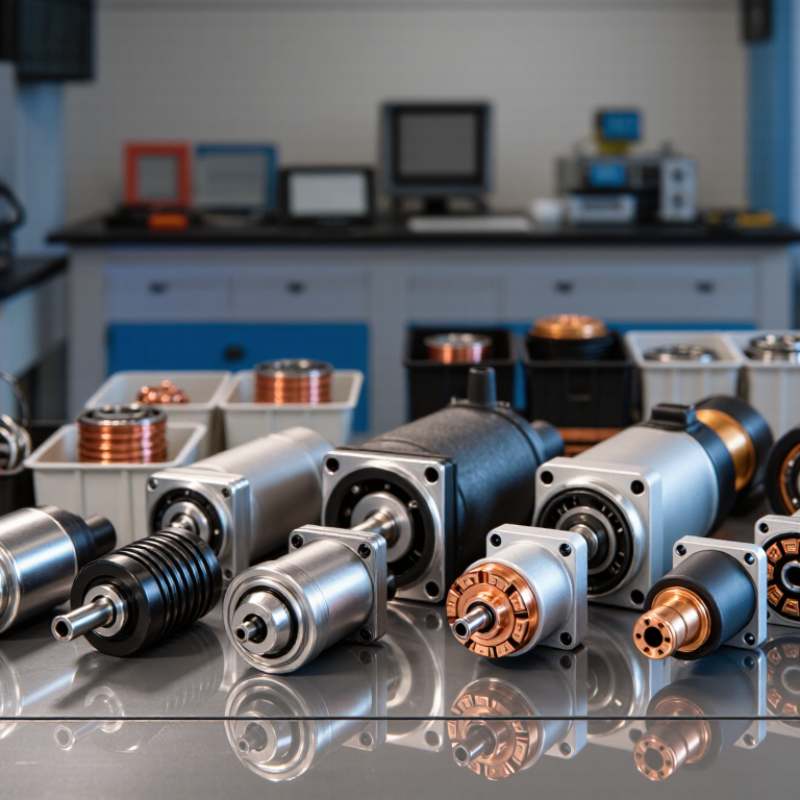
The global fuel pump and commutator market is shaped by two practical voltages: 12V and 24V. Twelve-volt systems dominate passenger cars, motorcycles, and light commercial vehicles. Twenty-four-volt systems serve trucks, buses, agricultural equipment, and construction machinery. Demand is growing where vehicle production, replacement parts, and electric fuel delivery expand together.
A credible top-ten manufacturer list should assess more than production volume. Engineers often inspect commutator runout, copper segment quality, brush wear, thermal cycling, and voltage stability. In field testing, a weak connection can create pump noise, slow starting, or unstable fuel pressure. Sealed housings also matter in dusty roads and humid coastal regions. However, rankings can change by market and application. That is worth remembering.
Tips: Match the commutator to the motor’s voltage, current, speed, and duty cycle. Check insulation after heat testing. Measure voltage at the pump, not only at the battery. A small wiring loss may become a serious performance problem in a 12V system. For 24V equipment, confirm relay ratings and connector spacing before production. Avoid judging quality from appearance alone. Some polished parts still fail after repeated thermal shocks.
| Rank | Anonymous Manufacturer Profile | Primary Manufacturing Footprint | Core Fuel-Pump Technologies | Commutator Capability | Typical Voltage Coverage | Typical Vehicle Applications | Global Demand Exposure | Representative Product Characteristics |
|---|---|---|---|---|---|---|---|---|
| 1 | Global Tier-1 Integrated Supplier A | North America, Europe, and Asia-Pacific | In-tank electric fuel-pump modules, turbine pumps, brushless pump assemblies | High-volume brushed DC Automotive commutators and motor subassemblies | 12 V passenger vehicles; 24 V commercial vehicles | Passenger cars, light commercial vehicles, heavy-duty platforms | High; strong OEM and replacement-market coverage | Integrated sender units, pressure regulation, filtration, fuel-level sensing, and electronic control compatibility |
| 2 | Global Tier-1 Integrated Supplier B | Europe, China, Southeast Asia, and the Americas | Electric fuel-pump modules, positive-displacement pumps, brushless systems | High-volume brushed DC Commutators for compact automotive motors | 12 V dominant; 24 V for trucks and buses | Gasoline vehicles, diesel vehicles, motorcycles, commercial fleets | High; broad platform qualification and regional production | Low-noise pump designs, compact motor architecture, high-temperature fuel compatibility |
| 3 | Automotive Motor and Pump Specialist C | East Asia and Central Europe | Brushed DC in-tank pumps, fuel delivery modules, auxiliary pumps | Specialized Copper commutators, segment assemblies, motor armatures | 12 V; selected 24 V product families | Passenger vehicles, motorcycles, agricultural machinery | High in Asia-Pacific and aftermarket channels | Cost-efficient motor-pump packages with scalable flow-rate and pressure configurations |
| 4 | Commercial Vehicle Systems Supplier D | North America, Europe, India, and China | Heavy-duty fuel pumps, diesel transfer pumps, modular fuel systems | Medium to high Heavy-duty commutators and brushed motor parts | 24 V heavy-duty systems; 12 V light-duty systems | Trucks, buses, construction equipment, agricultural equipment | High in fleet, off-highway, and replacement markets | Higher continuous-duty capability, robust sealing, and compatibility with large fuel tanks |
| 5 | Asia-Pacific Module Manufacturer E | China, Japan, South Korea, and Southeast Asia | In-tank pump modules, turbine pumps, compact brushless pumps | Medium to high Automotive commutators for compact brushed motors | 12 V; selected 24 V applications | Passenger cars, two-wheelers, compact commercial vehicles | High; supported by regional vehicle production growth | Compact packaging, competitive unit cost, high-volume production, and multi-platform fitment |
| 6 | European Aftermarket Specialist F | Western Europe, Eastern Europe, and Turkey | Replacement fuel pumps, pump modules, universal electric pumps | Medium Brushed DC motor and commutator integration through qualified suppliers | 12 V passenger vehicles; 24 V commercial applications | Passenger cars, vans, agricultural and fleet vehicles | Medium to high; strong independent aftermarket exposure | Broad catalog coverage, vehicle-specific modules, service kits, and replacement filtration components |
| 7 | North American Replacement Supplier G | United States, Mexico, and Canada | Electric fuel-pump modules, external pumps, diesel lift pumps | Medium Commutator-equipped brushed pump motors | 12 V light-duty; 24 V fleet and specialty vehicles | Pickups, SUVs, vans, recreational vehicles, fleet vehicles | Medium to high; significant replacement demand | Wide vehicle coverage, integrated pressure regulators, level sensors, and plug-in connectors |
| 8 | Industrial and Off-Highway Supplier H | Europe, China, India, and South America | Fuel transfer pumps, diesel priming pumps, auxiliary electric pumps | Medium Brushed motor components for rugged operating cycles | 12 V and 24 V; selected higher-voltage industrial systems | Mining equipment, generators, tractors, buses, and construction machinery | Medium; linked to infrastructure and equipment production | Long service intervals, vibration resistance, high contamination tolerance, and field-serviceability |
| 9 | Two-Wheeler and Compact Vehicle Supplier I | India, Southeast Asia, China, and Latin America | Compact in-tank pumps, scooter fuel pumps, small engine pumps | Medium Miniature commutators for compact brushed motors | 12 V dominant | Motorcycles, scooters, compact cars, and small utility vehicles | Medium to high; supported by large two-wheeler production volumes | Small envelope size, low current consumption, economical construction, and resistance to fuel additives |
| 10 | Electrification-Focused Supplier J | Europe, North America, and advanced Asian manufacturing hubs | Brushless fuel pumps, electronically controlled modules, hybrid auxiliary pumps | Selective Reduced dependence on mechanical commutators through brushless motor designs | 12 V and 24 V; developing higher-voltage auxiliary systems | Hybrid vehicles, modern passenger cars, commercial vehicles, and specialty platforms | Growing; driven by efficiency, noise reduction, and electronic control requirements | Electronic speed control, improved durability, reduced electromagnetic interference, and diagnostic communication |
Scope note: The table uses anonymized manufacturer profiles rather than company or brand names. Ranking reflects a composite view of global manufacturing footprint, OEM qualification, aftermarket reach, product breadth, and 12 V/24 V application coverage; it is not an audited revenue ranking. Fuel-pump architectures and voltage usage vary by vehicle platform, fuel type, region, and model year.
© Copyright 2025 PolyFab Plastic Industry LLC. All Rights Reserved.

