Home // Blog
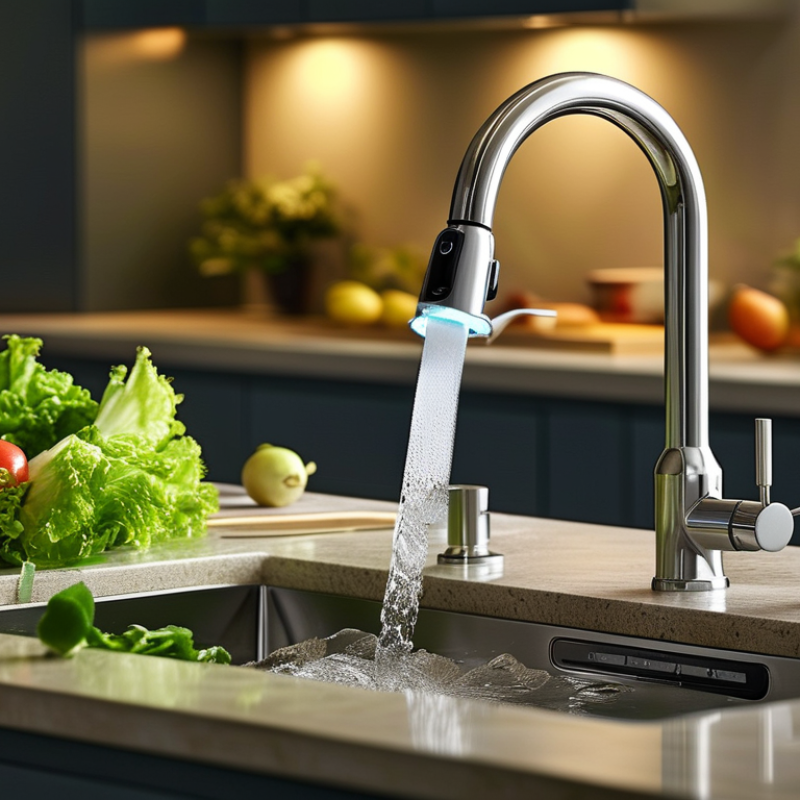
Choosing a Smart Sink Faucet is less about futuristic appeal than daily dependability. In a busy kitchen, a hand wave should start a steady stream, not a guessing game. I have found that the best models balance sensor accuracy, water efficiency, and simple manual control. That balance matters when hands are covered with dough or raw vegetables. A faucet that reacts too quickly can waste water. One that hesitates becomes frustrating. Small details matter.
Before buying, check installation dimensions, power options, flow rate, and replacement parts. Some units use batteries, while others need an adapter beneath the cabinet. Measure the space first. A deep basin may reduce splashing, but a short spout can make washing large pans awkward. Look for clear specifications, recognized safety certifications, a useful warranty, and accessible service information. These signals do not guarantee perfection, yet they improve confidence. Read reviews critically; attractive product photos cannot reveal sensor failures after months of steam and grease. I also question “hands-free” claims when the manual override is hidden or difficult to reach. Reliable design should remain usable during a dead battery or cleaning cycle. The ideal choice depends on household habits, plumbing conditions, and budget, not novelty alone. This guide examines those practical factors, while acknowledging one uncomfortable truth: even a well-tested faucet can occasionally misread movement. Plan for that moment.
How to Choose a Smart Sink Faucet?
Understanding Smart Sink Faucet Types and Core Functions
Smart sink faucets usually come in three types: touchless, touch-activated, and voice-controlled models. Touchless faucets use infrared sensors to detect hand movement beneath the spout. Touch-activated models respond when you touch the spout or handle with a wrist. Voice control can adjust water flow without physical contact, but it may misunderstand commands in noisy kitchens.
Core functions matter more than flashy features. Check whether the faucet offers temperature memory, adjustable sensor range, automatic shutoff, and a manual override. A reliable sensor should start water quickly without reacting to nearby movement. The aerator should produce a steady stream while reducing splashing. I also examine battery access, power indicators, and the control box beneath the sink. Poorly placed components make simple maintenance frustrating.
During installation, confirm the mounting-hole size and available cabinet space. Keep electronic parts away from regular leaks. Some models require batteries, while others use an adapter or backup power system. Each option has trade-offs. Batteries simplify installation but need replacement. Voice control can improve accessibility, though privacy concerns deserve attention. I once overvalued hands-free operation and ignored slow temperature adjustment. That was a useful mistake. A smart faucet should fit daily habits, not merely offer more technology.
Understanding Smart Sink Faucet Types and Core Functions
The chart compares four common smart sink faucet types by the number of core functions typically associated with each type. Touchless models focus on hygiene and hands-free activation, while voice-enabled and app-connected models provide broader control, monitoring, and automation features. Actual functions may vary by product configuration.
Choosing a smart sink faucet starts with the sink, not the screen or sensor. Count the mounting holes. Check their spacing. Measure the deck thickness and the clearance behind the faucet. A single-hole faucet may not suit a three-hole sink without a correctly sized plate.
Water connections also need attention. The U.S. Environmental Protection Agency’s WaterSense specification limits bathroom faucet flow to 1.5 gallons per minute at 60 psi, compared with the older 2.2-gallon federal limit.
Confirm your home’s pressure before judging performance. Low pressure can make touchless activation feel slow. High pressure can stress weak connections. Do not guess.
Installation space matters more than many product pages admit. Leave room beneath the basin for a control box, batteries, filters, and hose movement. Check whether the drain assembly blocks the mounting nut. A pull-down hose should retract without striking pipes or stored cleaning supplies.
ASME A112.18.1/CSA B125.1 covers key faucet performance and connection requirements, so look for compliance information in the technical sheet. Houzz’s 2024 U.S. Kitchen Trends Study also identifies faucet replacement as a common upgrade, but renovation popularity does not guarantee compatibility.
I have seen attractive installations fail because the installer measured only the countertop opening. Measure twice. The overlooked detail is often the expensive one.
Start with water control. The U.S. Environmental Protection Agency’s WaterSense specification limits labeled faucets to 1.5 gallons per minute. That is at least 30% below the standard 2.2 gallons per minute. The EPA also estimates that faucets consume over one trillion gallons of water annually in American homes. A responsive handle or digital temperature display can reduce careless flow. Test the control with wet hands. A beautiful panel is useless if it becomes slippery.
Sensors offer a different advantage. The Water Research Foundation’s Residential End Uses of Water, Version 2, measured faucet use at about 11.1 gallons per person daily. A reliable sensor can stop water during brushing, vegetable washing, or brief pauses. Look for adjustable detection distance and a manual override. Cheap sensors may trigger when a towel passes nearby. That can waste water. Maintenance matters too; mineral buildup around the sensor window can weaken detection.
Voice control is convenient. It is not always dependable. Background noise, accents, and wet hands can affect commands. Use voice features for repeated tasks, such as setting a warm temperature or starting a measured flow. Keep physical controls available during network outages. The National Institute of Standards and Technology recommends clear authentication and secure software updates for connected devices. I would not choose voice control alone. A smart faucet should still work when the internet does not.
How to Choose a Smart Sink Faucet?
Power, connectivity, safety, and maintenance deserve more attention than appearance. Start with power. Battery models simplify installation, but frequent activation can drain cells quickly. Rechargeable units reduce waste, yet they need a nearby outlet. I once overlooked this detail and found a dead faucet during meal preparation. Manual control still matters.
Water efficiency is measurable. The U.S. Environmental Protection Agency’s WaterSense specification limits qualifying residential faucets to 1.5 gallons per minute, about 30% below the common 2.2-gallon standard. Choose a model with a stable flow sensor and adjustable temperature memory. Weak sensing creates repeated hand movements and wastes water. The number sounds small, but daily use makes it visible on the utility bill.
Connectivity should improve control, not create another fragile appliance. NISTIR 8259A recommends device identification, protected data, secure updates, and access control for connected products. Check whether the faucet works without cloud service, supports encrypted connections, and receives firmware updates. Safety features deserve physical testing: automatic shutoff, splash-resistant controls, and a temperature limit can prevent accidents. The U.S. Consumer Product Safety Commission’s injury data repeatedly shows that hot-water scalds remain a household risk. Maintenance is less glamorous. Look for removable aerators, replaceable batteries, accessible filters, and clear cleaning instructions. Some promises remain unclear, so verify them before installation.
| Evaluation Dimension | Typical Options or Data | Recommended Selection | Why It Matters |
|---|---|---|---|
| Power Source | Battery-powered, low-voltage adapter, or hardwired mains supply | Choose a battery model for simpler installation; choose a certified low-voltage adapter for frequent daily use | The power method affects installation complexity, reliability, operating cost, and service access |
| Operating Voltage | Common electronic systems use batteries or low-voltage direct current; household mains input may be 100–240 V AC before conversion | Prefer a sealed, certified power adapter with the correct output voltage and current rating | Correct voltage reduces the risk of malfunction, overheating, and electrical damage |
| Battery Life | Often several months to multiple years, depending on sensor activity, water-cycle frequency, battery type, and temperature | Select a model with a low-battery warning and an accessible battery compartment | A warning system helps prevent unexpected loss of hands-free operation |
| Power Consumption | The valve and sensor usually consume power only during detection and water dispensing; connected features may increase standby consumption | Look for automatic sleep mode and adjustable sensor activation settings | Lower consumption extends battery life and reduces operating costs |
| Connectivity | No connection, Bluetooth, Wi-Fi, or integration through a compatible smart-home platform | Choose Bluetooth for local setup and basic control; choose Wi-Fi when remote monitoring or notifications are genuinely needed | Connectivity affects setup, privacy, network dependence, firmware updates, and long-term support |
| Offline Operation | Some models continue sensor-based dispensing without an internet connection; cloud-dependent functions may stop | Prioritize local manual and sensor control even when Wi-Fi is unavailable | The faucet remains usable during router, internet, or app-service interruptions |
| Sensor Response | Infrared or proximity sensors commonly activate water without handle contact; response time varies by design and surroundings | Choose adjustable detection range and a manual override | Adjustability helps reduce false activation from reflective surfaces, sunlight, or nearby movement |
| Water Flow Rate | Many residential bathroom faucets are commonly rated around 1.2–1.5 gallons per minute (4.5–5.7 L/min); kitchen requirements may differ | Select a flow rate appropriate for the sink, local plumbing rules, and intended tasks | A lower flow rate can conserve water, while excessive restriction may reduce usability |
| Temperature Control | Single-lever mixing, preset temperature, thermostatic control, or cold-water-only operation | For hot-water systems, choose temperature limiting or thermostatic protection | Temperature control reduces scalding risk and improves user comfort |
| Anti-Scald Protection | Adjustable temperature limiters, thermostatic valves, or automatic shutoff features | Use a temperature limiter in homes with children, older adults, or vulnerable users | Hot tap water can cause burns quickly when the temperature is set too high |
| Leak Protection | Automatic shutoff after inactivity, abnormal-flow detection, hose monitoring, or external leak sensors | Choose automatic shutoff and verify that the shutoff interval can be configured | These functions can limit water damage if a sensor sticks or a hose fails |
| Water Resistance | Electronic components may have an enclosure rating such as IPX4, but the rating varies by component and model | Confirm the rating for the sensor, control box, battery compartment, and power adapter separately | A water-resistant faucet is not automatically safe to immerse or expose every component to direct spray |
| Electrical Safety | Ground-fault protection, sealed connectors, strain relief, and relevant electrical safety certification | Use a qualified installer and follow local electrical codes, especially near wet areas | Water and electricity require proper separation, grounding, and protection against leakage current |
| Material and Finish | Common materials include brass, stainless steel, engineering polymers, and plated or coated finishes | Choose corrosion-resistant materials and a finish suited to local water quality | Material quality influences durability, appearance, and resistance to mineral deposits |
| Filtration and Inlet Protection | Removable inlet screens or filters help trap pipe debris; separate drinking-water filtration may be required for potable use | Select accessible screens and clean them after installation and whenever flow decreases | Debris can restrict flow, interfere with valves, and cause incomplete shutoff |
| Hard-Water Maintenance | Aerators and valve components may accumulate calcium carbonate and other mineral deposits | Choose a removable aerator and follow the manufacturer’s descaling instructions | Regular descaling preserves flow, sensor performance, and valve operation |
| Cleaning Requirements | Wipe the exterior with a soft cloth and mild cleaner; abrasive pads and harsh acids can damage finishes | Choose a smooth design with few crevices and a sensor window that is easy to access | Simple cleaning reduces buildup and helps maintain reliable sensor detection |
| Installation Compatibility | Common configurations include one-hole and three-hole mounting; deck thickness and supply-line size also vary | Measure mounting holes, deck thickness, water connections, clearance, and power access before purchase | Correct measurements prevent extra drilling, adapter use, or cabinet access problems |
| Manual Override | Physical handle, touch button, emergency switch, or mechanical bypass | Select a model that can operate without an app or internet connection | Manual control is valuable during power loss, connectivity failure, or sensor malfunction |
| Software and Privacy | App permissions may include Bluetooth, local-network access, usage data, or notifications | Review update policy, data handling, account requirements, and the ability to delete stored data | Connected plumbing products should be evaluated for cybersecurity and privacy as well as convenience |
| Serviceability | Replaceable batteries, standard supply lines, accessible filters, documented error indicators, and available spare parts | Prefer designs with replaceable wear parts and clear maintenance instructions | Serviceable components can reduce downtime, waste, and long-term repair costs |
Selection note: Specifications vary by model and local regulations. Always verify the installation manual, flow-rate certification, electrical approvals, water-pressure range, and enclosure rating before purchase.
Selecting a smart sink faucet begins with your routine, not its screen or sensor count. Consider how often you cook, wash dishes, or handle raw food. A touchless sensor can reduce mess when your hands are greasy. Voice control may help when both hands are occupied. However, it can feel unnecessary during quick tasks. Keep it practical.
Set a complete budget before choosing a model. Include installation, batteries, replacement filters, and possible adapter costs. A lower purchase price may become expensive if parts are difficult to replace. Check the warranty, repair process, and availability of technical support. Look for clear water-flow specifications and recognized safety certifications. These details show more reliability than attractive advertisements.
Measure twice. Your sink deck must fit the faucet base and supply connections. I once overvalued voice commands and ignored sensor response time. That decision looked clever, but the faucet reacted slowly during busy mornings. Test the activation area, handle movement, and temperature adjustment if possible. If your household includes children or older adults, choose controls they can understand without instructions. A manual override is useful during power loss or weak batteries. Privacy also deserves attention when connected features collect voice or usage data. Read the data policy carefully, even if it feels tedious. A dependable faucet should save effort daily, not create another device to manage.
© Copyright 2025 PolyFab Plastic Industry LLC. All Rights Reserved.
