Home // Blog
HDPE pipe is no longer a niche material hidden behind construction sites. It carries drinking water, wastewater, gas, mining slurry, and industrial fluids. Its strength comes from high-density polyethylene, heat fusion, and resistance to corrosion. A properly fused joint can become stronger than the pipe wall itself. That detail matters beneath a road, where repairs are expensive and disruptive.
Industry forecasts show continued demand. Grand View Research’s HDPE Pipes Market Size, Share and Trends Analysis Report, 2023–2030, identifies infrastructure renewal, water networks, and urban expansion as major growth drivers. MarketsandMarkets also projects steady expansion through 2028, especially in water, gas, and irrigation applications. These figures are forecasts, not guarantees. They can change with resin prices, public budgets, and regional standards.
Tony Radoszewski, former president and CEO of the Plastics Pipe Institute, has said, “Plastic pipe is a sustainable choice for infrastructure.” That view deserves careful testing, not blind repetition. Sustainability depends on design life, installation quality, recycled content, and end-of-life planning. Reliable hdpe pipe manufacturers should provide resin grades, pressure ratings, dimensional records, fusion procedures, and traceable test results. Ask for references from comparable projects. Visit the factory if possible. Look closely at storage yards, calibration equipment, and quality-control records. A polished brochure proves little. The real evidence is consistent documentation and field performance. Even experienced buyers sometimes overlook thermal expansion, joining conditions, or local certification requirements. That is where this guide begins.
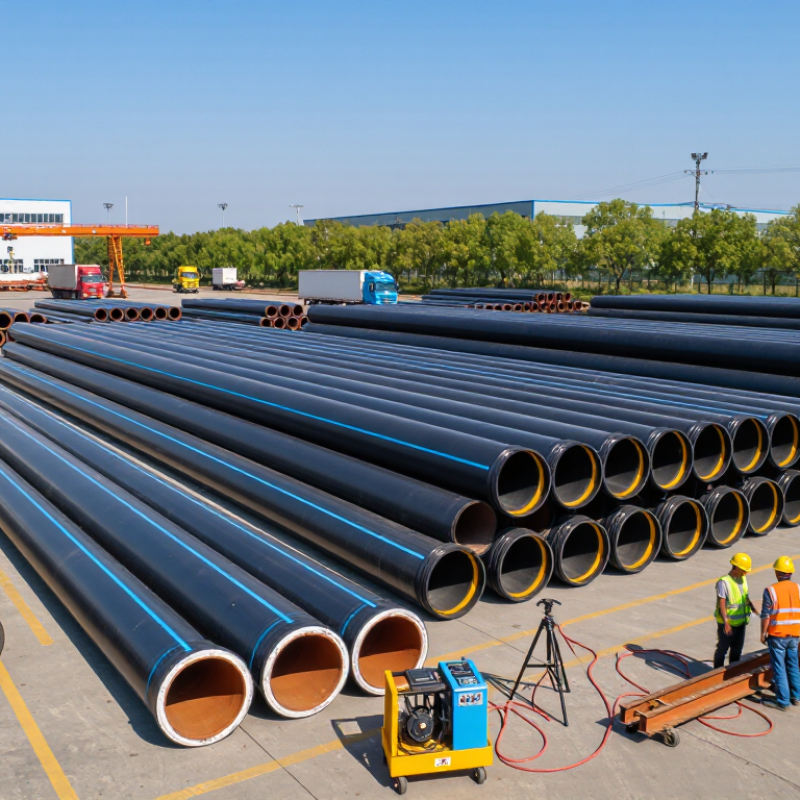
HDPE pipe is a thermoplastic pipe made from high-density polyethylene resin. ASTM D3350 classifies polyethylene compounds by density, slow-crack growth, hydrostatic strength, and other performance factors. In practice, HDPE usually has a density above 0.940 g/cm³. Its low weight makes handling easier, especially on uneven construction sites.
The pipe wall is not a single simple layer. It contains a polyethylene body, carbon-black protection, and carefully controlled extrusion surfaces. Carbon black helps reduce ultraviolet damage. ISO 4427 identifies PE100 as a material with a minimum required strength of 10 MPa after long-term testing at 20°C. That figure is not a short-term burst rating. Temperature, wall thickness, joint quality, and operating pressure still matter. The Plastic Pipe Institute’s PE Handbook also highlights resistance to corrosion, chemical attack, and slow crack growth.
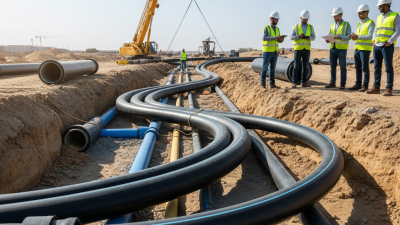
HDPE can bend around gentle curves, reducing the number of fittings and possible leak points. Heat fusion creates a continuous joint, but poor alignment can weaken it. Field inspections often find scratches, contamination, or inadequate cooling after fusion. Small defects matter. A reliable manufacturer should provide compound traceability, dimensional test records, pressure-test results, and compliance documentation. Independent testing is stronger evidence than a polished catalogue. Market reports often predict steady infrastructure demand, but forecasts are not proof of product quality. Buyers should compare test methods, not just impressive percentages. Performance claims need context.
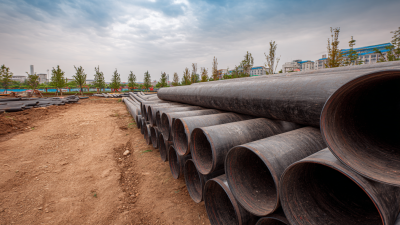
HDPE pipe begins with carefully selected polyethylene resin pellets. Manufacturers blend the resin with approved colorants and stabilizers. The mixture enters a heated extruder, where rotating screws melt and homogenize it. Temperature control matters because overheated material can lose performance. Poor mixing may create weak areas that remain invisible.
The molten polymer moves through a die that forms the pipe’s round profile. A vacuum sizing tank then holds its dimensions while cool water hardens the surface. Haul-off equipment pulls the pipe forward at a controlled speed. Cutters produce measured lengths, while larger diameters may be coiled. The process looks continuous. Small variations matter.
Reliable production depends on more than clean equipment. Technicians should record resin batches, melt temperatures, wall thickness, and cooling conditions. Quality checks can include visual inspection, dimensional measurement, pressure testing, and tensile evaluation. A smooth surface alone proves little. I have found that traceability often reveals problems before field installation does. Still, manufacturing records are only useful when workers review them honestly. An occasional reading may be missed, or a setting may drift. That deserves investigation, not concealment. Buyers should request test reports, production records, applicable standard references, and clear information about inspection frequency before choosing a manufacturer.
HDPE pipe is made from high-density polyethylene, a tough thermoplastic used in demanding infrastructure. Common pressure pipes use PE80 or PE100 compounds. Solid-wall pipes suit drinking water, irrigation, gas distribution, and industrial lines. Corrugated HDPE pipes are lighter and usually serve stormwater, drainage, and cable protection. Double-wall designs combine a smooth inner surface with a stronger outer profile.
Sizes vary widely. Small pipes may measure 16 or 20 millimeters outside diameter, while municipal systems can exceed 1,600 millimeters. SDR ratings matter because they link wall thickness with pressure performance. A 110-millimeter pipe with a low SDR has a thicker wall than one with a higher SDR. That difference affects cost, flexibility, and installation depth. Do not select by diameter alone.
Reliable manufacturers should provide resin traceability, dimensional inspection records, pressure-test data, and clear production standards. Ask whether the pipe meets applicable ISO, EN, or ASTM requirements. Factory certificates help, but independent testing is more convincing. Inspect sample surfaces for cracks, bubbles, uneven color, or rough cuts. These details often reveal weak process control. Fusion guidance is equally important, since poor heating or alignment can damage an otherwise excellent pipe. In practice, size tables can mislead when temperature, soil movement, and surge pressure are ignored. A careful supplier should discuss those conditions before quoting. Mistakes happen. Good documentation makes them easier to detect.
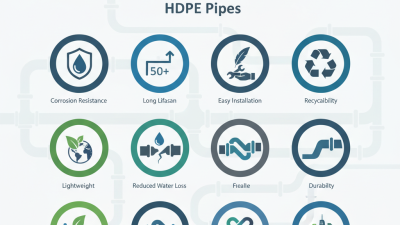
HDPE pipe is valued for corrosion resistance, flexibility, and long service life. Yet reliable performance begins with the manufacturer, not the product brochure.
When evaluating HDPE pipe manufacturers, inspect their technical records and production controls. Ask whether their pipes meet relevant standards, such as ISO 4427, ASTM F714, or EN 12201. Request current certificates, test reports, and resin traceability documents. Documents matter. A dependable manufacturer should identify resin grades, batch numbers, wall thickness, and pressure ratings clearly. Vague answers deserve caution.
I look for evidence from real production sites. Check extrusion lines, storage areas, and quality laboratories. Clean handling matters because contamination can weaken pipe joints. Ask how workers inspect dimensions, hydrostatic strength, and carbon black dispersion. Independent laboratory testing adds useful confidence. It also exposes weaknesses that internal reports may miss. If possible, contact several previous customers and ask about delivery accuracy, fusion support, and warranty responses. A low price can hide inconsistent thickness or poor technical assistance.
I once treated a polished certificate as proof of overall quality. That was too simple. A certificate may be genuine but outdated, limited, or unrelated to the supplied pipe. Review the certificate scope and issue date carefully. Manufacturers should answer practical questions without pressure or evasive language. They should also provide installation guidance, storage instructions, and clear responsibility after delivery. Ask hard questions. Their response often reveals more than their marketing material.
| Evaluation Dimension | What to Verify | Relevant Technical Information | Suggested Acceptance Evidence |
|---|---|---|---|
| Material definition | Confirm that the pipe is manufactured from high-density polyethylene suitable for the intended service. | HDPE is a thermoplastic material known for corrosion resistance, flexibility, low weight, and welded joints. | Material designation, technical data sheet, batch traceability, and resin compliance documents. |
| Applicable standards | Check whether product design, dimensions, testing, and marking follow standards appropriate to the project location and application. | Common references include ISO 4427 for water supply and drainage applications, ASTM D3035 for polyethylene plastic pipe, and ASTM F714 for larger-diameter polyethylene pipe. | Current certificates, standard edition numbers, test reports, and a clear statement of the product scope covered. |
| Pressure classification | Verify that the pressure rating matches the operating pressure, temperature, fluid, surge conditions, and design life. | Pressure capability is commonly expressed using SDR, pressure class, or maximum allowable operating pressure. A lower SDR generally indicates a thicker wall. | Pressure-class tables, design calculations, operating-temperature limits, and documented hydrostatic test results. |
| Dimensional accuracy | Assess outside diameter, wall thickness, ovality, length, and dimensional tolerances. | Consistent dimensions support reliable butt fusion, electrofusion, mechanical connection, and installation performance. | Inspection records using calibrated instruments, dimensional tolerance reports, and sample inspection results. |
| Joint performance | Determine whether the manufacturer provides qualified joining procedures and compatible fittings. | Heat fusion can create a continuous, leak-resistant system when pipe ends, temperature, pressure, alignment, and cooling time are properly controlled. | Fusion procedure specifications, installer guidance, fitting compatibility information, and joint test records. |
| Long-term durability | Review resistance to corrosion, chemicals, abrasion, ground movement, ultraviolet exposure, and temperature variation. | Service life depends on material grade, stress, temperature, installation quality, fluid chemistry, and exposure conditions. | Chemical-resistance information, temperature derating guidance, UV-stabilization details, and application references. |
| Quality-control system | Evaluate controls for incoming materials, extrusion, dimensional inspection, pressure testing, marking, and final release. | A documented quality system helps reduce variation between production batches and supports product traceability. | Quality manual, inspection and test plans, calibration records, nonconformance procedures, and batch-release documentation. |
| Testing capability | Confirm that routine and type tests are performed with suitable equipment and controlled methods. | Typical checks may include hydrostatic strength, dimensions, melt flow characteristics, tensile properties, reversion, and visual inspection, depending on the applicable standard. | Test methods, equipment lists, laboratory qualifications, recent test results, and independent inspection options. |
| Product marking and traceability | Check whether every pipe can be linked to its production batch and technical specification. | Markings commonly identify size, wall classification or SDR, material designation, applicable standard, production information, and manufacturer identification. | Readable permanent marking, batch codes, delivery records, and a traceability process from resin to shipment. |
| Manufacturing capacity | Assess whether production lines, tooling, storage, and workforce can meet the required sizes, quantities, and delivery schedule. | Capacity should be evaluated against pipe diameter range, wall thickness, coil or straight-length requirements, and project volume. | Production-capacity statement, equipment list, realistic lead times, and confirmed allocation for the project. |
| Technical support | Determine whether the supplier can assist with product selection, design data, handling, storage, installation, and fusion procedures. | HDPE performance depends significantly on correct sizing, thermal expansion allowances, trench conditions, joining, and backfilling. | Installation manuals, design assistance, training resources, responsive engineering contacts, and after-sales procedures. |
| Packaging and logistics | Review protection against deformation, contamination, impact, moisture, and damage during loading and transport. | Large-diameter products may be supplied in straight lengths, while smaller sizes may be available in coils where permitted by the applicable specification. | Packing method, loading plan, storage instructions, delivery inspection procedure, and damage-claim process. |
| Commercial reliability | Compare quotation clarity, contract terms, warranty coverage, payment conditions, and communication quality. | The lowest price may not represent the lowest total cost if quality variation, delayed delivery, installation problems, or replacement costs are likely. | Itemized quotation, agreed technical schedule, warranty terms, delivery milestones, references, and documented corrective-action procedures. |
What Is HDPE Pipe and How to Find Reliable Manufacturers?
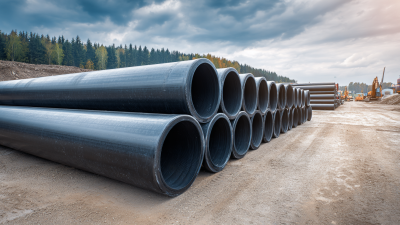
HDPE pipe is made from high-density polyethylene, a flexible material that resists corrosion, impact, and many chemicals. It is used for water supply, drainage, irrigation, and industrial lines. Its dark, smooth surface often hides important differences in quality. A reliable manufacturer should explain the resin grade, pressure rating, wall thickness, and suitable operating temperature clearly.
Ask where the raw material comes from. Is each batch traceable? Request test reports for dimensions, hydrostatic pressure, tensile strength, and joint performance. Also ask which standards guide production and whether independent laboratories verify the results. Vague answers are warning signs. Ask how the factory controls ovality, surface marks, and wall-thickness variation. These details affect installation and service life.
What happens when a shipment arrives late or contains damaged sections? Get the answer in writing. Ask about production capacity, inspection records, packaging, technical training, and after-sales support. A dependable supplier should provide fusion guidance, installation documents, and practical responses to unusual site conditions. One lesson deserves attention: the lowest quote may not be the lowest project cost. Poorly prepared joints can leak, causing excavation, delays, and repeated labor. I would still inspect sample pipes personally, because certificates cannot show every production habit. A short factory visit may reveal more than a polished sales presentation.
Before choosing a reliable HDPE pipe supplier, ask which material grade is used, whether dimensions comply with recognized standards, and whether pressure ratings are supported by test reports. For PE100 pipe at 20°C, a lower SDR indicates a thicker wall and a higher nominal pressure rating.
Key questions to ask: Can the supplier provide traceable raw-material certificates? Are pressure, dimensional, and hydrostatic tests documented? Does the manufacturer offer consistent quality control and application-specific technical support?
© Copyright 2025 PolyFab Plastic Industry LLC. All Rights Reserved.