What Is HDPE Pipe and How Do Global Buyers Choose It?

What Is HDPE Pipe and How Do Global Buyers Choose It?

HDPE pipe is a flexible thermoplastic system used for water, gas, mining, irrigation, drainage, and industrial transport. Its value is not simply low weight or corrosion resistance. Buyers must connect material grade, pressure rating, joining method, soil conditions, and project life. A pipe that performs well in a buried water main may be unsuitable for hot chemical service. Context matters.

Tony Radoszewski, former president of the Plastics Pipe Institute, has emphasized, “HDPE pipe is a proven technology with a long history of reliable performance.” That view reflects industry experience, but buyers still need evidence. They should request resin documentation, standards compliance, fusion procedures, dimensional data, and independent quality records. ISO 4427, EN 12201, ASTM F714, and local requirements may apply differently.

Look closely.

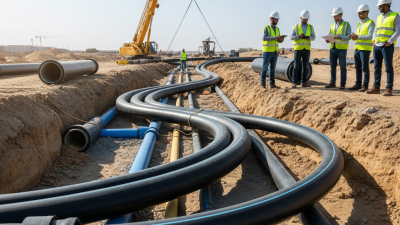
A serious evaluation also examines operating pressure, temperature, surge, ultraviolet exposure, and installation access. For example, a 315-millimeter hdpe pipe delivered to a remote site needs more than an attractive quotation. The buyer should confirm coil or straight-length packaging, butt-fusion equipment, technician training, inspection records, and replacement support. Freight distance can change the real cost.

Global procurement is rarely perfect. Supplier claims may be clear, while test evidence remains incomplete. That uncertainty deserves attention, not concealment. Experienced buyers compare lifecycle cost instead of purchase price alone. They also ask whether local contractors can install and repair the system correctly. This guide examines those practical decisions, including the mistakes buyers may overlook when selecting hdpe pipe for demanding international projects.
What Is HDPE Pipe and How Do Global Buyers Choose It?

HDPE Pipe: Definition, Material Properties, and Core Advantages

HDPE Pipe: Definition, Material Properties, and Core Advantages

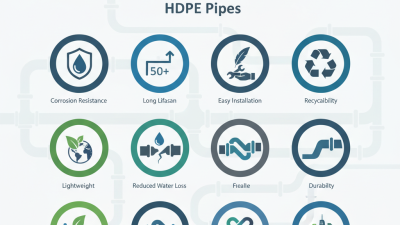
HDPE pipe is made from high-density polyethylene, a thermoplastic engineered for fluid transport and protection. Its molecular structure gives the pipe strong impact resistance and useful flexibility. Unlike rigid materials, HDPE can bend slightly around uneven ground and installation changes. It also resists corrosion, many chemicals, moisture, and biological growth. These properties support reliable use in water systems, drainage, mining, irrigation, and industrial applications.

A properly produced HDPE pipe has a smooth internal surface, which can reduce friction and support efficient flow. Heat fusion can create a continuous joint, reducing potential leakage points when trained technicians follow approved procedures. However, performance depends on resin quality, wall thickness, pressure rating, temperature, and installation conditions. HDPE is not perfect. Excessive heat, sharp objects, poor alignment, or unsuitable backfilling can shorten its service life. Buyers should review test reports, dimensional standards, and traceability records rather than relying only on low price.

Tips: Match the pipe grade with the fluid, pressure, and operating temperature. Check outside diameter, SDR value, and required joining method. Ask for independent inspection evidence when the project is critical. A small sample inspection can reveal surface damage, uneven color, or inconsistent markings. Also, confirm local engineering requirements before purchase, because specifications vary between regions and applications.
What Is HDPE Pipe and How Do Global Buyers Choose It?

HDPE Pipe: Definition, Material Properties, and Core Advantages

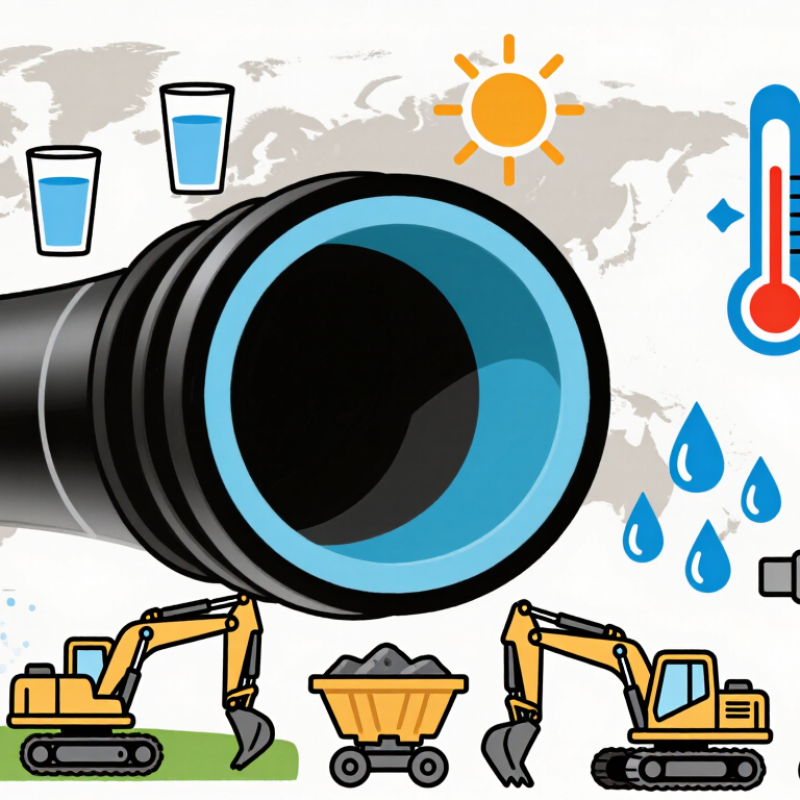
How to read this chart: High-density polyethylene (HDPE) pipe typically has a density of approximately 940–970 kg/m³. Its low density compared with metal and concrete pipe makes handling, transportation, and installation easier, while its flexibility, corrosion resistance, and long service life support demanding water, gas, mining, and industrial applications. Values shown are representative engineering values; exact density varies by material grade and formulation.

Reference basis: Typical material-density ranges reported in engineering material data and pipe-industry specifications. Actual product values depend on grade and manufacturing standard.

How HDPE Pipes Are Manufactured and Classified

HDPE pipe is produced from high-density polyethylene resin, usually supplied as measured pellets. The pellets are dried, blended, and heated inside an extruder. A rotating screw pushes the melted material through a circular die. The hot tube then enters a vacuum-sizing tank, where its diameter and wall shape become stable. Cooling water hardens the pipe gradually. Cutting, marking, and inspection follow.

Classification depends on more than outside diameter. Engineers commonly check the pressure rating, SDR value, material grade, and intended service. A lower SDR usually means a thicker wall. It may handle greater pressure, but it also costs more and weighs more. Pipes can be classified for drinking water, drainage, irrigation, gas distribution, or industrial fluids. Each application requires suitable testing and approved production standards. Color stripes and permanent markings help workers identify size, grade, and batch information.

Tips: Ask for resin traceability, dimensional reports, hydrostatic test results, and clear marking photographs. Confirm the pipe standard before discussing price. A cheap pipe with the wrong SDR is not a saving. In field projects, storage also matters. Direct sunlight, sharp stones, and careless lifting can damage the surface. I have seen specifications focus heavily on pressure while ignoring installation conditions. That is a useful warning. Reliable selection needs both factory evidence and practical site judgment.

Key Applications Across Water, Gas, Mining, and Industry

What Is HDPE Pipe and How Do Global Buyers Choose It?

HDPE pipe is a flexible thermoplastic pipe made from high-density polyethylene. Buyers often select it for water systems because it resists corrosion, scaling, and many chemicals. Its smooth inner wall supports steady flow and can reduce pumping losses. Long coils also limit the number of joints in buried networks. However, flexibility is not a substitute for engineering.

In drinking-water projects, buyers check pressure ratings, diameter tolerance, fusion procedures, and certified material records. For gas distribution, qualified joining practices and local safety requirements are essential. A pipe may look strong but still fail when installation ignores trench depth, soil movement, or pressure changes. Experienced contractors inspect fusion beads and record each connection.

Mining sites use HDPE for slurry lines, dewatering, and process-water transfer. Its abrasion resistance can help, although highly abrasive mixtures still require careful velocity and wall-thickness calculations. Industrial plants may use it for chemical drainage, cooling water, and compressed-air systems. Compatibility must be checked against temperature, concentration, and exposure time.

Global buyers should request test data, traceability documents, dimensional reports, and installation guidance. They should also compare transport conditions, climate, and repair access. A low purchase price can become expensive after difficult handling or poor joint quality. In practice, specifications are sometimes copied too quickly. That mistake deserves more attention. Reliable selection combines field experience, verified standards, and realistic operating conditions.

How Global Buyers Evaluate HDPE Pipe Quality and Standards

HDPE pipe is judged by performance, not appearance alone. Global buyers compare material grade, pressure rating, dimensions, and documented standards. Common references include ISO 4427, EN 12201, and ASTM F714, but the correct standard depends on the destination and application.

Quality begins with traceable raw material. Buyers should request resin identification, melt flow data, carbon black content, and long-term strength classification. For pressure systems, SDR and MRS values must match the design calculation. Wall thickness should be checked at several points, not only at the pipe end. A certificate alone is not proof. Production records, batch numbers, laboratory reports, and independent inspection provide stronger evidence. Fusion performance also matters. Poor surface preparation or incorrect heating can weaken an otherwise compliant pipe.

Tips: Ask for samples before placing a large order. Measure outside diameter, wall thickness, and ovality. Confirm the required standard in writing. Check markings along the pipe for size, grade, SDR, and production date. One detail is often missed: storage conditions. Direct sunlight, dragging, and sharp contact can damage pipe before installation. Buyers should also review packing methods and loading photographs. A common mistake is choosing the lowest quoted price without comparing testing scope, tolerances, and after-sales technical support. This decision deserves a second look.

Selecting the Right HDPE Pipe Supplier, Size, and Cost Structure

What Is HDPE Pipe and How Do Global Buyers Choose It?

Selecting the Right HDPE Pipe Supplier, Size, and Cost Structure

HDPE pipe is a flexible thermoplastic pipe used for water, irrigation, drainage, and industrial service. Global buyers usually compare more than a quoted meter price. Supplier selection starts with evidence, not promises. Ask for resin details, production standards, dimensional inspection records, and pressure-test results. A complete technical file matters more than polished sales language. Check certificate validity and confirm that documents match the actual production batch.

Size selection should follow the project’s real operating conditions. Measure flow, working pressure, soil movement, installation depth, and connection method before choosing diameter. For many water systems, engineers review outside diameter, wall thickness, and SDR together. A 110 mm pipe with a different SDR can have a very different pressure capacity. Do not trust size alone. Measure twice. Temperature changes performance. The supplier should also explain butt fusion or electrofusion requirements, including equipment and operator skill.

Cost structure includes pipe, fittings, inspection, packaging, freight, insurance, duties, and installation support. Request both ex-works and delivered-to-site quotations. Compare currency, lead time, minimum order quantity, payment terms, warranty, and claim procedures. A low factory price can become expensive after port handling or rejected batches. I have seen buyers overlook loading limits and local storage conditions. That assumption can fail. Independent inspection is sensible for high-value orders, although it adds time and cost. No checklist removes every uncertainty. Leave room for human error.

What Is HDPE Pipe and How Do Global Buyers Choose It? - Selecting the Right HDPE Pipe Supplier, Size, and Cost Structure

Selection Category Data Dimension Typical Technical Data or Planning Range How Global Buyers Use the Information
Material and Standards Common material grades PE80 and PE100 under ISO-based systems; PE4710 under common North American specifications Confirm that the grade, compound classification, and design basis match the destination-country standard and project specification.
Relevant standards ISO 4427 and EN 12201 for water systems; ASTM D3035 and AWWA C906 for commonly specified North American applications A supplier should identify the exact standard, edition, testing method, and conformity documentation instead of quoting only “HDPE.”
Density and flexibility Typical HDPE density: approximately 0.93–0.97 g/cm³; flexible compared with many rigid pipe materials Lower density supports easier handling, while flexibility can reduce the number of fittings required in suitable ground conditions.
Joining method Butt fusion, electrofusion, mechanical couplings, or flanged connections Evaluate installer qualifications, fusion equipment, joint inspection procedures, and access to compatible fittings.
Size and Pressure Selection Nominal outside diameter examples Common metric sizes include 110, 160, 250, 315, and 400 mm; actual availability depends on the standard and market Specify outside diameter, wall thickness or SDR, length, tolerance, and end condition. Nominal size alone is not sufficient.
SDR 11 wall thickness examples 110 mm: approximately 10.0 mm; 160 mm: approximately 14.6 mm; 250 mm: approximately 22.7 mm; 315 mm: approximately 28.6 mm A lower SDR generally means a thicker wall and higher pressure capability, but also more material weight and cost.
SDR 17 wall thickness examples 110 mm: approximately 6.5 mm; 160 mm: approximately 9.4 mm; 250 mm: approximately 14.7 mm; 315 mm: approximately 18.5 mm SDR 17 can reduce weight and initial material cost where the required operating pressure and surge conditions permit it.
Typical PE100 pressure designation at 20°C SDR 11 is commonly associated with PN 16; SDR 17 is commonly associated with PN 10 under ISO-based designations Treat these as reference designations, not universal guarantees. Verify the applicable standard, safety factor, fluid, temperature, and surge allowance.
Temperature effect Pressure capacity normally decreases as operating temperature rises above the reference temperature of 20°C Request a temperature derating table and confirm the maximum continuous and short-term operating temperatures before ordering.
Application Fit Potable water Use pipe and compound approved for drinking-water contact in the destination market Check hygiene certification, extractables requirements, color identification, and traceability of the raw material batch.
Sewer, drainage, and gravity flow Select wall thickness based on external loads, installation depth, soil conditions, vacuum risk, and required stiffness Pressure class may not be the only design criterion; deflection and buckling checks can be more important for buried gravity systems.
Mining, slurry, and industrial service Evaluate abrasion, chemical compatibility, temperature, solids concentration, and cyclic pressure Ask for a chemical-resistance assessment and application-specific design review rather than relying only on a general pressure rating.
Gas distribution Use a pipe system specifically approved for gas service, with the required color, marking, and safety documentation Do not substitute water-pipe specifications for gas applications; confirm local regulatory approval and installation requirements.
Supplier Evaluation Quality and compliance evidence Target evaluation weight: 30%; include test reports, certificates, batch records, dimensional inspection, and quality-system evidence Prioritize verifiable production and testing records over marketing claims or the lowest quoted price.
Technical capability Target evaluation weight: 25%; assess available diameters, SDR range, compound options, fittings, and fusion support A technically capable supplier can reduce redesign risk when project sizes, pressure classes, or joining methods change.
Delivery and logistics Target evaluation weight: 20%; review production lead time, packaging, container loading, port options, and delivery performance Compare total delivered cost and schedule reliability instead of comparing factory prices alone.
Commercial support Target evaluation weight: 25%; include quotation clarity, payment terms, warranty, claims process, and engineering response time Clear documentation and responsive after-sales support can lower the risk of installation delays and disputed specifications.
Cost Structure Resin and manufacturing cost Often the largest portion of pipe factory cost; influenced by resin grade, wall thickness, diameter, production volume, and energy Compare quotes using the same material grade, SDR, length, tolerances, and test requirements.
Fittings and joining components May add approximately 5–25% to material cost depending on the number and type of bends, tees, reducers, flanges, and valves A flexible HDPE layout may reduce fitting quantity, but specialized electrofusion or flanged components can increase the budget.
Freight and import charges Depends on pipe diameter, coil or straight-length format, packing density, shipment distance, insurance, duty, and inland transport Request an Incoterm-based quotation and calculate landed cost per meter, including destination charges.
Installation and lifecycle cost Include excavation, bedding, fusion labor, equipment, testing, maintenance, leakage risk, and expected service life The lowest purchase price may not be the lowest project cost if it increases installation time, joint risk, or future maintenance.
Recommended RFQ Data Minimum technical information Application, fluid, design pressure, surge pressure, operating temperature, outside diameter, SDR or wall thickness, length, and standard Providing complete data helps suppliers issue comparable quotations and prevents hidden assumptions.
Required documents Dimensional inspection report, hydrostatic test results, material certificate, conformity certificate, marking details, and packing list Make document submission a contractual requirement when the pipe is used in regulated or safety-critical infrastructure.
Price comparison basis Compare price per meter or kilogram only after normalizing grade, SDR, diameter, length, packaging, Incoterm, currency, and taxes A normalized comparison prevents a thin-wall or incomplete-delivery quotation from appearing artificially cheaper.

Note: Wall-thickness examples are calculated from outside diameter divided by SDR and may differ slightly from published nominal dimensions because standards use specified tolerances and rounding. Pressure designations are reference values for typical PE100 systems at 20°C and must be verified against the applicable standard and project conditions.

top