What Is a Hand Crank Coffee Grinder for Camping?
A Hand Crank Coffee Grinder For Camping is a compact tool for turning whole beans into coffee grounds without batteries or an electrical outlet. A hand crank drives burrs or, in some models, blades. Burr grinders generally produce more consistent grounds, which can help when brewing with a pour-over cone, French press, or camp dripper. Grinding just before brewing can also preserve more aroma than using coffee ground long before the trip.
No power needed. But effort is real.
For outdoor use, size, weight, durability, and easy cleaning matter as much as grind settings. A sturdy body can handle travel better than delicate parts, while a removable handle and catch cup may simplify packing. Check whether the grinder adjusts for your brewing method and holds enough beans for your usual number of cups. A small capacity may mean grinding in batches. That can feel slow before sunrise.
This guide explains what a camping hand grinder is, how its main parts work, and what to consider when choosing one. It also covers practical trade-offs: manual grinding takes time, and fine settings can require more effort. Claims of “perfect” flavor deserve some caution; beans, water, roast, and brewing technique all influence the result. The process is not always effortless. The right grinder is not necessarily the lightest or most expensive model, but one you are willing to carry, use, and clean after a dusty day outdoors.
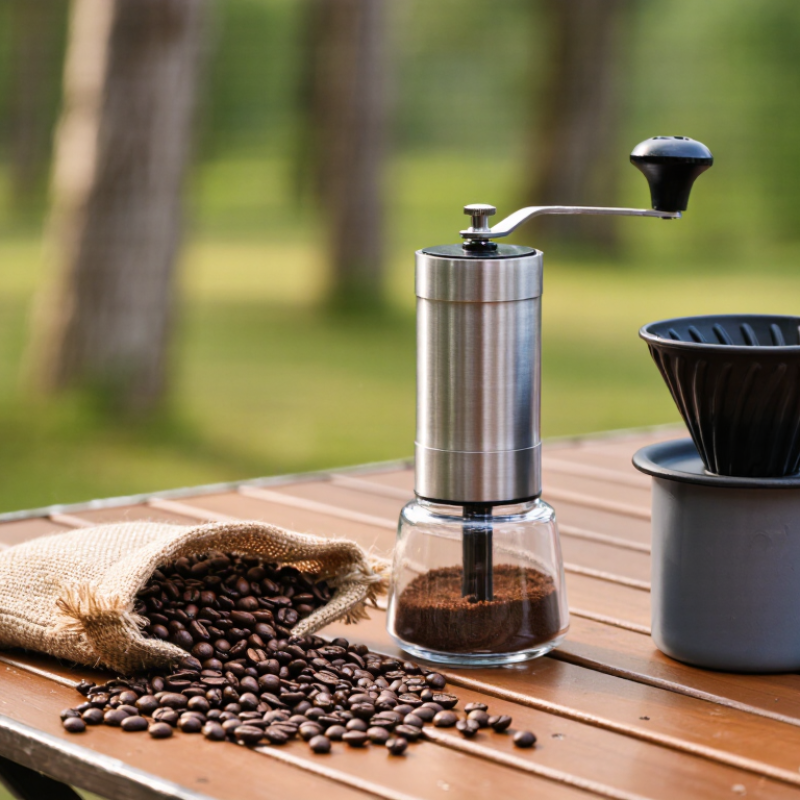
What a Hand-Crank Coffee Grinder for Camping Is and How It Works
A hand-crank coffee grinder for camping is a small manual mill that turns whole beans into grounds without electricity. Most use two burrs: one stays still while the other rotates. The crank drives the moving burr, which breaks beans into particles as they pass through the gap. A simple adjustment changes that gap, allowing a coarser or finer grind.
No outlet needed. No batteries either. Grounds collect in a cup beneath the burrs, while the handle usually folds or detaches for packing. To use the grinder, add a measured scoop of beans, secure the lid, and turn the crank steadily. Coarse grounds suit many steep-and-filter methods; finer grounds work better for some compact brewers. The right setting depends on the brewing method, so a little testing helps.
In camp, grind over a dry mug or container to avoid losing coffee to the ground. Grinding can take a minute or two, and hard beans may make the handle feel stiff. A few grounds can cling inside the cup. That small mess is easy to underestimate. Hand grinding is quiet and dependable, but it is not effortless, and the first cup may taste uneven while you dial in the setting.
Core Parts: Burrs, Crank, Grind Dial, and Grounds Cup
A hand crank grinder turns whole beans into grounds without batteries, which suits a campsite where power is scarce.
Its burrs do the cutting: two shaped surfaces break beans into particles more evenly than simple blades. That consistency matters. The Specialty Coffee Association’s Golden Cup guidance specifies a brew strength of 1.15–1.35% total dissolved solids and an extraction yield of 18–22%. Those figures are useful targets, not a promise that every outdoor cup will taste identical.
The crank drives the burrs by hand, so a steady turn helps keep grinding smooth. Cold fingers, though, can make a small handle awkward. A grind dial moves the burrs closer for finer grounds or farther apart for coarser ones.
Start coarse for a plunge-style brewer, then adjust if the cup tastes weak or overly bitter. The dial is not magic; markings differ between grinders, and beans age in the pouch.
The grounds cup catches the finished coffee and should screw on firmly before grinding. A loose cup can spill grounds onto damp soil. Small parts matter.
Wipe the burr area and cup dry after use, since leftover moisture can make grounds cling and complicate the next brew.
How Burr Settings Change Grind Size from Coarse to Fine
What Is a Hand Crank Coffee Grinder for Camping? How Burr Settings Change Grind Size from Coarse to Fine
A hand-crank coffee grinder uses two burrs to crush beans, rather than chopping them with blades. Turning the adjustment changes the space between those burrs. A wider gap makes coarser grounds for a slower, steeped brew; a narrower gap creates finer grounds that release flavor faster. At camp, that difference shows up in the cup—and in how quickly water passes through the grounds.
The Specialty Coffee Association’s brewed-coffee guidance gives a target extraction yield of 18–22% and a brew strength of 1.15–1.35% total dissolved solids. These figures describe a balanced range, not a guarantee. Grind size affects extraction, but water temperature, pouring, and bean freshness matter too. Coarse grounds can taste weak if water rushes through them. Very fine grounds may taste harsh or clog a pour-over filter. There is no universal “right” click count; burr designs vary, and that part is easy to overlook.
Tips: Change one setting at a time. For pour-over, start medium-coarse, then adjust after tasting. If the cup is thin, try a finer grind; if it is bitter, go coarser. Keep a small note of the setting. Wind, cold fingers, and rushed mornings can make memory unreliable.
How Burr Settings Change Grind Size for Camping Coffee
Turning a hand-crank grinder toward a finer burr setting produces smaller coffee particles. The values shown are approximate particle-size targets in micrometers; actual results vary with grinder design, calibration, and beans.
SCA’s 55 g/L Coffee-to-Water Benchmark for Planning Camp Doses
What Is a Hand Crank Coffee Grinder for Camping?
A hand crank coffee grinder lets you grind whole beans without electricity, which suits quiet campsites and simple gear setups. For planning coffee, the SCA’s 55 grams per liter benchmark offers a practical starting point. It describes the amount of dry coffee used per liter of water, not a rule every brewer must follow. A hand grinder makes it easier to weigh beans shortly before brewing, while keeping your pack free of a powered appliance.
For a 250-milliliter cup, use about 14 grams of coffee. For 500 milliliters, start near 28 grams; for one liter, use 55 grams.
A small digital scale helps, but pre-weighed portions work when packing light. Grind size still matters: coarse grounds suit many immersion brewers, while pour-over usually needs a finer setting. Taste and brewing time can shift the result. A useful starting point, not a law. I can still misjudge a dose when measuring by eye, especially before breakfast.
Tips: Weigh beans at home and pack each dose in a small sealed pouch. Keep the grinder stable on a flat rock or table, and turn the crank steadily. If the cup tastes thin, adjust the dose or grind slightly finer next time. Change one thing at a time, or it is hard to tell what helped.
Choosing a Portable Grinder: Capacity, Weight, Durability, and Cleaning
A hand-crank grinder suits camping when it fits your actual coffee routine, not an imagined minimalist one. The Outdoor Industry Association’s 2024 Outdoor Participation Trends Report counted 175.8 million U.S. outdoor participants aged six and older in 2023. For campsite use, capacity matters: a 20-gram dose covers one generous mug, while two servings may need about 30–40 grams. Check the grinder’s usable capacity, not just its advertised maximum. A chamber that needs several refills can feel tedious before breakfast.
Weight competes with capacity. Compare the grinder’s weight with your full kit, including its handle and catch cup. A small model saves pack space, but may require more cranking for multiple cups. The Specialty Coffee Association’s brewing guidance places balanced extraction around 18–22%, with a target beverage strength of 1.15–1.35% TDS. Those figures describe brewed coffee, not grinder quality, but they show why repeatable grinding matters. Small detail. Burr alignment and stable settings can help you make a similar cup each morning.
For durability, look for a rigid body, a securely attached handle, and parts that resist loosening in a pack. Metal construction can take knocks, though it may add weight. Cleaning should be simple: removable grounds cup, accessible burr area, and no awkward crevices. Brush out dry grounds after use; avoid packing the grinder damp. I may be overvaluing a few saved grams here. A grinder that is difficult to clean can become the one you leave behind.
What Is a Hand Crank Coffee Grinder for Camping? — Choosing a Portable Grinder: Capacity, Weight, Durability, and Cleaning
A hand-crank coffee grinder uses a manual handle to turn burrs that grind whole coffee beans. The figures below are typical ranges for portable grinder designs, not specifications for a particular model.
| Portable Grinder Design | Typical Capacity | Typical Weight | Durability Considerations | Cleaning and Camping Use |
| Compact metal body with steel burrs | About 20–25 g of beans; suitable for roughly one or two small servings. | About 350–550 g. | Metal bodies resist ordinary travel knocks better than thin plastic. Protect the burr assembly from grit and hard impacts. | Often a practical balance for regular camping. Brush loose grounds from the burrs; avoid rinsing unless the manufacturer confirms the parts are washable. |
| Lightweight polymer body with ceramic burrs | About 15–20 g; best for a single small brew. | About 200–350 g. | Low weight is useful for backpacking, but a polymer body can be more vulnerable to cracking under heavy impact. Ceramic burrs are hard but can chip if dropped. | Easy to carry in a small pack. Disassemble carefully and brush out grounds; keep the burrs dry before packing. |
| Larger metal body with steel burrs | About 30–40 g; can accommodate multiple servings before refilling. | About 500–800 g. | A larger, sturdy build can feel stable while grinding, but adds noticeable pack weight and takes up more space. | Useful when brewing for more than one person. More chamber space may require extra brushing to remove trapped grounds. |
| Compact stainless-steel body with steel burrs | About 20–30 g, depending on the chamber design. | About 450–700 g. | Stainless steel handles routine moisture and travel better than many untreated metals, but it is heavier than most lightweight options. | A good fit for car camping or frequent use. Wipe the exterior dry after exposure to moisture and brush the grinding chamber clean. |
| Collapsible-handle travel design | Usually about 15–25 g. | About 300–600 g, depending on materials. | A folding handle packs neatly, but its hinge or joint is an additional moving part to inspect for looseness or damage. | Convenient when pack space is limited. Fold the handle only after grinding and remove loose grounds before storing. |

