Top Uses for Plastic Pipe in Everyday Applications?
In modern construction and everyday applications, plastic pipe has become indispensable. Experts like Dr. Emily Carter, a renowned engineer in sustainable materials, emphasize, "Plastic pipes offer versatile solutions across industries." This statement captures the essence of their utility in our daily lives.
Plastic pipes are lightweight, durable, and resistant to corrosion. These features make them ideal for plumbing, irrigation, and HVAC systems. However, not all plastic pipes are created equal. It's crucial to choose the right type for specific tasks. For instance, PVC pipes are excellent for drainage but may not withstand high temperatures.
Despite their advantages, reliance on plastic pipes raises environmental concerns. With proper management, many issues can be addressed. Understanding the benefits and limitations ensures effective and sustainable use. The journey of finding balance is ongoing in the industry. Plastic pipes offer tremendous potential, but we must be thoughtful about their impact.
Common Types of Plastic Pipe Used in Everyday Applications
Plastic pipes play a vital role in various everyday applications. They are lightweight, durable, and resistant to corrosion, making them suitable for multiple uses. Among the common types, PVC, CPVC, and PEX pipes stand out. PVC pipes are widely used for drainage and irrigation systems. They are cost-effective and have a long lifespan.
CPVC pipes are known for their ability to withstand higher temperatures. These pipes are ideal for hot water distribution in residential plumbing systems. According to industry reports, the global CPVC market is expected to grow significantly due to rising demand in construction and renovation projects.
PEX pipes offer flexibility and ease of installation. They are often found in radiant heating systems and potable water applications. However, some critiques exist; concerns about the long-term leaching of chemicals are prevalent. A study highlighted that while PEX is safe for drinking water, it is essential to monitor water quality regularly. Using plastic pipes can thus pose challenges that demand careful consideration.
Plumbing Systems: Advantages of Using Plastic Pipe
Plastic pipe has become a popular choice in modern plumbing systems. Its lightweight nature makes installation easier. Plumbers find it less cumbersome to work with compared to traditional materials. Moreover, plastic pipes resist corrosion effectively, reducing maintenance costs over time. This durability is vital in preventing leaks and ensuring a longer lifespan.
In residential plumbing, plastic pipes are versatile. They can be used for hot and cold water lines. Their smooth interior walls enhance water flow, which improves system efficiency. However, not all plastic pipes are created equal. Some may warp under extreme temperatures or may not be suitable for certain applications. It's essential to choose the right type based on the specific plumbing needs.
Additionally, plastic pipes are generally more affordable than metal ones. This cost advantage can be significant during renovations or new constructions. Yet, some may raise concerns about environmental impacts. The production and disposal of plastic can contribute to pollution. This is an important aspect to consider, highlighting the need for better recycling solutions in the industry.
Top Uses for Plastic Pipe in Everyday Applications
Irrigation and Agriculture: Plastic Pipe Solutions
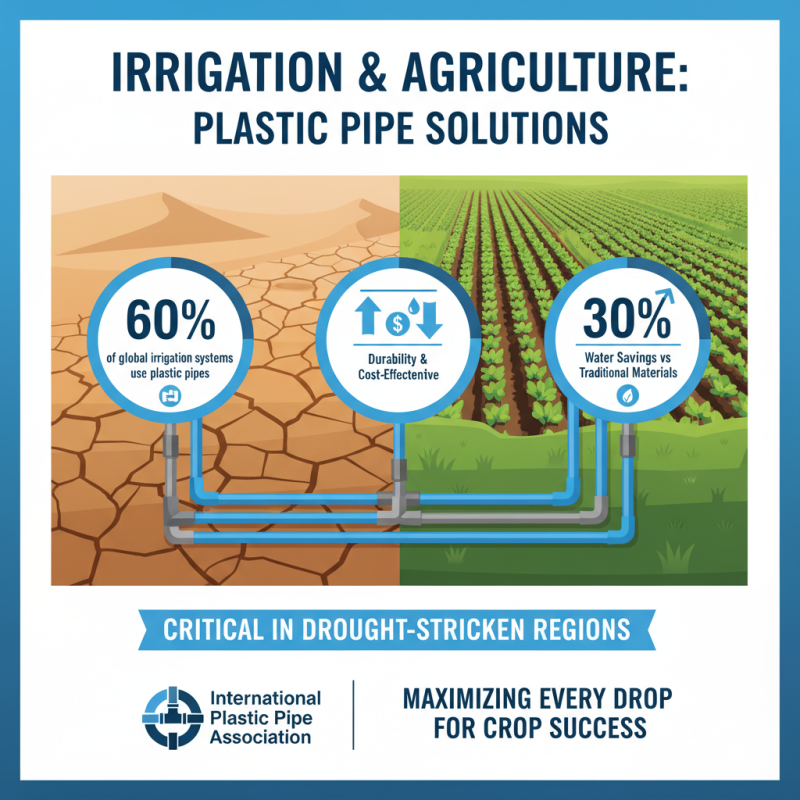
Plastic pipes, particularly in irrigation and agriculture, have transformed the way we optimize water usage. According to the International Plastic Pipe Association, approximately 60% of the world's irrigation systems now use plastic pipes for their durability and cost-effectiveness. These pipes can save up to 30% more water compared to traditional materials. This efficiency is critical in regions facing drought, where maximizing every drop is essential for crop success.
Implementing a drip irrigation system with plastic pipes can significantly promote healthier plant growth. A study by the Food and Agriculture Organization estimates that such systems can increase yields by up to 50% in some crops. This highlights not just the functionality of plastic pipes, but also their role in sustainable farming practices.
Tip: Regularly inspecting your plastic pipe systems can prevent costly leaks and ensure proper water distribution. Remember to check for cracks or blockages as part of your maintenance routine. Another tip is to consider the use of color-coded pipes to signify different functions, promoting better organization. Simple strategies can enhance the efficiency of your agricultural practices.
Electrical Conduits: Protecting Wires with Plastic Pipe
Electrical conduits are vital for protecting wires in various applications. Plastic pipes, often made from PVC or other polymers, serve as durable options for these conduits. They are lightweight, making installation easier and more efficient.
Using plastic pipes for electrical conduits offers numerous benefits. They resist moisture and chemicals, helping to protect sensitive wiring. While they may not be as robust as metal conduits, their flexibility can be advantageous. However, if not installed correctly, plastic conduits can be a potential weak point. Issues like improper fittings can lead to gaps and expose wires to damage.
Another point to consider is that plastic conduits can degrade under exposure to sunlight. Proper installation should include strategies to mitigate UV damage. While plastic ducts provide valuable protection, longevity is a crucial factor. Choosing the right type of plastic and ensuring meticulous installation can enhance their lifespan significantly.
Top Uses for Plastic Pipe in Everyday Applications
| Application Area |
Plastic Pipe Type |
Benefits |
Common Sizes |
| Electrical Systems |
PVC Conduit |
Durability, Weather Resistance |
1/2", 3/4", 1" |
| Water Supply |
PVC Pipe |
Corrosion Resistance, Lightweight |
1", 1.5", 2" |
| Irrigation Systems |
HDPE Pipe |
Flexibility, UV Resistance |
3/4", 1", 2" |
| Telecommunications |
Flexible Conduit |
Protection Against Damage, Easy Installation |
1/2", 3/4", 1" |
| Drainage Systems |
PVC Drain Pipe |
Low Handling Costs, High Flow Capacity |
4", 6", 8" |
HVAC and Ventilation: Efficient Use of Plastic Pipe Systems
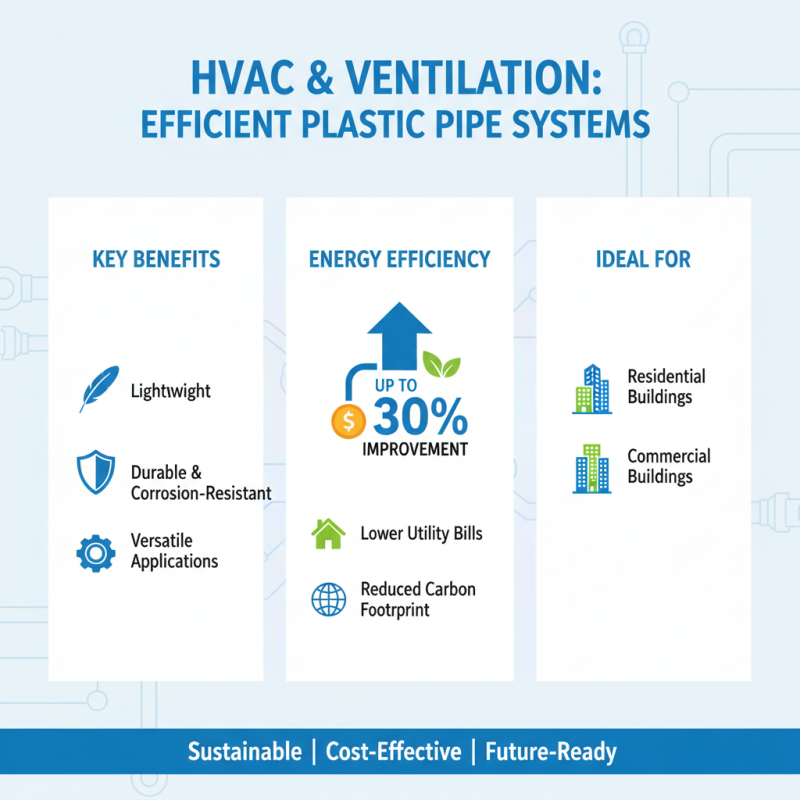
Plastic pipes play a crucial role in HVAC and ventilation systems. They are lightweight, durable, and resistant to corrosion, making them ideal for diverse applications. According to industry reports, plastic pipe systems can improve energy efficiency by up to 30%. This is significant for both residential and commercial buildings, leading to lower utility bills and a reduced carbon footprint.
Using plastic pipes also simplifies installation. Contractors appreciate the ease of handling lightweight materials. Improper installation, however, can lead to leaks. Regular checks are essential to ensure the system operates efficiently.
**Tip:** Always ensure proper sealing when connecting plastic pipes. This avoids potential leaks and maintains system efficiency.
In terms of air quality, plastic pipes do not release harmful chemicals, making them safer for indoor environments. A study showed that buildings with plastic ventilation systems had 15% cleaner air. Regular maintenance can enhance performance.
**Tip:** Schedule annual inspections to keep your HVAC system functioning well. Proper maintenance can improve its longevity and efficiency.