How to Choose a Pet Bottle Baling Machine?
Choosing the right Pet Bottle Baling Machine is more practical than simply comparing prices. A recycling facility must match the machine with its bottle volume, storage space, labor skills, and transport requirements. Steve Alexander, a long-time plastics-recycling executive and former president and CEO of the Association of Plastic Recyclers, has said, “Recycling is a manufacturing process.” That idea matters here. A baler should create consistent, dense bales that buyers can handle and process efficiently.
The decision begins with daily material flow. A small warehouse may need a compact vertical baler, while a high-volume plant may require an automatic horizontal model. Check the feeding opening, bale weight, cycle time, power supply, and maintenance access. Watch the floor, too. Wet bottles, loose caps, and labels can affect feeding performance. Small details matter.
Safety cannot be treated as an afterthought. Look for guarded moving parts, clear emergency controls, stable doors, and dependable sensors. Ask how quickly replacement parts arrive. Ask who will train the operators. A machine can look impressive during a demonstration and still disappoint during a busy shift. That happens.
Experience should guide the final choice, but experience is not always perfect. Record actual bottle volume for several weeks before purchasing. Compare realistic output, not only the highest advertised capacity. Consider noise, energy use, cleaning time, and future expansion. The best Pet Bottle Baling Machine is not necessarily the largest one. It is the model that works reliably, safely, and economically within your real operating conditions.
What Is a PET Bottle Baling Machine and How Does It Work?
How to Choose a PET Bottle Baling Machine?
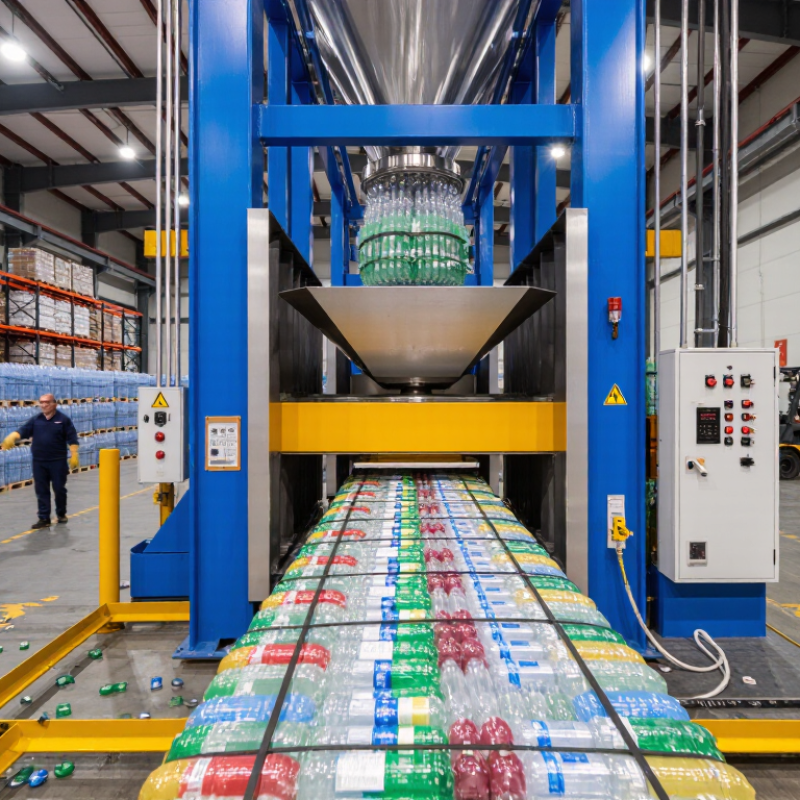
A PET bottle baling machine compresses loose bottles into stable, transportable bales. It usually includes a feeding conveyor, compression chamber, hydraulic ram, and automatic tying system. The conveyor meters bottles into the chamber. The ram then applies controlled pressure. Wires or plastic straps secure the finished bale.
This process reduces storage volume and handling costs. The OECD Global Plastics Outlook reported that only about 9% of plastic waste was recycled globally in 2019. The UNEP report Turning off the Tap estimates that 430 million tonnes of plastic are produced annually. These figures show why reliable sorting and compacting equipment matters. However, maximum pressure is not always the best choice. Excessive compression can trap moisture, damage bottles, or create bales that recycling facilities reject. Operators should compare hourly throughput, bale weight, chamber size, energy use, and maintenance access. A trial using real bottles is more useful than a catalogue promise.
Tips: Check the feedstock before choosing. Bottles with caps, labels, and liquid residue behave differently. Ask for verified bale-density data, noise measurements, and safety-test records. Keep the inspection area clear. Small stoppages become expensive during peak collection periods. One detail is often missed: the machine must fit the available floor space and electrical supply. A technically strong baler can still perform poorly when feeding is uneven. That is not a machine failure alone; it may reveal a weak workflow.
Which PET Bottle Types and Volumes Will You Process?
How to Choose a Pet Bottle Baling Machine?
Which PET bottle types and volumes will you process? Start there, not with the machine’s advertised pressure. Clear beverage bottles usually compact predictably, while colored, opaque, hot-fill, and multilayer bottles may spring back differently. Caps, labels, liquid residue, and trapped air also change bale stability. A mixed stream needs stronger compression control and more frequent cleaning.
Scale matters. The OECD Global Plastics Outlook reported 353 million tonnes of plastic waste worldwide in 2019, with only 9% recycled. In the United States, NAPCOR’s 2022 PET Recycling Report recorded approximately 1.9 billion pounds of PET bottles collected. These figures show the volume pressure, but they do not define your facility. Record actual tonnes per hour, peak delivery days, bottle moisture, and storage limits for at least one week.
Small operations may process several hundred kilograms daily. Larger sorting lines can require several tonnes per hour, continuous feeding, automatic wire tying, and high-duty hydraulic systems. Bale density must match your transport and downstream buyer requirements. Too much compression can deform bottles and slow feeding. Too little creates unstable bales. A practical trial with your own bottles is essential. Recheck the specification after two weeks; seasonal packaging changes can expose an earlier mistake.
How to Choose a PET Bottle Baling Machine?
Which PET bottle types and volumes will you process?
Small bottles: 0.5–1.0 L Lower weight per bottle means more bottles per bale. Choose a machine with effective pre-compression and reliable feeding to prevent bridging.
Medium bottles: 1.5–2.0 L These are common in household and recycling streams. A standard vertical or horizontal PET baler can often handle them after sorting and crushing.
Large bottles: approximately 5 L Larger containers require a wider feed opening and stronger compaction capability, especially when bottles are not fully perforated or crushed.
The chart shows approximate PET mass per 1,000 empty bottles using representative bottle weights. Actual weight varies by bottle design, wall thickness, cap, label, and product packaging. Confirm the feed opening, throughput, bale dimensions, and required bale density using your own samples.
How to Compare Machine Capacity, Bale Density, and Power Needs?
How to Choose a Pet Bottle Baling Machine?
How to Compare Machine Capacity, Bale Density, and Power Needs?
Choosing a PET bottle baling machine starts with your daily bottle volume, not the advertised maximum. Measure incoming material for a full week, including quiet days and sudden delivery peaks. A 1,000-kilogram hourly rating can mislead when bottles arrive loose, wet, or poorly sorted. Ask whether the stated capacity refers to feeding, pressing, or finished bales. These figures differ.
Bale density affects storage, transport, and handling. Dense bales occupy less floor space, but excessive compression may strain the wire, chamber, or ejector. For clean, dry PET bottles, compare bale weight and dimensions under the same material conditions. Request test data from your own bottle mix. Clear numbers matter. In practice, inspect a sample bale for loose corners, crushed labels, and uneven layers. A neat surface does not always mean high density.
Power needs depend on motor size, hydraulic design, cycle time, and site voltage. Check the starting load, running load, breaker rating, and cable distance with a qualified electrician. A machine that fits the floor may still overload an undersized supply. Ask how many cycles it completes hourly at your target density. Do not compare motor horsepower alone. One overlooked detail is idle operation. If staff pause feeding, the machine should not waste energy or create unnecessary heat. Leave space for maintenance access, because real workflows rarely match the brochure.
What Safety, Maintenance, and Installation Features Should You Check?
Choosing a PET bottle baling machine starts with safety, not compression force. OSHA estimates that effective hazardous-energy control can prevent 120 deaths and 50,000 injuries annually. Check for interlocked doors, emergency-stop buttons, guarded hydraulic areas, and visible lockout points. The control panel should show faults clearly. Test every safety function before accepting the machine.
Maintenance features directly affect uptime and bale quality. Select a machine with accessible lubrication points, replaceable wear parts, pressure gauges, and simple hydraulic diagnostics. OECD’s Global Plastics Outlook reports that only 9% of plastic waste was recycled worldwide in 2019. Reliable equipment therefore matters, but impressive throughput figures need careful verification. Ask for tested output using your bottle mix, moisture level, and bale density. Real conditions are usually less tidy.
Tips: Leave clear space around the chamber and electrical cabinet. Install on a level, reinforced floor. Confirm power, drainage, ventilation, and lifting access before delivery. Train operators on isolation procedures, not only the start button. Keep inspection logs. A loose hose can become a serious hazard. Review the checklist with maintenance staff; they may notice practical weaknesses that specifications miss. The perfect installation rarely exists.
How to Evaluate Suppliers, Costs, and Long-Term Operating Value?
Choosing a PET bottle baling machine requires more than comparing purchase prices. Supplier reliability matters when a full bale weighs 200–350 kilograms and production stops after a small hydraulic fault. Ask for verified throughput using your bottle mix, moisture level, and target bale density. Request service-response times, spare-parts availability, warranty limits, and references from facilities with similar daily volumes.
Cost evaluation should include electricity, wire or strapping, labor, maintenance, and downtime. NAPCOR’s 2022 PET Container Recycling Report recorded a 29.1% PET bottle recycling rate in the United States, showing that recoverable material remains substantial. A machine processing 1,000 kilograms daily can create meaningful value, but only if bale quality meets buyers’ specifications. Calculate cost per bale, not only the equipment invoice. A cheaper press may consume more labor because operators repeatedly adjust loose bottles.
Long-term value depends on measurable evidence. The supplier should provide motor power, cycle time, rated pressure, and tested bale density. Check these figures on site, if possible. Listen for pump noise and inspect the chamber floor for wear. Small details matter. Ask for a three-year ownership estimate based on your local electricity and labor rates. I would also test an imperfect load, including wet bottles and labels, because laboratory samples can flatter performance. The “best” machine is sometimes the one with slower output, simpler controls, and dependable local support. Payback calculations are useful, but they should remain estimates, not promises. References: NAPCOR, 2022 PET Container Recycling Report; U.S. EPA, Facts and Figures about Materials, Wastes and Recycling.

