How to Choose the Best Track Slide Roller in 2026?

Choosing the best Track Slide Roller in 2026 requires more than comparing prices or wheel materials. The correct choice depends on load, travel speed, rail geometry, contamination, noise limits, and maintenance access. A roller that feels smooth by hand may still develop flat spots under repeated impact.

Industry data shows why careful selection matters. Grand View Research places the global bearing market in the multi-billion-dollar range, with industrial automation supporting continued demand for reliable motion components. MarketsandMarkets also identifies linear motion systems as a growing sector, driven by automated production and smart equipment. However, neither report isolates Track Slide Roller performance. That gap deserves attention.

Reliability engineer Heinz P. Bloch offers a useful principle: “Reliability begins with understanding the application.” His warning fits this component precisely. Measure the real load, not only the catalog rating. Check whether dust reaches the track. Observe vibration during acceleration and stopping. Small installation errors can become expensive wear.

This guide compares roller materials, bearing designs, track compatibility, load ratings, sealing methods, and service life. It also considers practical details, such as a trolley moving across a gritty rail or a guide operating beside hot machinery. Some specifications remain difficult to compare between suppliers. That is an important limitation, not a detail to hide.

The strongest selection balances laboratory data with field experience. It also leaves room for inspection, adjustment, and honest reassessment after installation.
How to Choose the Best Track Slide Roller in 2026?

What Is a Track Slide Roller and How Does It Work?

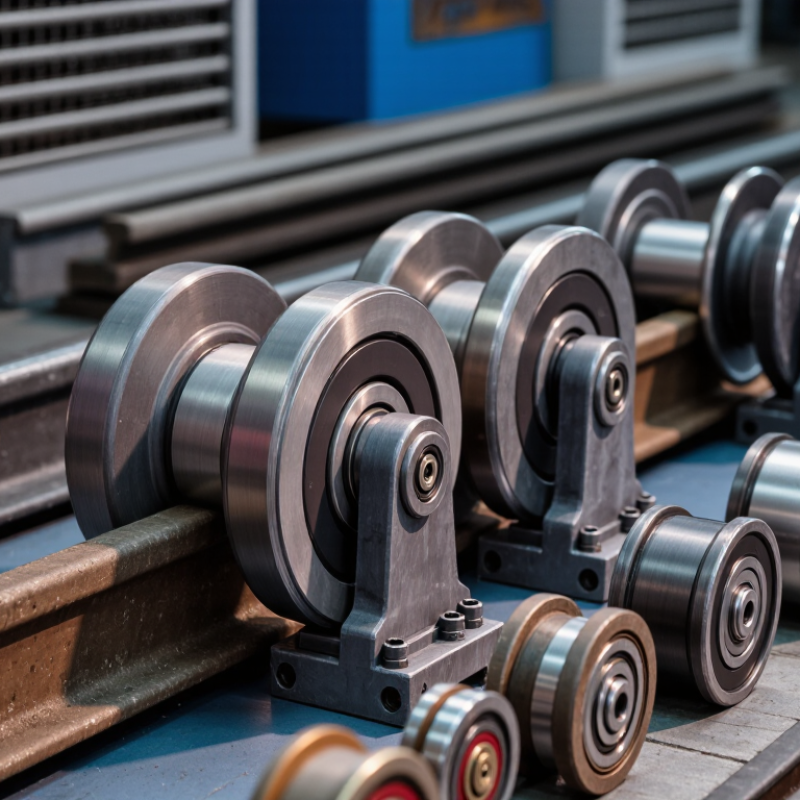
A track slide roller is a rolling component that moves along a fixed rail or track. It usually contains a wheel, bearing, axle, and protective housing. The wheel supports the moving load while the bearing reduces friction around the axle. As the assembly travels, the roller keeps the carriage aligned and limits sideways movement.

The working principle is simple. Load transfers from the carriage into the roller, then into the track. A properly matched bearing allows smooth rotation, even during repeated cycles. Seals help block dust, moisture, and fine metal particles. In practical inspections, uneven wear often reveals poor alignment before a failure occurs. Listen for clicking.

Choosing a suitable roller in 2026 requires more than checking the outer diameter. Measure track width, wheel profile, load rating, travel speed, and operating temperature. Consider shock loads, not only the normal weight. A roller rated for static use may perform poorly under frequent acceleration. Stainless or coated parts may suit damp areas, but material choice can be overestimated. Cleanliness and alignment still matter greatly. I would also check replacement access, lubrication needs, and documented test data. Small installation errors can create surprising noise.

Which Track Slide Roller Specifications Matter Most?

How to Choose the Best Track Slide Roller in 2026?

Which Track Slide Roller Specifications Matter Most?

Choosing a track slide roller starts with load capacity, not appearance. Check both the static load and the moving load. A roller carrying 80 kilograms may need a higher rating during sudden starts or stops. Measure the roller diameter, track width, axle size, and mounting height carefully. A difference of two millimeters can create binding or uneven movement. It happens more often than expected.

Material matters in real working conditions. Hardened steel suits heavy loads and frequent movement, while engineered polymer can reduce noise and surface wear. Sealed bearings help in dusty workshops and damp storage areas. Check the operating temperature, corrosion resistance, and expected cycle count. I once selected a smooth roller with the wrong bearing clearance. It looked perfect, but it developed play within weeks.

Tips: Compare the manufacturer’s test method before trusting a load rating. Inspect the contact surface for flat spots, burrs, or scoring. Rollers should move quietly without side wobble. Keep a small tolerance allowance for installation, because tracks rarely remain perfectly aligned. If the application involves vibration, choose a stronger axle and confirm the fastener retention method. I still recheck alignment after installation; rushing this step is an avoidable mistake.

How to Choose the Best Track Slide Roller in 2026?

Which Track Slide Roller Specifications Matter Most?

The chart ranks the main specifications used when screening track slide rollers. Load capacity and fatigue life should receive the highest attention, followed by dimensional fit, sealing, operating temperature, speed, and corrosion resistance. The percentages are practical evaluation weights and are not manufacturer or brand data.

How to Match a Roller to Track Design and Operating Conditions

How to Choose the Best Track Slide Roller in 2026?

How to Match a Roller to Track Design and Operating Conditions

Selecting a track slide roller begins with the track, not the catalog. Measure the track width, rail profile, mounting space, and clearance around each roller. A roller should contact the intended running surface evenly. Uneven contact creates edge loading, noise, and rapid wear. Keep it simple.

Load direction matters too. Estimate static load, moving load, impact, and the number of rollers sharing weight. That last figure is often optimistic. Dirt, frame flex, or poor alignment can reduce real load sharing. Choose a suitable load rating with a practical safety margin, then verify the calculation with the equipment supplier or a qualified engineer.

Operating conditions can change the correct material and seal design. Outdoor tracks may need corrosion-resistant components and effective sealing against rain and grit. High-cycle systems need low-friction surfaces, dependable bearings, and easy inspection access. Slow, heavy movement may require a larger roller than a faster light-duty application. Check temperature, moisture, cleaning chemicals, and expected duty cycles before ordering.

I once focused mainly on diameter and missed the rail’s worn edge. That assumption was wrong. The replacement roller fitted, but it carried load unevenly. Inspect the complete track, fasteners, alignment, and end stops. Record wear after installation. A short trial run under normal load can reveal vibration or binding before they become expensive failures.

How to Compare Materials, Load Ratings, and Installation Methods

How to Choose the Best Track Slide Roller in 2026?

Material selection affects service life more than appearance. Steel rollers handle heavy loads and repeated movement, but they may corrode in humid areas. Stainless steel resists moisture better, although it usually costs more. Nylon or polymer rollers run quietly and protect finished tracks. However, they can deform under excessive heat or weight. Match the roller material with the track material. Hard steel against a soft track can create grooves over time. I have seen smooth rollers fail because the track was poorly protected from grit.

Check both static and dynamic load ratings. Static capacity describes weight at rest, while dynamic capacity reflects movement. Calculate the total door or panel weight, then include a practical safety margin. Uneven loading matters. A roller carrying one corner may experience far more stress than expected. Many specifications look reassuring until real movement begins. That detail is easy to miss.

Installation quality can decide whether a good roller performs well. Keep the track level, clean, and firmly supported. Align every roller before tightening fasteners. A small angle can cause vibration, edge wear, and rising operating force. Use compatible bolts and washers, then test movement by hand. It should feel steady, not forced. Recheck alignment after several cycles. My earlier assumption was that tight hardware solved everything; it did not. Periodic inspection remains necessary, especially where dust, water, or frequent traffic is present.

How to Choose the Best Track Slide Roller in 2026? — Comparing Materials, Load Ratings, and Installation Methods
Roller Material Typical Load Rating per Roller Recommended Track Material Best Application Operating Environment Noise and Vibration Typical Installation Method Maintenance Requirements Key Advantages Important Limitations
Nylon 50–300 kg Cold-rolled steel, stainless steel, or aluminum with a smooth running surface Light sliding doors, cabinet systems, access panels, and indoor partitions Dry indoor areas; generally suitable from approximately −20°C to 80°C Very low noise; good vibration absorption Drop-in axle, shoulder bolt, or pressed-in bearing assembly Inspect for flat spots and wear; lubricate only the bearing if specified Lightweight, corrosion-resistant, economical, and quiet Lower impact resistance and lower load capacity than metal rollers; can creep under sustained heavy loads
UHMW-PE 75–400 kg Hardened steel, stainless steel, or polished steel track Sliding equipment, clean-process doors, conveyors, and applications requiring low friction Moist or chemically exposed areas; commonly used from approximately −40°C to 80°C Very low noise and excellent shock damping Flanged roller on a fixed axle, bolt-on bracket, or guided carriage Check dimensional wear and track contamination; normally no external lubrication is required Excellent chemical resistance, low friction, and strong resistance to water absorption Lower stiffness than steel; may deform under continuous high point loads or elevated temperatures
Polyurethane 100–600 kg Steel, stainless steel, or coated steel track with a smooth finish Quiet industrial doors, material-handling carts, lifting tables, and precision guided systems Indoor and moderate outdoor conditions; commonly approximately −30°C to 80°C Very low noise; excellent grip and impact absorption Press-fit wheel on sealed bearings, keyed hub, or bolt-on wheel assembly Inspect tread wear, cuts, and chemical exposure; keep the track free of sharp debris High traction, low marking, good wear resistance, and smooth operation May swell or soften with some oils, solvents, or prolonged heat; load rating depends strongly on hardness
Glass-Filled Nylon 150–800 kg Steel or stainless steel track; avoid rough or abrasive running surfaces Medium-duty sliding gates, machine guards, storage equipment, and industrial guide systems Indoor and sheltered outdoor areas; commonly approximately −30°C to 100°C Low to moderate noise with good dimensional stability Bolted roller housing, axle-mounted wheel, or carriage plate assembly Check wheel clearance, bearing condition, and track alignment at scheduled intervals Higher stiffness and load capacity than standard nylon with good corrosion resistance Can be more abrasive to soft tracks; may crack under severe impact or incorrect tightening
Carbon Steel 300–2,500 kg Hardened steel rail, structural steel track, or machined steel running surface Heavy sliding gates, industrial transfer carts, machine platforms, and warehouse equipment Indoor or protected outdoor use unless painted, plated, or otherwise protected from corrosion Moderate noise; higher vibration transmission than polymer rollers Stud-mounted roller, U-bracket, V-groove wheel, or shaft-mounted bearing unit Regular lubrication of bearings, corrosion inspection, and track cleaning are required High load capacity, high stiffness, and strong resistance to impact and abrasion Can rust in wet environments; may damage an improperly matched or softer track
Stainless Steel 250–2,000 kg Stainless steel, hardened steel, or compatible corrosion-resistant track Food-processing areas, washdown zones, marine equipment, and outdoor sliding systems Wet, humid, salt-exposed, or regularly washed environments Moderate noise; lower with polymer tread or precision bearings Through-bolt, welded mounting plate, stud assembly, or sealed bearing housing Rinse contaminants, inspect for pitting, and use a lubricant compatible with the environment Strong corrosion resistance and reliable performance in demanding environments Usually more expensive and less hard-wearing than hardened carbon steel; galling is possible in some stainless-on-stainless contacts
Cast Iron 500–4,000 kg Heavy steel rail, cast track, or hardened steel running surface Very heavy machinery, large industrial doors, foundry equipment, and low-speed transfer systems Dry industrial environments; protected from standing water and corrosive chemicals High rolling noise and vibration unless isolated with a resilient tread Heavy-duty axle, flanged wheel, V-groove wheel, or fabricated mounting bracket Frequent inspection for cracking, corrosion, bearing wear, and track damage Excellent compressive strength, dimensional stability, and resistance to heavy static loads Brittle under shock loading; heavy, noisy, and unsuitable for poorly aligned tracks
Phenolic Resin 150–900 kg Steel or stainless steel track with a smooth, clean surface High-temperature carts, industrial ovens, heat-treatment equipment, and electrically insulated systems Dry industrial areas; selected grades can operate at approximately 120°C to 250°C Low to moderate noise with good electrical insulation Bolted wheel, fixed axle, or bearing-supported carriage Inspect for heat checking, chips, cracks, and excessive wear; avoid water shock when hot Good high-temperature capability, low weight, and electrical insulation Can be brittle under impact; moisture and rapid temperature changes may reduce service life

Selection note: The load ratings shown are practical indicative ranges for a single roller under properly aligned, predominantly radial loading. Final capacity must be verified against the roller diameter, bearing rating, track condition, wheel spacing, load distribution, impact factor, travel speed, temperature, and required safety factor. For a four-roller carriage, do not automatically assume that the total capacity equals four times the single-roller rating because uneven loading is common.

How to Inspect, Maintain, and Replace a Track Slide Roller

Choosing the best track slide roller in 2026 starts with careful inspection, not a quick purchase. Check the roller after cleaning away packed soil and stones. Look for flat spots, cracks, deep scoring, oil leakage, or uneven wear. Hold the track frame securely, then test for sideways movement. Excessive play often indicates worn bushings or bearings. A rough grinding sound matters too. I once ignored a small wobble, and the adjacent track parts wore faster than expected.

Tips: Inspect rollers after demanding work, especially in mud, sand, or rocky ground. Confirm the roller’s dimensions, load rating, seal design, and mounting pattern. Match the replacement to the machine’s service requirements. Do not rely on appearance alone. Some rollers look sound but contain damaged internal bearings. Follow the equipment manual for track tension and bolt torque. Sealed rollers usually need no added grease unless the manufacturer specifically allows it.

Replace a roller when damage, leakage, severe wear, or unsafe looseness appears. Park on stable ground and release stored energy before lifting the machine. Use rated supports, not improvised blocks. Remove the track carefully, then inspect nearby bolts, guards, and track alignment. A new roller can fail early if the frame is bent or the track is over-tightened. Record the date, operating hours, and observed fault. This simple record improves future maintenance decisions, although it is easy to forget during a busy repair.

top