Why Choose Fiberglass Reinforced Plastic Laminate Making Machine?
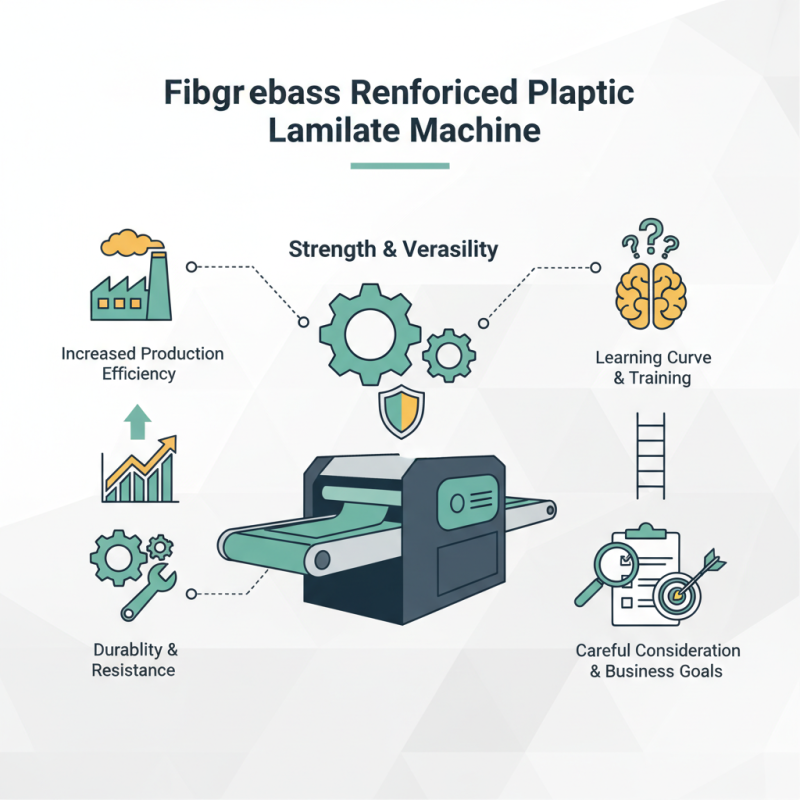
Fiberglass Reinforced Plastic Laminate Making Machine stands out in today’s manufacturing landscape. This technology combines strength and versatility, making it ideal for various applications. Businesses seek reliable machines that deliver quality products.
The process of creating fiberglass reinforced plastic laminate offers durability and resistance to environmental challenges. Investing in this machine can lead to increased production efficiency. However, manufacturers must thoroughly consider their needs and production goals.
While the benefits are clear, some users may find the learning curve challenging. It's essential to receive adequate training and support, ensuring effective operation. Choosing the right machine requires careful consideration of various factors. This ensures that the investment aligns with long-term business strategies and goals.
Introduction to Fiberglass Reinforced Plastic Laminate Making Machines
Fiberglass Reinforced Plastic (FRP) laminate making machines play a pivotal role in various industries. These machines enable the production of strong, lightweight materials used in construction, automotive, and marine applications. According to a report by Global Market Insights, the FRP market is projected to reach over $70 billion by 2026, driven by the increasing demand for durable composites. The efficiency of FRP machines contributes to sustainable manufacturing practices, minimizing waste.
The technology behind FRP laminate production has advanced significantly. Modern machines utilize automated processes to ensure precision and consistency. A recent study highlighted that utilizing advanced laminate machines can improve production efficiency by up to 30%. However, some challenges remain. Not all manufacturers have access to the latest technology, which can hinder production quality and speed. The requirement for skilled operators is another concern, as a lack of expertise may lead to defects in the final product. Proper training and investment in technology are crucial for overcoming these issues.
Beyond production efficiency, FRP laminate making machines promote the use of environmentally friendly materials. Composite materials can often be recycled, reducing the overall carbon footprint of the industry. Nonetheless, the recycling process itself is not flawless. The techniques to recycle FRP are still evolving, and challenges arise in sourcing recycled content effectively. Thus, while the benefits of FRP laminate machines are substantial, there are areas in need of development.
Key Advantages of Using Fiberglass Reinforced Plastic in Manufacturing
Fiberglass Reinforced Plastic (FRP) has become a key material in various manufacturing sectors. Its lightweight yet strong nature makes it ideal for numerous applications. According to a report by Global Market Insights, the FRP market is projected to reach over $30 billion by 2026. This growth is driven by the material’s unique properties.
One significant advantage of FRP is its resistance to corrosion. Unlike metals, fiberglass does not rust or degrade when exposed to harsh environments. This can lead to lower maintenance costs, benefiting manufacturers in the long run. Additionally, FRP components can be molded into complex shapes, providing design flexibility. The construction and automotive industries have particularly embraced this.
However, there are challenges in using FRP. Producing high-quality laminates requires specialized machinery and skilled labor. The initial investment for fiberglass reinforced plastic laminate making machines can be significant. Moreover, not all manufacturers possess the expertise needed for optimal production. Addressing these gaps is essential for unlocking the full potential of FRP in manufacturing.
The Process of Creating Fiberglass Reinforced Plastic Laminates
The process of creating fiberglass reinforced plastic laminates involves several key stages. Initially, raw fiberglass materials are combined with resin. This mixture is essential for providing the laminate's strength and durability. The choice of resin can significantly impact the final product's performance. Proper mixing techniques are crucial. Any inconsistency can lead to weak spots in the laminate.
Once mixed, the resin-fiberglass blend is layered onto a mold. Each layer must be carefully applied to achieve optimal thickness and strength. Molding conditions, such as temperature and pressure, should be monitored closely. Improper conditions can cause defects like bubbles or uneven surfaces. It's critical to allow the laminate to cure fully. Rushing this step may result in subpar performance.
After curing, quality control checks are vital. Inspecting for imperfections ensures the laminate meets required specifications. Some common issues include delamination and surface blemishes. Addressing these problems early can save time and resources. Continuous improvement in the process is essential. Reflecting on past projects can lead to better techniques in the future.
Applications of Fiberglass Reinforced Plastic in Various Industries
Fiberglass reinforced plastic (FRP) finds extensive applications across various industries, showcasing its versatility and strength. The automotive sector utilizes FRP components for their lightweight yet durable characteristics. In fact, studies have shown that using FRP can reduce vehicle weight by up to 20%. This reduction plays a critical role in improving fuel efficiency and lowering emissions.
In the construction industry, FRP is increasingly used in building materials. Its resistance to corrosion and high strength makes it an ideal choice for bridges and reinforced panels. According to a market report by Allied Market Research, the global FRP market is projected to reach $20 billion by 2026. This growth reflects an increasing demand for sustainable and high-performing materials.
However, there are challenges in the adoption of FRP. Cost factors can be a barrier for smaller companies. Knowledge gaps also exist; many manufacturers may lack the expertise to effectively process and utilize FRP. As industries seek to adopt innovative materials like FRP, addressing these challenges becomes crucial to maximizing its potential.
Comparison with Other Materials and Manufacturing Methods
Fiberglass reinforced plastic (FRP) laminate making machines offer several advantages over traditional materials and manufacturing methods. A key comparison is with metals and wooden composites. FRP is lightweight yet exceptionally strong. According to a report by the Composites Industry Association, FRP can be up to four times lighter than steel, reducing operational costs in transportation and labor.
Moreover, FRP’s resistance to corrosion stands out. Unlike metals, which can degrade over time due to environmental exposure, FRP retains its integrity. A study from the American Society for Testing and Materials shows that FRP can last two to three times longer than conventional materials under similar conditions. This longevity translates into lower maintenance costs and improved durability.
Tips: Keep in mind that not all FRP is created equal. It's crucial to evaluate specific production capabilities. Some machines may lack the precision or consistency needed for large-scale manufacturing. Regularly assess your operational needs against machine specifications to avoid potential bottlenecks. Another reflection point is the initial investment. While FRP laminate machines provide long-term savings, the upfront cost can be significant. Ensure your financial plan accounts for this consideration.
Why Choose Fiberglass Reinforced Plastic Laminate Making Machine? - Comparison with Other Materials and Manufacturing Methods
| Material/Method | Strength | Weight | Cost | Durability | Production Speed |
| Fiberglass Reinforced Plastic (FRP) | High | Lightweight | Moderate | Excellent | Fast |
| Aluminum | Moderate | Lightweight | High | Good | Moderate |
| Wood | Variable | Heavy | Low | Fair | Slow |
| Steel | Very High | Heavy | High | Good | Slow |
| Concrete | Very High | Very Heavy | Moderate | Excellent | Very Slow |